Dr. Jaipaul Parmar Named UWS 2022 Alumnus of the Year

Alumni Recognition Award Graphic

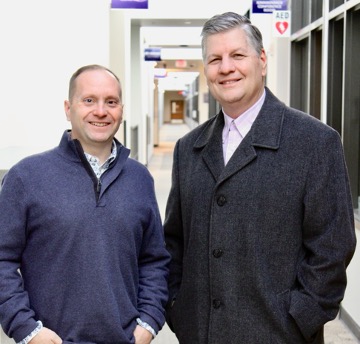
Jaipaul Parmar, DC, 2010 graduate of University of Western States (UWS), has been named the 2022 UWS Alumnus of the Year.

“It is a true honor and privilege to be named the 2022 UWS Alumnus of the Year,” said Dr. Parmar. “Since acceptance, going through the program, graduating, and now having over a decade of practice, I hold a very special place in my heart for UWS. I have a genuine passion for the chiropractic profession and am beyond grateful for this recognition from the institution that has forever changed my life and has allowed me to have an impact on others’ lives every single day.”

Shortly after receiving his license, Dr. Parmar began serving as a member of the British Columbia Chiropractic Association (BCCA) and the Canadian Chiropractic Association (CCA). He was recently nominated to sit on the CCA Board of Directors for his contributions to the community. Dr. Parmar and his practice, Alliance Wellness Clinic in Vancouver, BC, has served as a preceptor site for UWS student clinical interns for many years.

“Since graduating from UWS in 2010, Dr. Jaipaul Parmar’s contribution to the BC chiropractic community and the university has been significant,” said UWS President and CEO, Dr. Joseph Brimhall. “Dr. Parmar’s clear passion for the profession goes beyond boards and public service but is also evident on an individual level as a mentor to UWS student interns. As a preceptor for several years, Dr. Parmar has been eager to share his expertise with our student interns and has shown a keen investment in the next generation of chiropractors.”

Recipients of the UWS Alumni Recognition Award represents the outstanding accomplishments UWS alumni accomplish in advancing the science and art of integrated health care. UWS alumni reflect the core values of the university – student focus, best practices, curiosity, inclusiveness, professionalism and whole-person health.

Dr. Parmar and all the nominees will be honored at an alumni reception at the UWS campus at 8000 NE Tillamook Street in Portland, Oregon on Thursday, April 20, 2023.

What is Sport and Performance Psychology?

Post 1: The Continuum of Mental Health

By: Sarah Castillo, PhD, CMPC, UWS sport and performance psychology program director
Let’s face it – there are plenty of options when it comes to pursuing a graduate education and choosing a career. If you’re interested in working with performers, you might choose sport management, sports marketing, coaching education, athletic training, strength and conditioning, or a host of other options. If it’s mental health, you might consider clinical psychology, psychiatry, or social work. If it’s kinesiology, the scientific study of human body movement, career fields range include exercise prescription, biomechanics, and motor development? But, there’s only one field that lives at the very center of them all – sport and performance psychology. The name is intriguing, it’s popular and it sounds like it might be exactly what you want! But what, exactly, is it? In this blog series, we’ll address the basics of sport and performance psychology and help you to understand where you might fit.

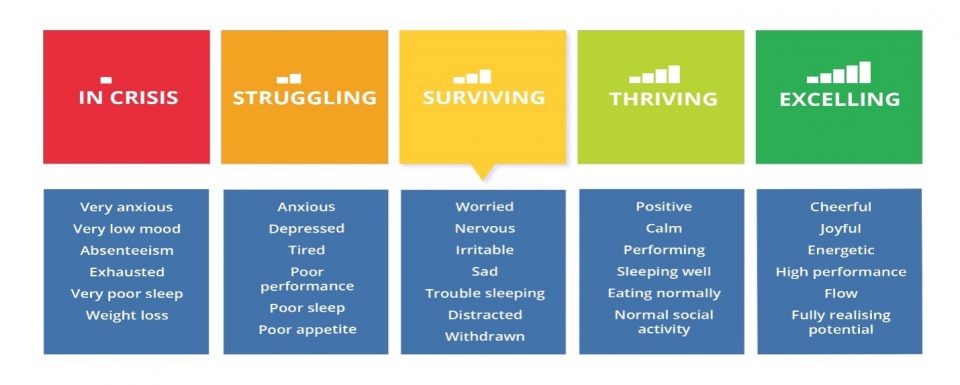
First and foremost, sport and performance psychology (SPP) is a mental health profession. In 2020, Delphis, an organization dedicated to management organization on mental health and well-being, proposed a continuum of mental health in an attempt to expand the traditional belief that that mental health was nothing more than the absence of mental illness.

At University of Western States, (UWS), we agree wholeheartedly with this conceptualization of mental health. Even better, individuals trained in sport and performance psychology may be able to work with performers at various points along the continuum.

Let’s take a look at the training required for this work:

When working with performers “in crisis” or “struggling,” training in sport and performance psychology must be paired with clinical licensure in psychology. Individuals with this dual training are able to diagnose and treat mental illness with a clear understanding of how competitive sport and performance environments must be considered.

Working with performers who are “surviving” requires, at minimum, substantial training in sport and performance psychology and significant counseling skills. While the performer’s presenting problem may not be clinical in nature, it’s essential that the SPP practitioner be able to immediately recognize any future appearance of clinical issues, as they may be just below the surface. When clinical issues arise, it is essential that the SPP practitioner make an appropriate referral to a clinical practitioner.

Performers who are “thriving” or “excelling” are able to manage life’s challenges with well-developed coping skills and are able to perform at their peak. Working with performers at this end of the continuum requires extensive training and applied experience in sport and performance psychology.

It’s critical to recognize that not every SPP practitioner wants to, or is qualified to, work with individuals at every point along the continuum. Therefore, when considering a career in sport and performance psychology, the first order of business is to determine what it is that YOU want to do. Which points along the continuum are you passionate about? Your choice of program coursework and supervised experiences all depend on where your passion for the field truly lies.  Sport and performance psychology is gaining popularity, but it’s your passion for the type of work that will make you a dedicated student and competent practitioner!

Be sure to check out the second installment in this three-part series, “What is Sport and Performance Psychology.” In part two, we’ll talk about the similarities and differences between clinical and performance-based SPP practitioners.

In the third installment of the series, it’s discussed how the UWS SPP and CMHC programs prepare students to build their careers in these growing professions.


Want to learn more about the UWS sport and performance psychology degree programs? Visit the program webpage for more information or contact the admissions department virtually, by emailing [email protected] or calling 800-641-5641.

Value of a Specialization in Sports Medicine

By: Bill Moreau, DC, DACBSP, FACSM

Sports and chiropractic care have enjoyed a long and mutually supportive relationship. It is now commonplace for doctors of chiropractic to be involved in all levels of sport care for athletes, from the recreation leagues to the Olympics, Paralympics, NFL and other professional sports leagues, and beyond. Regardless of the level of involvement, there are growing opportunities for chiropractic physicians to serve in the sporting world.

The highly visible world of sport is a great proving ground to demonstrate the safe, effective and efficient delivery of chiropractic care, in both preventative and interventional modes. Athletes of all levels are looking to reach their personal bests in sport. An athlete’s sustained and healthy career can be a predictor of their success. In order to reach that level of success, mental and physical wellness need to be top priorities.

Hear from Dr. Bill Moreau, about the value of a degree specialization in sports medicine.

HOW TO GET INVOLVED IN SPORTS CARE

A key to identifying the pathway to engage in sport care of athletes is for the doctor of chiropractic to identify opportunities that are unique to their particular circumstances. Many doctors are currently in the sporting environment, and many more want to get in the game. It makes sense to expect that the doctor needs to enhance their clinical skills and sports-related acumen as they begin to offer healthcare services outside of their clinic or office setting. For most doctors, their area of highest comfort and clinical confidence is when they are working in their own offices. In the office setting, doctors of chiropractic are in positions of authority where the final opinion is typically not questioned and all the staff, tools and equipment they use to help their patients is right at hand.

In sport care, the doctor needs to understand the three A’s of sport: ability, availability, affability.  All chiropractic physicians care for athletes. When the care is offered outside the clinic or office setting, the change in location requires the doctors to see the entire setting before engaging in care. It is important to recognize there are other well trained and talented professionals that also want to help the athletes stay healthy. Developing supportive partnerships within the health care team is necessary to deliver athlete-patient centric care.

sports chiropractic

OFFICE CARE VERSUS EVENT CARE

There are important differences between office and event care. One of the key differences is related to the clinical presentation of the patient. Chiropractic physicians are taught to recognize clinical conditions by identifying the signs and symptoms of the presenting patient and then match these findings to a diagnosis. The diagnosis is formulated based on the doctor’s education and clinical experience, and serves as a guide to implement the best course of care for the ill or injured athlete. The key difference is the time to presentation. In the clinical setting, the athlete’s injury will have had time to develop the classic telltale signs and symptoms we are trained to identify. At an event, you see an athlete moments after the injury. The injury is most likely still unwinding to show the clinical picture whereby the clinician can identify the diagnosis.

Serial (repeat) examinations are a cornerstone to the successful management of injuries and illness at an athletic event. For example, the current standard of care for the evaluation and management of an individual with sports related concussion is serial examinations every five (5) minutes.1 The final diagnosis should not be made until the patient’s clinical presentation is stable and no longer changing.

WHERE TO OBTAIN ADDITIONAL EDUCATION, TRAINING AND CERTIFICATION

Depending upon the role the chiropractic physician fills on the sports medicine team, additional education helps best prepare the doctor to fulfill their role. In the United States, the American Chiropractic Board of Sports Physicians is the recognized certification organization for the chiropractic physician who wishes to obtain a sports medicine certificate of additional qualification.2 For those who work outside the United States, the International Federation of Sports Chiropractic (FICS) is the recognized certification organization.3 Doctors working domestically or on the international level may also consider formal education in a master’s degree program related to sport or sports medicine to help prepare them for success in the sporting arena.

PREPARTICIPATION EXAMINATIONS AND SPORTS-RELATED CONCUSSION EVALUATIONS

In addition to the numerous opportunities, there are also barriers to the chiropractic physician wishing to engage in the full spectrum of sports medicine. The two most controversial areas pertain to the ability to perform preparticipation examinations (PPE), sometimes called the periodic examination, and the evaluation and management of sports-related concussion.

About one half of the states allow the chiropractic physician to perform the PPE while other states do not. There is a lack of consensus within and outside the profession regarding this issue. Typical areas of resistance are centered on the cardiac examination. The critics state they are not convinced that a chiropractic physician can detect abnormal heart sounds. While there is not a single study to support this position, there are studies that demonstrate that family practitioners, academic internists, and general internists all demonstrate a low proficiency of no more than 40% in recognizing basic heart murmurs. Cardiologists, who only represent 5% of practicing physicians, are the only group that routinely recognizes most abnormal heart murmurs.4

The AHA twelve-point cardiac examination has been suggested as the standard of care for the PPE. At the discretion of the examining clinician, a positive response in any one or more of the 12 items may be enough to cause a referral to a cardiologist for cardiovascular evaluation. Parental verification of the responses is regarded as essential for minor students in middle or high school students, because young patients are notoriously poor historians.5 The historical and physical examination described in those circumstances falls well within the scope and skills of a chiropractic physician. The point is the abnormal heart sound does not need to be named by the primary point of contact. All athletes with an abnormal heart sound must be evaluated by a cardiologist to identify the cause of the murmur and the safety for that individual to participate in sporting activities.

Regarding sport-related concussion, it would be very surprising, after the plethora of current media coverage, that any health care provider would ever consider returning an athlete who possibly sustained a concussion to play. Each athlete must be protected from continued participation while suffering from any symptom or sign of concussion. Advising against return to play based on clinical findings is well within the scope of skills for chiropractic physicians.

There is a growing and continued need for chiropractic physicians to evaluate and manage sports injuries in all patient populations. It makes sense that all providers would work to know what they need to know before the sport injury patient presents before them.

References:

  1. McCrory, Paul, Willem Meeuwisse, Jiří Dvorak, Mark Aubry, Julian Bailes, Steven Broglio, Robert C Cantu, et al. “Consensus Statement on Concussion in Sport—the 5 th International Conference on Concussion in Sport Held in Berlin, October 2016.” British Journal of Sports Medicine, April 26, 2017, bjsports-2017-097699. https://doi.org/10.1136/bjsports-2017-097699.
  2. Moreau, William J. “The American Chiropractic Board of Sports Physicians Supports the Journal of Chiropractic Medicine.” Journal of Chiropractic Medicine 6, no. 3 (2007): 85–86. https://doi.org/10.1016/j.jcme.2007.06.002.
  3. Latest FICS News. (n.d.). Retrieved February 4, 2020, from https://fics.sport/
  4. Barrett, Michael, Bilal Ayub, and Matthew Martinez. “Cardiac Auscultation in Sports Medicine: Strategies to Improve Clinical Care.” Current Sports Medicine Reports 11, no. 2 (April 2012): 78–84. https://doi.org/10.1249/JSR.0b013e318249c0ff.
  5. Maron, Barry J., Paul D. Thompson, Michael J. Ackerman, Gary Balady, Stuart Berger, David Cohen, Robert Dimeff, et al. “Recommendations and Considerations Related to Preparticipation Screening for Cardiovascular Abnormalities in Competitive Athletes: 2007 Update: A Scientific Statement From the American Heart Association Council on Nutrition, Physical Activity, and Metabolism: Endorsed by the American College of Cardiology Foundation.” Circulation 115, no. 12 (March 27, 2007): 1643–55. https://doi.org/10.1161/CIRCULATIONAHA.107.181423.

UWS Named a Top School for Online Education in Nutrition

Best Online Degree Programs

UWS has been ranked one of the nation’s best schools for online degrees and certificates in the nutrition field for 2023. Six percent of regionally accredited colleges and universities earned a ranking position. 

University of Western States has been named one of today’s best schools for online higher education in health care by EduMed.org. UWS’s online programs in the nutrition field earned top honors for their overall quality, affordability and commitment to student success. 

Take a look at the full rankings to see where UWS placed: Best Online Nutrition Master’s Degrees

“Our rankings showcase the schools giving future integrated health care professionals the best chance to succeed from day one in the classroom to day one on the job,” said Wes Harris, outreach coordinator for EduMed.org. “This starts with low-cost tuition, but also includes academic counseling, career placement and other key resources that students need to graduate and get hired.”

EduMed.org’s rankings come at a time when the demand for trained health care professionals is on the rise. According to Mercer, a global consulting leader in health care, the U.S. will see millions of vacancies in critical health care positions by 2025.

“One key to solving the health care shortage is making higher education more accessible,” said Harris. “Online programs open the door to students who may not be able to commit to a campus-based program while working, or to commute to a classroom at all. Each school in our rankings has made online learning a priority.”

EduMed.org researched and analyzed more than 7,700 accredited schools using data from the Integrated Postsecondary Education Data System (IPEDS) and from the schools themselves. The website’s data science team then applied a proprietary algorithm to rank all qualifying schools for each healthcare discipline. Primary data points include: 

  • Academic counseling services
  • Career placement services
  • Student-to-faculty ratio
  • Tuition
  • Percent of students receiving school-based financial aid
  • Amount of school-based aid per student

To be eligible, a school must hold active regional accreditation and have at least one partially online program in the ranking subject. Just 8% of U.S. postsecondary institutions earned a ranking position. 


About EduMed.org

EduMed.org set out in 2018 to support higher education in health care. Our complimentary resource materials are expert-driven guidebooks help students find scholarships, financial aid and top degree programs in nursing, healthcare administration, public health, and dozens of other key medical and health disciplines. Since the site’s official launch in 2019, EduMed.org has been featured by more than 100 premier colleges and universities across the U.S. 


About the UWS Human Nutrition and Functional Medicine Program

The HNFM department at UWS houses the following programs:

These nutrition programs integrate cutting-edge functional medicine clinical tools and resources developed by the Institute for Functional Medicine (IFM), the organization that founded and developed many functional medicine concepts in use today. Functional medicine is a science-based, patient-centered approach to achieving and maintaining excellent health through natural methods, with diet and nutrition at the forefront. Founded on a holistic view of health, our functional medicine programs leverage the biochemical and genetic individuality of each patient so that practitioners can treat the whole person, not just the symptoms.

Our HNFM programs are 100% online. Available to international students, transfers, and veterans

Want to learn more about the UWS human nutrition and functional medicine degree programs? Visit the program webpage for more information or contact the admissions department virtually, by emailing [email protected] or calling 800-641-5641.

Obtaining the CMPC® Credential Through the AASP

University of Western States alumna, Dr. Neva Barno, obtained the Certified Mental Performance Consultant (CMPC®) credential through the Association for Applied Sport Psychology (AASP) after completing the doctorate of education in sport and performance psychology, clinical mental health counseling specialization (EdD-SPP, CMHC) degree program.

CMPC Badges

Dr. Barno’s passion for clinical mental health counseling and sport and performance psychology started after experiencing an injury in high school. It left a significant impact on her physical performance and mental health. Dr. Barno currently works as a cognitive enhancement specialist with Thrive Proactive Health, O2X Human Performance, and Blue / Green Training. Her specialties include injury rehabilitation and working with tactical athletes. Obtaining the CMPC® took her injury to a new level.

According to the AASP, “Certification as a CMPC® demonstrates to clients, employers, colleagues, and the public at large that an individual has met the highest standards of professional practice, including completing a combination of educational and work requirements, successfully passing a certification exam, agreeing to adhere to ethical principles and standards, and committing to ongoing professional development.”

Curious how an education through UWS can prepare you to pursue the CMPC® credential? Connect with the UWS admissions department online or by email at [email protected] or call 800-641-5641.

Dr. Christine Girard Elected to UWS Board

The University of Western States (UWS) Board of Trustees has announced the addition of Christine L. Girard, ND, MPH, to the board. Dr. Girard brings an extensive background and knowledge of integrative medicine.

“We are very pleased to welcome Dr. Christine Girard as a member of the UWS Board of Trustees,” said Dr. Joseph Brimhall, UWS president and CEO. “Dr. Girard’s exceptional background and experience in the naturopathic medicine community, in higher education administration, and in clinical practice, uniquely qualifies her to deliver valuable perspectives for the board governance of University of Western States.” 

Christine Girard, ND

Dr. Girard has devoted her career to hospital-based integrative medicine and the education of health care professionals across specialties for more than 25 years. She has taught both undergraduate and graduate level courses for the online programs at the University of Arizona’s Mel & Enid Zuckerman College of Public Health. Dr. Girard also served as past president/CEO of the National University of Natural Medicine in Portland, Oregon, executive vice president of Southwest College of Naturopathic Medicine, and past director of naturopathic medicine at Southwestern Regional Medical Center in Tulsa, Oklahoma. Dr. Girard is the co-founder and past co-director of the Integrative Medicine at Griffin Hospital in Derby, Connecticut. While at Griffin Hospital, Dr. Girard served as a clinical research specialist at the Yale-Griffin Prevention Research Center.

“What a great honor to join the Board of Trustees,” said Dr. Girard. “I am delighted to serve alongside such a forward-thinking team of professionals. I have been impressed with the leadership of UWS as it navigates the changing landscape of higher education and health care while remaining constant in keeping the ‘good of the patient’ at the center of care.”

Dr. Girard received her naturopathic degree from National College of Naturopathic Medicine in Portland, Oregon and her MPH from the University of Arizona’s Mel & Enid Zuckerman College of Public Health.

Awards include the Virginia G. Piper Charitable Trust’s Piper Fellows Program (2013), American Association of Naturopathic Physicians’ Physician of the Year Award (2010), and National College of Naturopathic Medicine’s Pioneer Award (2008).