Written by: Jenn Evon, UWS Human Nutrition and Functional Medicine Course Facilitator
 Omega-3 polyunsaturated fatty acids (PUFAs), such as DHA and EPA, are known for their anti-inflammatory properties. Their role in exercise performance is unclear, with studies showing greater benefit for certain populations over others in reducing exercise-induced inflammation.
Oxidative stress occurs during exercise and while low levels are required for exercise adaptation, chronic inflammation can tax the body’s antioxidant systems. Strenuous exercise may lead to chronic inflammation, as demonstrated by increased tumor necrosis factor-alpha (TNF-a) and C-reactive protein (CRP) biomarkers.1
Omega-3 fatty acids are precursors to prostaglandins, hormone-like compounds that help to reduce inflammation.2 Omega-3 fatty acids are thought to change the muscle cell membrane by affecting membrane fluidity, receptor function, and the production of cytokines, which all lower the effect of exercise on muscle damage.3,4
The central and peripheral nerves contain polyunsaturated fatty acids, with omega-3 fatty acids helping to comprise neurons, myelin, and muscle membranes. Supplementation with omega-3 fatty acids may improve nerve conduction and neuromuscular engagement, while also reducing exercise-induced inflammation.5,6
Currently, the daily limit set by the FDA for supplementation is no more than 3,000 mg/day.7,8
Older Adults
As we age, we lose skeletal muscle mass and higher reactive oxygen species in the mitochondria of skeletal muscle cells cause alterations to muscle fibers.9 Omega-3 supplementation, such as with fish oil, has been found to help lower blood markers of inflammation as well as mitigate delayed onset muscle soreness and muscle damage.
The benefit of omega-3 fatty acid supplementation for older adults is much more clear than it is for younger, healthy athletes. PUFAs affect the cardiovascular and central nervous systems in older adults, which is largely why they may be so beneficial to pair with exercise.
In adults with a history of myocardial infarction, or heart attack, DHA/EPA supplementation for 4 months reduced and stabilized many post-exercise cardiovascular markers including heart rate recovery, stroke volume, and heart rate variability.6
Studies have found improved quadricep strength as well as overall activation of skeletal muscle and force in postmenopausal and elderly women who couple exercise with omega-3 supplementation.5,10
Endurance Training
While there are benefits of omega-3 fatty acids for endurance training, they may not be significant enough to warrant supplementation solely for athletic performance. Omega-3 fatty acids act as a vasodilator, which helps increase the movement of oxygen into skeletal muscle during exercise.4 In a study of adult rats, DHA supplementation led to improvement in endurance exercise capacity and mitochondrial function in skeletal muscle.9
Endurance athletes may notice an improvement in muscle flexibility with EPA supplementation. In younger adult athletes, omega-3 supplementation can contribute to lower peak heart rate, reduce resting heart rate variability, and oxygen consumption required during exercise.6
However, several studies have shown insignificant improvements in markers of inflammation, performance, and immunity. Exercise-trained men who took an EPA/DHA supplement for six weeks and performed an uphill climb while carrying a load had insignificant lower levels of resting TNF-a and CRP compared to the placebo group.
A separate study of young men and women performing a maximal endurance test on an ergometer showed that supplementation with krill oil did not change immune function or markers of exercise performance.11
These results suggest that those who regularly engage in endurance exercise may have minimal oxidative stress responses to exercise because regular exercise naturally increases the body’s antioxidant system.1 Therefore, omega-3 supplementation solely based on improving athletic performance may not be warranted for endurance.
Strength Training
Researchers have also explored the role of omega-3 fatty acid supplementation for strength training. Omega-3 supplementation improves nerve conduction, thereby influencing muscle activation.5
Studies have shown that DHA/EPA supplementation before an eccentric bicep curl test leads to more repetitions, better range of motion, and lower levels of the inflammatory cytokine interleukin-6 (IL-6). Loss of muscle strength and delayed onset muscle soreness three days after exercise were also decreased.2,7,12,13
During a maximal back squat assessment, male athletes who supplemented with PUFAs experienced improved muscle activation and lower fatigue.5 Men taking EPA supplements noticed better recovery than the placebo group after performing a plyometric squat jump test.3
Final Thoughts
Supplementation with omega-3 fatty acids has been shown to be beneficial for the nervous and cardiovascular systems, with anti-inflammatory effects that fight against exercise-induced muscle damage.
While the benefit for endurance athletes is less clear, supplementation with PUFAs does seem helpful for older adults and individuals engaging in strength training. Depending on the individual and their goals, the inclusion of PUFA supplementation as part of their athletic recovery routine may be worthwhile.
References
- Bloomer, R.J., Larson, D.E., Fisher-Wellman, K.H., Galpin, A.J., & Schilling, B.K. (2009). Effect of eicosapentaenoic and docosahexaenoic acid on resting and exercise-induced inflammatory and oxidative stress biomarkers: a randomized, placebo controlled, cross-over study. Lipids in Health and Disease, 8(36). doi: 10.1186/1476-511X-8-36
- Jouris, K.B., McDaniel, J.L., & Weiss, E.P. (2011). The effect of omega-3 fatty acid supplementation on the inflammatory response to eccentric strength exercise. Journal of Sports Science and Medicine, 10, 432-438.
- Jakeman, J.R., Lambrick, D.M., Wooley, B., Babraj, J.A., & Faulkner, J.A. (2017). Effect of an acute dose of omega-3 fish oil following exercise-induced muscle damage. European Journal of Applied Physiology, 117, 575-582. doi: 10.1007/s00421-017-3543-y
- de Silva, E.P., Nachbar, R.T., Lavada-Pires, A.C., Hirabara, S.M., & Lambertucci, R.H. (2016). Omega-3 fatty acids differentially modulate enzymatic anti-oxidant systems in skeletal muscle cells. Cell Stress and Chaperones, 21, 87-95. doi: 10.1007/s12192-015-0642-8
- Lewis, E.J.H., Radonic, P.W., Wolever, T.M.S., & Wells, G.D. (2015). 21 days of mammalian omega-3 fatty acid supplementation improves aspects of neuromuscular function and performance in male athletes compared to olive oil placebo. Journal of the International Society of Sports Nutrition, 12(28). doi: 10.1186/s12970-015-0089-4
- Da Boit, M., Hunter, A.M., & Gray, S.R. (2017). Fit with good fat? The role of n-3 polyunsaturated fatty acids on exercise performance. Metabolism, 66, 45-54. doi: 10.1016/j.metabol.2016.10.007
- Tsuchiya, Y., Yanagimoto, K., Nakazato, K., Hayamizu, K., & Ochi, E. (2016). Eicosapentaenoic and docosahexaenoic acids-rich fish oil supplementation attenuates strength loss and limited joint range of motion after eccentric contractions: a randomized, double-blind, placebo-controlled, parallel-group trial. Eur J Appl Physiol, 116, 1179-1188. doi: 10.1007/s00421-016-3373-3
- Jouris, K.B., McDaniel, J.L., & Weiss, E.P. (2011). The effect of omega-3 fatty acid supplementation on the inflammatory response to eccentric strength exercise. Journal of Sports Science and Medicine, 10, 432-438.
- Le Guen, M., Chate, V., Hininger-Favier, I., Laillet, B., Morio, B., Pieroni, G., … & Dubouchaud, H. (2015). A 9-wk docosahexaenoic acid-enriched supplementation improves endurance exercise capacity and skeletal muscle mitochondrial function in adult rats. Am J Physiol Endocrinol Metab, 310, E213-E224. doi: 10.1152/ajpendo.00468.2014
- Rodacki, C.L.N., Rodacki, A.L.F., Pereira, G., Naliwaiko, K., Coelho, I., Pequito, D., Fernandes, L.C. (2012). Fish-oil supplementation enhances the effects of strength training in elderly women. American Journal of Clinical Nutrition, 95, 428-436. doi: 10.3945/ajcn.111.021915
- Da Boit, M., Mastalurova, I., Brazaite, G., McGovern, N., Thompson, K., & Gray, S.R. (2015). The effect of krill oil supplementation on exercise performance and markers of immune function. PLoS One, 10(9), e0139174. doi: 10.1371/journal.pone.0139174
- Corder, K.E., Newsham, K.R., McDaniel, J.L., Ezekiel, U.R., & Weiss, E.P. (2016). Effects of short-term docosahexaeonic acid supplementation on markers of inflammation after eccentric strength exercise in women. Journal of Sports Science and Medicine, 15, 176-183.
- Ochi, E., Tsuchiya, Y., & Yanagimoto, K. (2017). Effect of eicosapentaenoic acids-rich fish oil supplementation on motor nerve function after eccentric contractions. Journal of the International Society of Sports Nutrition, 14(23). doi: 10.1186/s12970-017-0176-9

 Cortny Williams, PhD, assistant professor in the basic sciences department at University of Western States (UWS) has been selected as the recipient of the 2018 International Association of Medical Science Educators (IAMSE) Travel Award.
 If you had told me a few years ago that I would pursue my master’s degree entirely online, I may not have believed you.
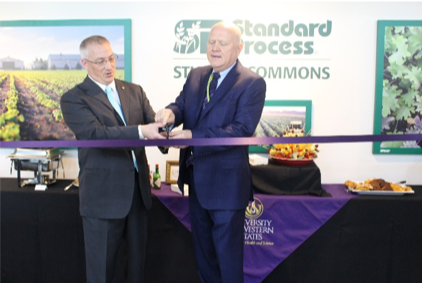 University of Western States (UWS), a leader in educating health care professionals, has opened a new student commons area on campus thanks to a generous $500,000 capital pledge from Standard Process, Inc., a manufacturer of whole food nutrient solutions.
 Standard Process feels this project is a natural fit with their company goals. The organization believes that students who learn about nutrition while they are in school will be catalysts in their practices, sparking positive lifestyle changes in their patients.