By: Caitlin Jones, 10th Quarter UWS Doctor of Chiropractic and Sports Medicine student
With everything going virtual, the American Chiropractic Association’s annual conference ENGAGE 2021 was no different. In past years, people would fly from all over the country to Washington, D.C. for a long weekend conference to meet with their representatives on Capitol Hill to advocate for the chiropractic profession and take pictures in the middle of the night at the Lincoln Memorial. Though I missed the opportunity to meet and network with chiropractic physicians and students in person, I was still able to make those meaningful connections virtually! There was a mix of pre-recorded sessions and Zoom discussions. For me, being the legislative representative for the UWS Student American Chiropractic Association (SACA) chapter, it was wonderful because I was still able to watch the cool sessions that I normally would have missed for a very long business meeting. And trust me, I really did not want to miss Dr. Howard’s session on “Treating a concussion beyond the adjustment in a chiropractic practice!” I was even able to watch it a week after the conference since we have access to the sessions for a whole month. Next on my list is to check out Dr. Ortega’s session titled “Reframe the brain to rethink the pain” – yes please!
Though we missed out on my favorite part of advocating on Capitol Hill, they still held a discussion giving everyone an update on the Chiropractic Medicare Coverage Modernization Act. We were able to gain some additional support before the new Congress took over, which means that this year we should have an easier time moving this legislation forward. I am honored to announce that I was selected to be the vice legislative chair for SACA National Executive Board (SNEB), so you will definitely hear more about our progress! The ACA is currently working on reframing the bill, but it still keeps to the core of updating Medicare from the 1972 limitations on chiropractic physicians – which still states chiropractor as “he” – that’s how outdated it is. If you want to keep up to date with what the ACA is advocating for – check out www.ACAtoday.org.
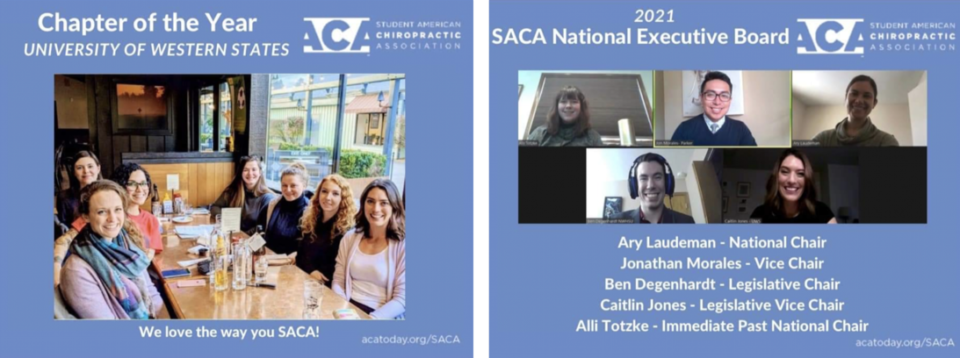
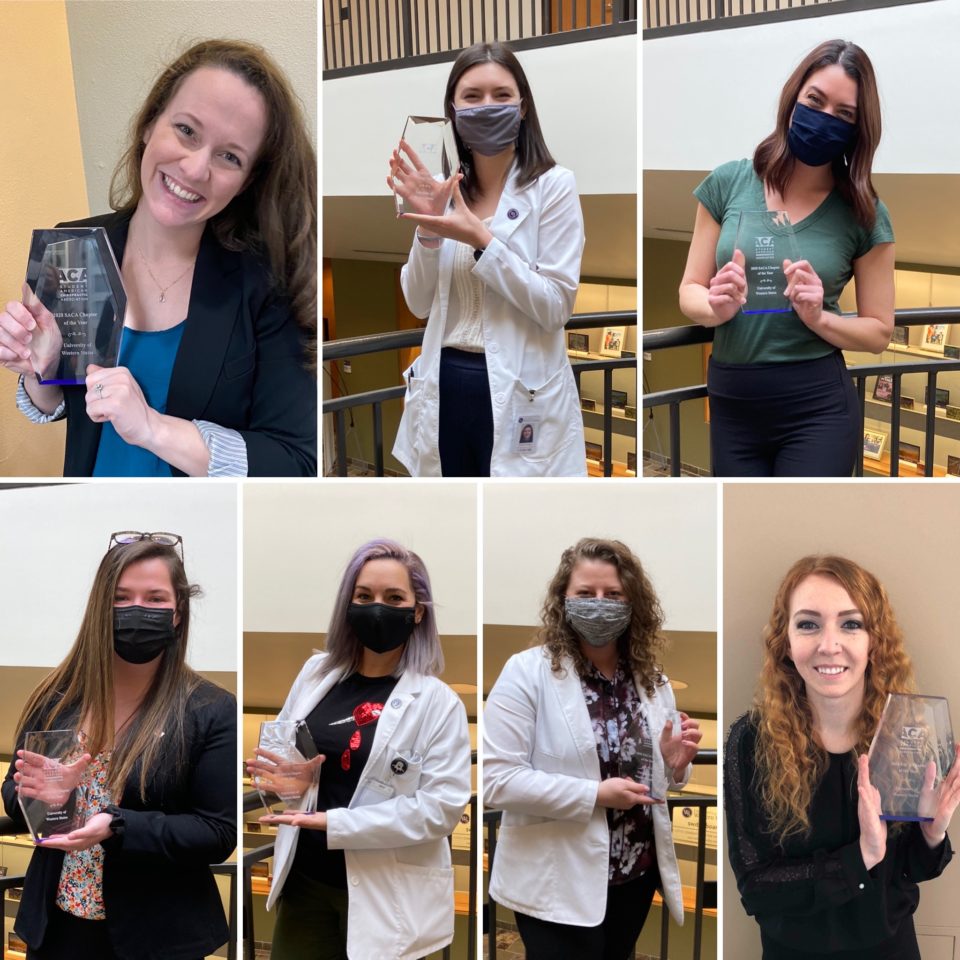
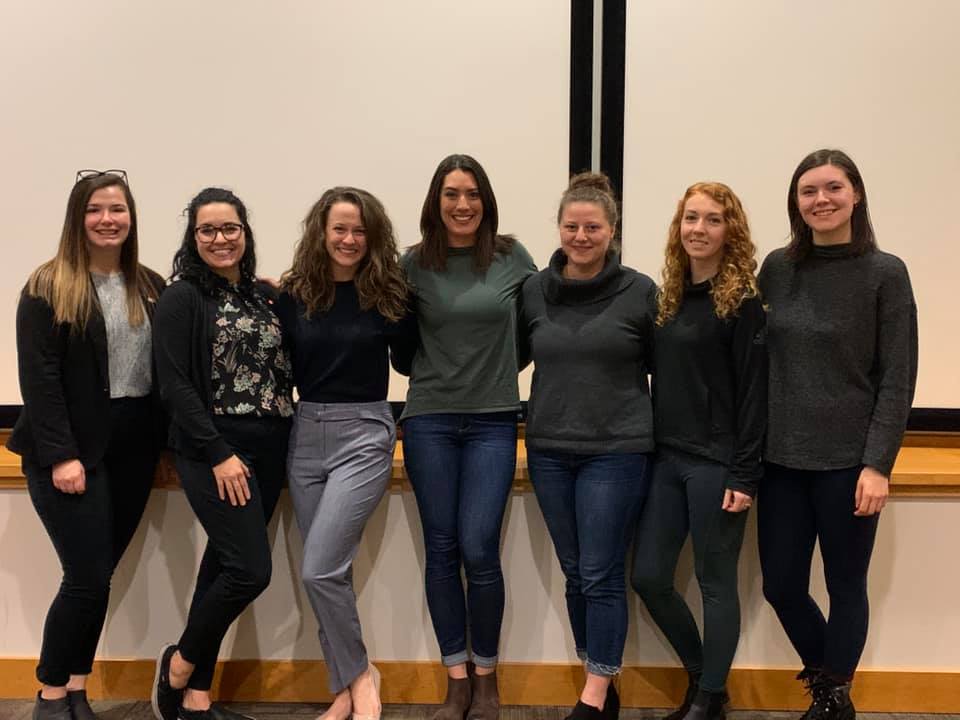
Though there were a number of amazing things about ENGAGE this year, my favorite part actually had to do with the UWS community. Though we missed out on socializing in person, eating some great food and exploring my old stomping grounds (I lived in the D.C. area for 12 years), the UWS SACA Chapter was named the 2020 SACA Chapter of the Year! I was honored to be able to work with Danielle Pettet, Leah Dash, Carlee Thomson, Kailey Koopman, Katrina Parsley and Sierra Zinke under the guidance of Dr. Gary Schultz. It was a tough year with COVID changing all of our initial goals, but our wonderful UWS community helped us by attending our events and keeping us motivated. Thank you all so much!
University of Western States (UWS) and the Institute for Functional Medicine (IFM) are pleased to announce the extension of their joint collaboration to incorporate functional medicine and functional nutrition coursework in the UWS Master of Science in human nutrition and functional medicine (HNFM) and the doctor of clinical nutrition and graduate certificate in HNFM programs.
“Our collaborative relationship with the Institute for Functional Medicine, now entering its 10th year, continues to be of great value for our HNFM students, as it provides access to educational content from IFM that is integrated into the high-quality courses developed and delivered by our expert faculty,” said Dr. Daniel Redwood, director of the HNFM program.
The UWS mission is to advance the science and art of integrated health care through excellence in education and patient care. This collaboration will enable UWS to better fulfill this mission and to prepare health professionals to address the 21st century epidemic of chronic diseases.
IFM supports the innovative UWS master’s, doctorate and graduate certificate programs through providing faculty training, faculty scholarships, and curricular materials and tools. The UWS HNFM program has been met with enthusiasm and interest among students from around the world and from a variety of backgrounds, including dietitians, nurses, physicians and several other professions.
“The partnership between UWS and IFM is one that is meaningful for both organizations,” said Dr. Alisa Bates, dean of the college of graduate studies. “We are thrilled that our faculty and students have access to their timely learning materials that enhance their learning experiences in our programs. Beyond that, we are glad to be part of a collegial community that values and encourages ongoing professional learning in functional medicine and nutrition.”
Program Overview
The HNFM program at UWS is the only accredited master’s program in functional medicine. It is 100% online and is offered as a collaborative endeavor between UWS and the IFM, the organization that founded and developed the key functional medicine concepts in use today.
Functional medicine is a science-based, patient-centered approach to achieving and maintaining excellent health through natural methods, with diet and nutrition at the forefront. Founded on a holistic view of health, our functional medicine program leverages the biochemical and genetic individuality of each patient so that practitioners can treat the whole person, not just the symptoms.
Students can choose to receive a Master of Science degree, doctor of clinical nutrition or a graduate certificate in human nutrition and functional medicine. Candidates for either program are eligible for financial aid.
The University of Western States human nutrition and functional medicine program will begin offering an online doctor of clinical nutrition degree in fall 2021
The University of Western States (UWS) human nutrition and functional medicine (HNFM) department has added a doctor of clinical nutrition (DCN) degree and is accepting applications for fall 2021.
The two-year online program includes 65 quarter credits with emphasis on developing stronger clinical skills while encompassing a broader range of conditions and therapies. Faculty of the program come from a variety of nutrition backgrounds and are highly respected in the field.
“During my years as HNFM program director, many of our master’s degree students have asked whether UWS would consider offering a clinically-focused doctoral program where they could continue their studies, deepening their knowledge of nutrition and functional medicine,” said Dr. Daniel Redwood, HNFM program director. “To have now reached the point where our DCN program is ready to admit students to its inaugural class is a moment of deep satisfaction and hope for the future of UWS and all those it serves.”
The UWS DCN program utilizes a functional medicine model, enabling students to integrate the best available scientific evidence with a comprehensive, whole-person care approach. With this knowledge, doctors of clinical nutrition can develop targeted, individualized prevention plans to help reduce the risk of chronic illness and support optimal physical, mental and emotional well-being for the patients and clients they serve.
“The doctor of clinical nutrition program is a timely addition to the programs offered by UWS,” said Dr. Alisa Bates, dean, college of graduate studies. “Adding this additional option for those in the human nutrition and functional medicine community allows us to expand our support of the professional field and the quality of clinical career provided through this lens. With faculty whose backgrounds integrate conventional medicine and nutrition-focused health care, we are eager to bring their experience to students through our curriculum and learning experiences.”
The DCN program is application-focused and supported by key clinical tools created by the Institute for Functional Medicine (IFM), the organization which founded and developed many functional medicine concepts used today. UWS and IFM have a global agreement that leads to further collaboration between the two institutions, including integration of IFM’s novel patient assessment tools.
Graduates of the UWS DCN program may seek careers as a nutritionist, solo practitioner,* health and wellness coach, educator, lecturer, author or within an integrated practice.
“The UWS DCN program will empower graduates to better address complex, challenging patient cases that require advanced functional medicine strategies to solve,” said Dr. Chris Browne, HNFM associate director. “By deepening their understanding of evidence-informed clinical nutrition practice, DCN students will learn to deliver the very best in therapeutic and preventive care. In a competitive health care marketplace, these skills and knowledge will support our graduates’ clinical and career success. As functional medicine continues to grow and develop, we envision our DCNs as leaders in the field, helping more patients and communities to gain access to the healing power of nutrition.”
The doctor of clinical nutrition degree will be a meaningful extension to the robust Master of Science degree within the College of Graduate Studies at UWS. The enhanced clinical skillset conferred by the program will enable better realization of a whole-person care approach along with an improved capacity for developing and maintaining a meaningful therapeutic relationship with the patient.
About Nutrition Licensure
*Nutrition licensure varies state-by-state and is evolving toward greater inclusivity. Check out the valuable resource, theana.org/advocate, to learn more about the particular laws in your state and keep updated on the newest initiatives affecting the nutrition world.
It is the responsibility of the individual student to understand and comply with all relevant local or jurisdictional requirements for clinical practice, which are highly variable and subject to periodic change. UWS makes no representation or guarantee that completion of UWS coursework or programs will permit an individual to obtain certification, licensure or other authorization to practice in any specific jurisdiction.
About University of Western States
University of Western States designs and delivers evidence-informed curricula that embrace the science and art of health care, establishing a solid foundation and competitive edge in preparing professionals for clinical practice. UWS is a regionally accredited, independent nonprofit institution dedicated to improving the health and well-being of society through its educational programs, research and clinical services. Founded in 1904, the institution is world-renowned for excellence in health professions education. University of Western States students pursue an array of academic degree programs: doctor of chiropractic; doctor of clinical nutrition; Master of Science in human nutrition and functional medicine; Master of Science in sports medicine; Master of Science in diagnostic imaging; Master of Science and doctor of education in sport and performance psychology; and Master of Science in clinical mental health counseling. The institution sponsors approved continuing education programs for licensed health care professionals, and provides health-care services through University of Western States Health Centers. UWS is a founding member of the Oregon Collaborative for Integrative Medicine, an organization that aims to advance integrative health care through education, research, patient care and advocacy. To learn more about University of Western States and its academic programs, visit uws.edu.
By: Caitlin Jones, 10th Quarter UWS Doctor of Chiropractic and Sports Medicine student
Welcome to Portland Q3 doctor of chiropractic (DC) students! If you aren’t already here, I hope that you are excited to make the move and to finally have some in-person classes on campus. It will definitely make being in the DC program more real when you start working on your adjusting skills in a classroom setting. You can also get treated at the campus health center by upper quarter students and get to know the clinicians that you’ll be working with when you get to clinic.
To help with the transition to campus life, here are some top things to prepare for:
Move to Portland! If you aren’t already here, be sure to reach out to admissions for advice on where to look for housing in the area. The admissions team and some of the student ambassadors have been active on your group’s Facebook page with ideas, so be sure to check them out. You can also check out UWS Switchboard to see if any of your classmates are looking for roommates too!
Explore Portland. There are some great places to explore and still remain COVID safe. There are a ton of local restaurants, hikes and neighborhoods to explore. Some of the best walkable neighborhoods are Mississippi, Alberta and the Pearl district. There are some great hikes within an hour of Portland along the Columbia River Gorge, up to Mount Hood, and out to the coast such as Cannon Beach and Astoria. There are also great outdoor spaces within Portland at Pittock Mansion, Powell Butte and Mt. Tabor. Keep an eye out for a blog coming up on great places to visit while you’re here!
How to get to campus. You have the option for either a TriMet pass to use public transportation or a parking pass. TriMet passes can be picked up at the front desk. Parking is $35 a quarter and you’ll have the first week to pick up your pass from the front desk. So, don’t worry about getting a ticket on your first day! An email will be sent out with a link to the commute declaration where you can opt for either a parking or a public transportation pass. You can find the declaration form here.
ID Badge. You’ll receive an ID badge your first day which you’ll need to wear on campus. You’ll also need it to get into the building past the front desk and into certain rooms like the second floor study room.
COVID-19 precautions. I hope you know this already, but if you are feeling sick, please stay home! If you’re feeling great, then come to campus with your mask that is to be worn over your mouth and nose at all times. There are hand sanitizing stations in every room and all over campus. Please wash and sanitize your hands frequently throughout the day. There are only two places to eat on campus: the student commons and the mindful eating space. Social distancing is also incredibly important to help stop the spread. There are many signs on campus to help remind everyone to keep some space.
Standard Process Student Commons.A great open space with a variety of seating and lots of microwaves. This is also where the Spinal Tap coffee kiosk and campus store is located. There you can grab meals, snacks and some much-needed caffeine. They also have a variety of things such as mobility tools, UWS gear, educational books and study tools and more.
Library. I know you all have spine models, but our library has a ton of resources for you! They have individual bone models including real bones and extremities. There are also books and the helpful library staff who can assist you with your research. In case you didn’t know, while you’re a student at UWS, you have access to some very expensive resources like Dynamed, Pubmed, SPORTDiscus and Natural Medicines. The staff are wizards at pointing you in the right direction for your research so be sure to utilize them!
Student Navigator.Have a question and not sure where to go? Check out the Student Navigator and it can point you in the right direction.
Student clubs. All clubs are currently meeting virtually, so you don’t even need to wait until next quarter to get involved! Joining student clubs are one of the best things you can do as a student. You meet other people and learn different techniques from upper quarter students. It really helps you to connect the things we learn and gives you enough chiropractic practice to help get you through the basic science courses you’re in. There are a ton of clubs to join so be sure to check out the list in the Weekly Vitals and follow the individual clubs Facebook and Instagram pages to get their Zoom links.
Make an appointment at the campus health center! As a student, you’re provided chiropractic care at the campus clinic. Just call 503-255-6771 to schedule an appointment. The clinic is amazing, because you get to see what you’re going to learn at UWS. You’ll make connections with upper quarter students, the clinicians you’ll be working with, and best of all, get chiropractic treatment! We have all of the physical therapy modalities like laser light therapy and therapeutic ultrasound as well as a brand-new rehab room with tons of great equipment. It’s a great experience treatment-wise as well as a learning opportunity.
We are really looking forward to having you join us on campus and if you have any questions, please reach out to admissions, post on your Facebook group page, or feel free to reach out to me at [email protected].
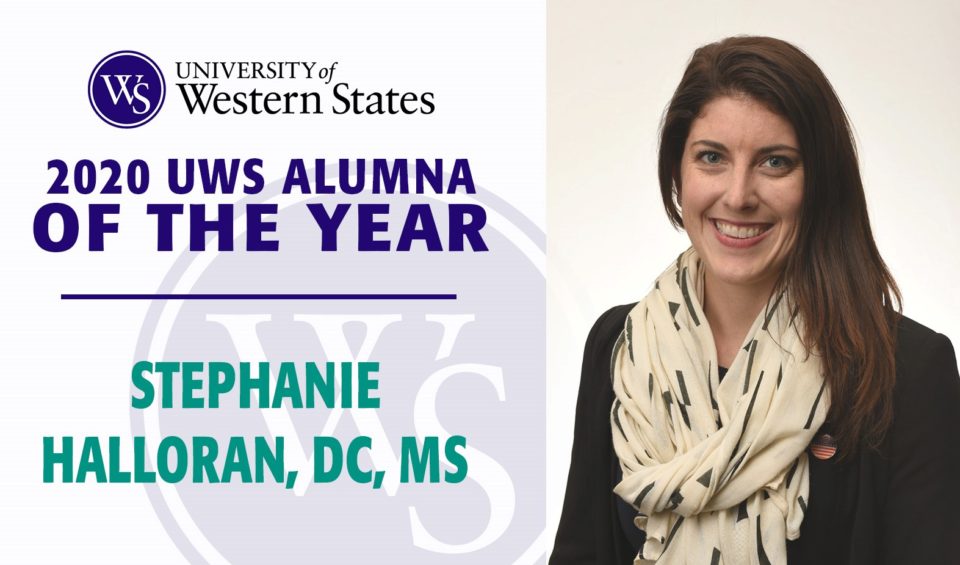
Congratulations to Dr. Stephanie Halloran, UWS doctor of chiropractic and human nutrition and functional medicine alumna for being named the 2020 UWS Alumna of the Year!
Dr. Halloran has gone on to fellowships with the Veteran’s Affairs (VA) and with Yale University. She has shown exemplary leadership serving in various professional organizations. Halloran’s colleagues have noted that she represents her profession with grace and inclusivity, opening doors for those who follow her lead.
“I am deeply humbled and honored to have been nominated and to receive this award,” said Dr. Halloran. “I am so grateful for my time spent at UWS and for the opportunities it gave me in pursuing integrated care. I look forward to continuing to work with students in pursuing the same career path that I have been so fortunate to have.”
Read more about Dr. Halloran in the upcoming UWS Annual Report, out in early April.
The University of Western States (UWS) Student American Chiropractic Association (SACA) chapter was named the 2020 SACA Chapter of the Year. The announcement was made during the 2021 American Chiropractic Association (ACA) ENGAGE conference presented virtually this year.
“We are truly honored to be recognized as the 2020 SACA Chapter of the Year,” said Danielle Pettet, past SACA president. “All SACA chapters were faced with many challenges this year, so to be selected for this award is quite the honor. Despite the online environment, we were able to boost our UWS SACA membership and host several successful fundraisers and virtual events. All of these things were made possible by our amazing SACA members and club advisor, Dr. Gary Schultz, who stuck with us during these uncertain times and kept the SACA spirit alive at UWS.”
Through the challenges faced this year due to the COVID-19 pandemic, being able to think creatively and keep engagement up with members was critical in keeping members connected. The executive board created many well-attended virtual events to help keep a sense of normalcy and community.
“Working with this SACA executive board has been the antidote to 2020,” said Dr. Schultz. “Each member of this team has embodied leadership, positivity, good humor, creativity and persistence. They truly have been an inspiration both personally and professionally. To be honest, it really was not the least bit surprising to see them awarded SACA Chapter of the Year. I am so very proud of them and the hard work they have put in this year.”
Additionally, Caitlin Jones, past UWS SACA legislative representative was one of four recipients of a scholarship from Standard Process and was also elected to the SACA National Executive Board as the legislative vice chair.
2020-2021 UWS SACA executive board: President – Danielle Pettet; Vice President – Leah Dash; Legislative Rep – Caitlin Jones; Legislative Assistant – Katrina Parsley; Treasurer – Kailey Koopman; Secretary – Sierra Zinke; Public Relations Chair – Carlee Thomson
ACA is the largest professional association in the United States representing doctors of chiropractic. ACA promotes the highest standards of ethics and patient care, contributing to the health and well-being of millions of chiropractic patients.
On behalf of its members, ACA lobbies for pro-chiropractic legislation and policies, promotes a positive public image of chiropractic, supports research, provides professional and educational opportunities for doctors of chiropractic, and offers leadership for the advancement of the profession.
Hello and welcome! To provide you the best possible experience, our site uses cookies and third-party services to remember you, understand how you use our site, and improve the quality of our communication with you. We care about our visitors and want to ensure you are informed on how we use your data. Click here to learn more. By continuing to use the University of Western States website, you agree to how we use your data to improve service and user-experience.