The Growing Demand in the Sports Medicine Field

A man exercises using an exercise machine in a gym full of various exercise machines.

The sports medicine market is growing, but why? Learn more about what’s driving the surge in demand for sports medicine professionals.

The Master of Science in Sports Medicine at the University of Western States offers online coursework coupled with hands-on laboratory exercises and practical, field-based experiences to prepare students for a professional career in sports medicine.

Why Is Sports Medicine Important?

Sports medicine jobs may include athletic trainer, strength and conditioning coach, and exercise physiology at the adolescent, high school, collegiate, or professional levels. Sports medicine can be applied to those who participate in sports as well as anyone who lives an active lifestyle.

Sports medicine professionals help active people with injury prevention, management, and rehabilitation. Professionals learn to provide quality patient care through physical and mental health techniques, whether it is soft tissue treatment or mental health communication strategies. These methods help athletes recover and maintain health to optimize their athletic performance.

Professionals in sports medicine are important because they implement injury prevention programs and assist in muscle recovery and injury rehabilitation for athletes. The M.S.  in Sports Medicine program at UWS includes Rehabilitation and Sports Performance as one of its required program courses. This online class focuses on patients’ rehabilitation and care management to enhance performance while including a brief overview of muscle functions during movement, movement patterns, and functional exams.

The use of the clinical audit process and application of learned knowledge allows our graduates to gain hands-on experience, confidence in the professional field, and practice care protocols in preparation for their role in the sports medicine field.

In conjunction with the Psychology of Athletic Injury and Rehabilitation, a required degree course, graduates will learn theoretical and psychosocial topics that address an individual’s response to injury and rehabilitation. Our sports medicine students will be able to implement appropriate performance psychology techniques to improve adherence and compliance of the athlete or performer during the struggle of recovering from injury and transitioning to return to play.

Growth in the Sports Medicine Market

The growing caution for sports injury prevention and management for all ages and at all levels of play leads to an increased demand for sports medicine professionals. The demand for sports medicine physicians increased by 2.6% on average between 2017 and 2022. As of 2022, the sports medicine market employed 133,635 people and is expected to fill 72,500 new jobs by 2029. This estimate is based on the growing awareness of sports injuries, the increase in research, and the corresponding need for injury prevention and rehabilitation programs in the growing athletic world.

  • An average of 30 million children play sports in the United States, and an average of  3.5 million injuries occur each year at adolescence.
  • The number of student-athletes competing at the National Collegiate Athletic Association (NCAA) level has increased by over 3,000 athletes in the 2017-2018 academic year compared to the year before.
  • There are 62 new teams for men and 64 new teams for women at the college level.

Sports injuries, such as concussions for example, used to go undetected due to variable presenting symptoms, lack of education around this brain injury, and the late effects of brain trauma a concussion can have. With the rise in athletic participation, there is a correlating rise in injuries, including concussions. Now, there are updated recommendations for athletic trainers for concussion management through education, assessments, and return to academics and play.

Given the importance of concussion awareness and the rise in frequency of concussions, sports medicine professionals, including athletic trainers, can benefit from UWS’s Evidence-Based Concussion Management and Care elective. This online class provides students with up-to-date evidence about sports-related concussions, analyzing various organizations’ position statements, concussion laws, and standards of care for athletes to be able to return to a place, academics, and optimal health. Should our students choose to pursue a career in sports where concussions are prevalent, the program can be customized with elective courses to provide the best preparation for their desired career.

Impact of Sports Medicine Research

Sports medicine professionals can treat any individual who is injured while being active, in sports, or in independent exercise. Therefore, the demand for sports medicine physicians has been increasing with the push of a healthy lifestyle. However, to be able to keep up with the growing number of active people and competitive athletes, research is constantly conducted and studied, providing insight on common injuries in specific sports such as the cause, potential preventative measures, and how to manage care and rehabilitation.

Following the concussion example from above, research on sports-related concussions has dramatically increased in recent years with growing awareness and precautions taken in sports like soccer and football. In addition to the concussion management course UWS offers, the elective course, Research Applications, teaches students how to utilize current research to form evidence-based conclusions in patient care. UWS graduates focus on research applications to gain a deeper understanding of the research process, preparing future sports medicine professionals for independent research to exceed professional competency in the field. Studies are constantly being published, influencing injury rehabilitation methods. Sports organization regulations and medical treatments are everchanging, adapting to the sports injury data. This is why sports medicine professionals stay updated on published research and adjust their treatment plans if necessary.

There are several hot topics in sports medicine research. The common injuries found in athletes from various athletics are constantly being studied:

Looking to Join the Sports Medicine Field?

The M.S. in Sports Medicine at UWS is a degree for individuals who already hold a a professional degree (e.g., MD, DO, DC.) and license in health care. A variety of career options are available for those with a master’s degree in sports medicine with other higher education and certifications. The growing demand for sports medicine professionals is expected to continue, opening the market to a significant amount of job openings in the future. This sports medicine market growth appears to be a steady incline for the next several years, offering career opportunities in research and clinical work. Learn more about the sports medicine degree options available at the University of Western States to get started on your career path.

UWS’ Approach to Evidence-Based Chiropractic Care

A pair of human hands press their fingers into another person's doughy back.

Last updated:

Learn about the evolution of chiropractic care, evidence-based chiropractic techniques, and typical chiropractor training.

Chiropractic science dates back to the late 19th century, with the most notable early practitioners being Daniel David “D.D.” Palmer and his son, Bartlett Joshua “B.J.” Palmer. Like all health care fields, chiropractic science has evolved with new scientific discoveries and developments over the years.

University of Western States’ origins date back to the beginnings of chiropractic science in 1904, making it the second oldest chiropractic college in the world. Here, chiropractic students learn modern chiropractic theories and techniques in addition to learning how to treat the whole patient rather than merely treating their symptoms. We blend hands-on clinical experiences from chiropractic internships, preceptorships, and working at our on-campus clinic, with practical knowledge and research. We have a strong reputation with our community in Portland, Oregon, helping our Doctor of Chiropractic students network and gain real-world experience in preparation for their licensure exams.

The Evolution of Chiropractic Science

During the emergence of chiropractic science, medical care was still at the point of bloodletting and leeches. D.D. Palmer researched alternative methods of medical care. He was the first to theorize that the nervous and human organ systems were connected and developed the method of spinal adjustments. This was the start of chiropractic science.

Today, evidence-based chiropractic techniques are used. As of 2012, 62% of U.S. adults have used complementary and alternative medicine therapies, with chiropractic care being the most prominent. While the focus for modern chiropractic care has been maintained integrative in its approach, the techniques used are grounded in evidence.

Efficacy of Chiropractic Science

Studies have shown that chiropractic care can be effective for managing back pain, neck pain, and headaches. Joint adjustments made during treatment aim to fix misalignments. When combined with standard medical care, chiropractic care reduces lower back pain more than standard medical care alone. Studies have even shown a reduced need for back surgery in patients whose first care provider was a chiropractor rather than a surgeon. Chiropractic treatments also improve chronic headaches and neck pain using spinal manipulation therapy and massage therapy.

Chiropractic Education

To become a chiropractor today, one must obtain specialized education and licensing. First, an undergraduate degree is required in a related field such as biology. Next, the candidate must earn a Doctor of Chiropractic degree. At UWS, the doctoral program takes three to four years to complete. After graduation, a candidate must obtain licensure to practice in their state. Licensure requirements vary by state, so be sure to check your state’s requirements.

UWS’ Approach to Chiropractic Education

UWS uses an innovative, patient-centered approach to teach chiropractic students how to incorporate concepts, skills, and clinical and chiropractic sciences to complete whole-person care rather than just treating a patient’s symptoms. Chiropractic students at UWS learn how to apply clinical sciences to perform patient assessments and formulate diagnoses.

Chiropractic education at UWS provides students with knowledge of spinal biomechanics, landmark palpations, spinal and pelvic anatomy, soft tissue techniques, chiropractic theories and evidence-based practices. The doctorate program requires students to complete an internship with clinical hands-on training with a preceptor. During this portion of the program, students apply their studies to real-life scenarios in which they review and refine their spinal assessment skills as well as soft tissue interpretation.

Using all their theoretical and clinical knowledge, UWS graduates are equipped to provide whole-person care, focusing on more than just symptom management. Their goal is to provide high-quality health care with proven results.

Once students are taken and pass their state’s required licensure exams and become practicing Chiropractors, they will need to meet the continuing education requirements. UWS offers online CE courses for first-year, second-year, and active chiropractors practicing in the state of Oregon.

Pursue a Career in Modern Chiropractic Care

If you are interested in pursuing a career as a chiropractor, start your journey today at the University of Western States. UWS is regionally accredited by the Northwest Commission on Colleges and Universities (NWCCU), and its Doctor of Chiropractic program is accredited by the Council on Chiropractic Education (CCE). As the second oldest chiropractic school in the world, UWS commits to preparing graduates to provide chiropractic care in a conservative, whole person, and integrated health care approach. Apply today.

The Path to Becoming a Sports Chiropractor

A blonde woman presses her hands into the back of another, prone woman.

Last updated:

Discover what sports chiropractors do, and how they differ from regular chiropractors. Learn what education is needed, the average salary, and job outlook.

Chiropractors specialize in addressing health issues concerning the musculoskeletal system, including conditions affecting bones, muscles, and joints. Sports chiropractors undergo specific training to diagnose, treat, and prevent sports-related injuries, while also aiding athletes in their rehabilitation process.

The Doctor of Chiropractic program at University of Western States prepares graduates with a systems-based, whole-person approach to health and a dedication to care that is “for the good of the patient.” Students in the program are offered an option that combines it with the M.S. in Sports Medicine program, creating a unique path toward a rewarding career as a sports chiropractor.

What Is a Sports Chiropractor?

A sports chiropractor aids athletes in maximizing performance, preventing injuries, and expediting recovery from injuries. Chiropractic care offers a medication-free approach to enhance overall health, promoting efficient bodily function and healing. Approximately 90% of professional and Olympic athletes reportedly integrate chiropractic care into their training and recovery routines.

What Type of Education Is Required for a Sports Chiropractor?

A sports medicine chiropractor career typically requires completing a minimum of three years of undergraduate education. It’s advisable to pursue degrees like human biology, exercise science, or kinesiology, which have a strong focus on biological sciences.

Register for a Doctor of Chiropractic degree program, which typically takes 3 to 5 years to finish the 4,200 instructional hours. The chiropractic program should be nationally accredited, spanning over four years, and include hands-on training through laboratory sessions and clinical internships.

For post-graduate education to achieve the sports level of chiropractic care and specialization, you need to acquire further education and pass the required examinations.

This may vary by employment industry and region:

Students in the University of Western States chiropractic program must complete the standardized clinical skills assessment (CSA) which evaluates students’ attainment of clinical competencies.

  • First eligibility to sit for NBCE Part I occurs in correlation with completing Q5.
  • First eligibility to sit for NBCE Part II occurs in correlation with completing Q9.
  • First eligibility to sit for NBCE Part III occurs in correlation with completing Q9. Also requires successful completion of NBCE Part I.
  • First eligibility to sit for NBCE Part IV occurs in correlation with completing Q10 and requires successful completion of NBCE Part I.

How to Pursue Sports Chiropractic Care With UWS

The M.S. in Sports Medicine at UWS is an excellent companion to the Doctor of Chiropractic program to provide specialized learning in sports-related areas and practical training. It better equips chiropractors with the knowledge to assist athletes’ unique health needs.

The Doctor of Chiropractic degree program at University of Western States is awarded programmatic accreditation by the Council on Chiropractic Education (CCE). UWS provides a route to combine the M.S. in Sports Medicine with the Doctor of Chiropractic program with strong values in integrative health to better prepare students for career opportunities in sports injury chiropractic care.

UWS 2025 Faculty Members of the Year

A banner image bearing University of Western States branding and brand colors reads, "UWS Faculty of the Year."

Join us in congratulating the recipients of the 2025 UWS Faculty Member of the Year award: Christine Major, DC, from the UWS college of chiropractic and Ron Watson, DC, from the UWS college of graduate studies.

Christine Major, DC

 “Dr. Christine Major is a dynamic educator who is student centered and always ready to represent the university through participation in committees, events, research and so much more,” says UWS Provost Dana Sims, Ph.D. “On behalf of the university, I congratulate Dr. Major on this peer recognition of her expertise and constant quest for excellence.”

“I am honored and humbled to receive the Faculty Member of the Year Award,” Dr. Major says. “This recognition is a reflection not just of my work, but of the support I’ve received from colleagues, students, and the entire UWS community. It motivates me to continue striving for excellence in teaching. I’m grateful for the opportunity to contribute to the growth of our students and to be part of such a collaborative and inspiring environment.”

Ronald Watson, DC

“Dr. Ron Watson exemplifies student focused through his work with students,” says Dr. Sims. “His students turn to him for robust and meaningful answers to difficult questions. On behalf of the university, I congratulate Dr. Watson on this peer recognition of his outstanding student focused approach.”

Says Dr. Watson, “I’m honored to receive this year’s Faculty of the Year award. It’s deeply meaningful to me and serves as a reminder of how fortunate I am to be part of such a supportive environment at UWS. I owe a great deal of thanks to the Human Nutrition and Functional Medicine program directors, Drs. Browne and Redwood, whose leadership and encouragement have been instrumental throughout my time here.  I also want to express my gratitude to the students, who continually inspire me with their dedication, curiosity, and willingness to engage.”

The Faculty Member of the Year award was developed to recognize faculty member contributions and successes based on nominations from each UWS college. Dr. Major and Dr. Watson were nominated by their peers for their demonstration of the UWS core value of student-focus.

Why Canadian Students Are Choosing US Chiropractic Schools for Advanced Training

The Doctor of Chiropractic program at UWS prepares Canadian students to meet the growing demand for chiropractic care back home.

Chiropractic care has seen a surge in popularity as more patients turn to preventative treatments. The global demand for chiropractic physicians continues to grow, with the field now valued at $20.6 billion. Meanwhile, Doctor of Chiropractic (DC) programs in the U.S. have gained international attention, particularly from Canadian students.

In this article, we will examine the rising demand for chiropractic care and how it is attracting Canadian students to pursue chiropractic studies in the U.S.

The Preventative Power of Chiropractic Care

There is a common misconception that chiropractic care is limited to spinal adjustments, but it’s so much more than that.

Chiropractic care is a whole person approach to health that emphasizes the diagnosis, treatment, and prevention of disorders related to the musculoskeletal and nervous systems—particularly those affecting the spine. Chiropractic physicians focus on spinal alignment and use various techniques to enhance overall well-being.

Chiropractic care plays a critical role as a primary preventative measure for spinal pain and musculoskeletal disorders. By addressing misalignments and musculoskeletal dysfunctions early, patients can often avoid more aggressive treatments such as opioid medications or invasive surgeries. Studies show that patients receiving chiropractic care are 60% less likely to require hospital treatment for spinal conditions, highlighting the preventative benefits of this approach.

Additionally, chiropractic care tends to be more affordable than other medical interventions. The effectiveness of chiropractic care in reducing the need for more expensive treatments—such as prescription medications, deep-tissue massage, or physical therapy—subsequently lowers the overall health care costs for patients. Chiropractic care is not only a safer alternative but also a cost-effective way to manage and prevent pain, making it an accessible option for many seeking long-term relief from musculoskeletal issues.

A Comparison of US and Canadian Chiropractic Care

The chiropractic profession has deep roots in both the United States and Canada. Its origins trace back to Daniel David Palmer, who was born in Ontario, Canada, and later moved to Iowa, where he founded the practice of chiropractic in 1895. This groundbreaking work laid the foundation for the profession, which has since flourished on both sides of the border.

Despite these common roots, there are significant differences in how chiropractic care is delivered, regulated, and integrated into the health care systems of the U.S. and Canada. The differences in accessibility, education, and integration have created unique challenges and opportunities for the chiropractic field in both countries.

Why US Patients Have Greater Access to Care

In the U.S., chiropractic care is widely embraced, with more than 35 million Americans seeking treatment annually. This high level of demand reflects the broad acceptance of chiropractic services as a mainstream option for addressing musculoskeletal issues, pain management, and overall wellness.

The strong utilization of chiropractic services is supported by a substantial workforce of approximately 70,000 licensed DCs across the country. This large pool of practitioners ensures that chiropractic care is readily available in most regions, allowing patients to easily access services.

In contrast, while chiropractic care is valued in Canada, there are only an estimated 9,000 licensed DCs. The smaller number of practitioners limits access to chiropractic services, particularly in rural areas.

UWS helps bridge the gap in Canada’s demand for DCs by equipping students with evidence-based training. Some Canadian licensed alumni then return to Canada to bring advanced skills and a whole person approach to health care, enhancing care in their communities.

How Chiropractic Training Differs

Including the University of Western States, the U.S. has 18 Doctor of Chiropractic degree programs (DCP) that are accredited by the Council on Chiropractic Education. UWS is the second oldest chiropractic school in the world, opening its doors in 1904, just a few years after the practice’s founding.

Though tuition for DC programs is lower in Canada, the options are very slim; currently, there are only two DCPs.

Additionally, specialized course offerings are more advanced in the U.S., giving students an edge in their careers. Here at UWS, several specialized master’s programs can be added concurrently with the DCP. Check out the following programs to further enhance skills in your chiropractic career:

To ease the tuition curve, UWS offers a DC scholarship for Canadian students that is automatically applied when students maintain a minimum 2.5 cumulative GPA. Learn more about UWS resources for Canadian students.

Professional Autonomy in the US and Canada

While chiropractic care is well-respected in both countries, there are notable differences in the scope of practice and perception.

One primary nuance when it comes to chiropractic care: Chiropractic physicians in the U.S. are afforded a high level of autonomy and are often more integrated into the health care system. For example, U.S. chiropractic physicians can order advanced diagnostic tests—such as MRIs, CTs, and blood tests—and can refer patients to orthopedic surgeons when necessary. The ability to utilize a wider array of diagnostic tools enhances the role of chiropractic physicians and can improve patient outcomes.

In Canada, chiropractic physicians face more restrictions in terms of diagnostic capabilities. They are authorized to order radiographs (X-rays) but not MRIs or CT scans. This limitation has led some Canadian chiropractic physicians to refer patients to the U.S. for quicker access to diagnostic imaging. Anthony Lombardi, MD, shared with The American Chiropractor: “My practice is located 45 miles from the U.S. border, so I refer my patients to Buffalo to have the diagnostic imaging done so they do not have long wait times in Canada.”

The ability to order additional diagnostic tests for patients is an essential tool for chiropractic physicians to address whole person health—an initiative championed by UWS.

UWS Prepares Students to Serve All Communities

As an integrated health sciences university, UWS champions the motto “For the good of the patient” with a strong focus on whole person health. The university’s diverse student body of more than 1,000 includes individuals from various backgrounds, including a significant Canadian population.

As a provider of integrated health education, students learn to integrate different aspects of health care, emphasizing a comprehensive approach to patient well-being. UWS ensures students become trusted chiropractic leaders who are prepared to care for every patient’s unique needs and address the needs through integrating all fields of health care.

Many UWS alumni carry the UWS approach beyond Portland. “I hope to move to the west coast of Canada and participate in an associateship where I can further refine my skillset and gain experience with a diverse population,” says Jasmine Cheema, DC, graduate of UWS. “Eventually, I would like to have my own practice where I plan on working with elderly individuals and can cater treatment plans to their specific needs.”

The UWS Doctor of Chiropractic program is designed to meet the academic requirements for licensure the U.S. and Canada, providing graduates with a wide range of professional opportunities.

Explore the UWS Doctor of Chiropractic program and make an impact globally. 

CapU and The Community Solution Sign Memorandum to Enrich Chiropractic Learning Opportunities

Capilano University (CapU) has entered into a Memorandum of Understanding (MoU) with The Community Solution Education System that formalizes a pathway for CapU kinesiology students to enter the Doctor of Chiropractic program at University of Western States (UWS).

“I am thrilled with this new partnership, which signals that Capilano University’s Bachelor of Kinesiology prepares students to successfully enter health-related doctoral programs such as the chiropractic doctoral program at UWS,” said Caroline Dépatie, dean, Faculty of Global & Community Studies at Capilano University.

The MoU helps establish a pathway for undergraduates to further their studies in chiropractic health care.

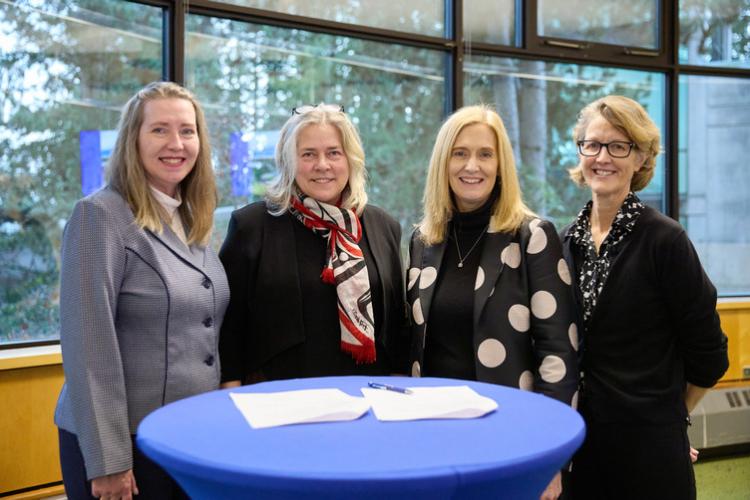
Barbara Davis-Leigh, vice president, global engagement, The Community Solution Education System, Caroline Dépatie, dean, Global & Community Studies, Capilano University, Dana Sims, provost, University of Western States (UWS), and Martha Kaeser, dean, College of Chiropractic, UWS, sign a memorandum of understanding Dec. 16, 2024, that formalizes a pathway for CapU kinesiology students to enter the Doctor of Chiropractic program at UWS. (photo Capilano University)

“We are proud to collaborate with CapU to create new pathways for students to pursue careers in chiropractic health care,” said Nathan Long, president of UWS. “This partnership reflects our shared commitment to advancing whole-person health education and preparing the next generation of health-care professionals to make a meaningful impact in their communities. It’s also a clear example of the value our university receives as a proud member of The Community Solution, allowing us to expand opportunities for students and foster more collaboration across institutions.”

The agreement also outlines additional opportunities for collaboration, including supporting the exchange of materials, faculty and students, and professional development and research activities. Additionally, CapU kinesiology students enrolling in the chiropractic doctoral program at UWS are eligible to receive transfer credits for four courses (11.5 credits) and can complete some practicums in Canada.

“This partnership exemplifies The Community Solution’s commitment to building strong relationships that benefit both students and institutions,” said Michael Horowitz, chancellor of The Community Solution. “By collaborating with forward-thinking universities like CapU, we’re expanding access to high-quality education and advancing students’ professional goals. We look forward to creating similar partnerships throughout our System.”

Applications are now open for the four-year Bachelor of Kinesiology (BKin) program at CapU, which is expected to graduate 40 students this year. The degree focuses on developing students’ knowledge of how to assess, design and implement programs to facilitate health behaviour change, leading to improved lifestyles and prevention of chronic diseases. A two-year diploma program in kinesiology is offered exclusively at CapU’s new Squamish campus.

The UWS Doctor of Chiropractic (DC) program is a rigorous, 12-quarter doctoral program that is designed to be completed in three years. Students learn from experienced faculty with practice experience and clinical training at the UWS campus in Portland, Ore. The UWS DC program qualifies graduates with the coursework required for licensure in the U.S. and Canada.

“Our vision: Inspired by Imagination is grounded in co-creating a distinct university experience,” Dépatie says. “A sincere thank you to the team at The Community Solution and to our School of Kinesiology for making this partnership happen for our students and graduates.”

First UWS Chiropractic Week Builds Community

UWS Sports Medicine students at welcome table

Chiropractic Week brought together faculty, students, alumni, and practitioners to learn from each other and grow the profession.

University of Western States opened its fall quarter with the inaugural Chiropractic Week. The brainchild of Martha Kaeser, DC, dean of the College of Chiropractic, the event highlighted current aspects of theory and practice in the profession. The result was a series of activities that brought together experienced professionals in the field, including alumni, to provide students with a window into their professional futures.

Scheduled during the student lunch hours, the weeklong event featured food, presentations, information tables for student clubs and organizations, hands-on demonstrations, guest speakers, all culminating with a white coat ceremony on Friday.

A Homecoming for Some

Opening the week was a panel discussion by long-time doctors of chiropractic Daniel Mutter, DC, and UWS alumnus Jason Young, DC. Dr. Young saw the panel format as an opportunity to inspire students and future chiropractors about the journey that they have embarked on.

“It immediately sparked memories of all the things I was excited and insecure about when I was sitting in their position,” Dr. Young says. In the weeks leading up to the event, he reflected on how far the profession has come in the 17 years he has been practicing. “UWS has had no small part in the recent evolution of chiropractic because of the people working in the institution as well as those who have been educated there.”

Students speaking at Asian Student Association table

Faculty member Rebecca Bell, DC, who gave a hands-on presentation during the week, says her students enjoyed the event for the sense of community it fostered.

“They especially enjoyed the Community Day activities and the chance to hear about subjects they get less exposure to in the regular curriculum,” Dr. Bell says.

A Glimpse of Future Opportunities

For UWS student Colin Paradis, the week’s activities served two purposes.

“One, it exposed me to several doctors and their perspective on practice, which helped guide me in how I see myself practicing in the future,” Paradis says. “Two, I was able to learn many practical chiropractic skills regarding assessment, adjustments, and soft tissue treatments from highly skilled professionals.”

Paradis, one of several Canadian students at UWS, found the presentation by Board of Trustees member Jennifer Forbes, DC, who lives and practices in British Columbia, to be particularly informative.

Students at ACA table

“Her presentation, which was very candid and straightforward, shifted my original opinion of initially practicing in the U.S. after graduation and then moving back to Canada,” Paradis says.

Jake Salaz, DC, concluded the week with a presentation on how to create a comprehensive exam that establishes a framework for world-class treatment and management of the patient.

Says Dr. Salaz, “I was hoping to inspire the students to understand that the school gives them a great initial framework, and that by layering in other world-renowned techniques into that framework, they would be able to elevate their understanding of the functional deficits in the patients they are working with.”

The Privilege and Responsibility of the White Coat

Chiropractic Week coincided with a white coat ceremony at which students in their eighth quarter were formally recognized and inducted into the Connected Whole Health clinic to begin patient care.

Nikita Vizniak, DC, who addressed the students, says, “I was honored to be part of the white coat ceremony, which marks such a significant milestone in the lives of these students. My remarks focused on encouraging graduates to embrace their new roles with confidence and humility, highlighting the importance of evidence-informed, patient-centered care, as well as to emphasize the power of empathy in clinical practice.”

The consensus among the participants both at UWS and in the community was that Chiropractic Week exceeded expectations in attracting students, practitioners, and faculty.

“The event provided us with some great practical strategies for patient assessment and treatment, and it was inspiring to hear from individuals who are genuinely passionate about their work,” student Alexandra Nelson says.

Dr. Young recognizes the importance of alumni providing guidance to current students. “The future of the profession is only as bright as our commitment to mentorship, cooperation, and collaboration,” he says.


For more information on programs at University of Western States, please fill out the form below.

120 Years of Refining and Reimagining Whole Person Health

A group of Western States College students stand for a group photo in the early 20th century behind overlay text reading "Celebrating 120 Years."

Since its earliest days, University of Western States has pioneered a vision of health care that situates the patient in their environment and seeks to heal from within.

As far back as the late Middle Ages, as superstition and primitive practice gave way to more practical and proven methods of patient care, healers understood that wellness depends on a range of factors, including mental, physical, and spiritual health and is influenced by one’s environment. Modern Western medicine has largely forgotten these lessons, focusing instead on treating symptoms of patients. Beginning at the dawn of the last century, however, there have been some institutions focused on an integrated approach to the general wellness of the individual, including finding balance in our physical selves, learning how nature can heal us, and understanding what to eat to prevent illness instead of making it go away.

Since its opening 120 years ago, treating the whole person and not just their symptoms has been the mindset at University of Western States, first in its chiropractic instruction, then naturopathy, and later a range of programs, all of them committed to addressing the patient within their larger world.  The concept of whole health isn’t new, but the university has always been at the forefront of the movement.

“Whole health to me is truly that,” says alumna Montserrat Andreys, DC, who runs a community-based practice in Portland. “It’s treating the entirety of the person, their household, the community that they live in as well as the spiritual, emotional and physical self.”

SUBHED: 120 Years of Evolution

As the early doctors of chiropractic moved west along the with Western expansion of the late 1800s, they found remote communities in need of a range of services. In contrast with the rising medical beliefs of the day, commonly called “germ theory,” which held that diseases were caused by germs and needed to be treated with medicines approved by the fledging Food and Drug Administration, the chiropractors of the West were attuned to the physical and environmental realities of their patients.

Drs. John E. and Eva Marsh, founders of University of Western States (originally named the Marsh School and Cure) were building upon the work of chiropractic pioneers back East. One of the leading reasons why the university has been a leader in whole health in Portland is that the Oregon legislature passed the Chiropractic Practice Act in 1915. This allowed chiropractors and naturopaths a “broad scope” of care that included a wider range of treatment than was permitted in most other states. This law served both the residents of the Pacific Northwest, where doctors were rare, as well as the chiropractic and naturopathic practitioners alike as they were able to apply their theories of general wellness to the public at large and pioneer techniques that would later gain broad acceptance.

“Many years ago, there was a lack of primary care physicians,” says University of Western States Board of Trustees member and adjunct professor Leo Romero, DC, “so the chiropractors served a role in OB-GYN work, minor surgery, and primary care.”

Training and intellectual rigor were core elements of the intuition’s operating philosophy from its earliest days. By 1919, the school’s curriculum required 3,400 hours of instruction, 1,000 more than the state required, and what was at that point called Western States College became the first chiropractic college to offer a four-year degree.

By the 1980s, the college had established a reputation for its contributions to the community and its groundbreaking theories of practice. In 1983, the college was awarded a $250,000 grant for a summer program to support Native American students and in 1993, the institution received the first ever federally funded grant awarded to a chiropractic college. The study assessed allopathic and chiropractic approaches to back pain.

This success in the research sphere reflects how University of Western States has long championed an evidence-informed approach, meaning practicing according to research and treatment methods based on results. Stanley Ewald, DC, MPH, associate dean of the College of Chiropractic, describes a “triad of evidence,” which includes evidence found in the literature, the evidence learned from the patients themselves in terms of what has worked for them, and the evidence of the practitioner in their experience of what makes for successful practice.

SUBHED: Serving Portland Where the Need Is Greatest

As a result of providing this range of integrated care, the university’s roots run deep in the city. Seeing how the region and its population have grown and changed over time has allowed the faculty and alumni to understand clearly the needs of the residents and develop means of addressing them. This has led University of Western States to establish and build on a tradition of care within communities where it was needed most. Nowhere is this bond more apparent than in the nationwide community-based clinical education program. Students can provide clinical care where it is needed in a range of setting depending on where they are based across the country.

By providing integrated care to at-risk populations, representatives of University of Western States hope to do more than putting a Band-Aid on systemic problems. One of the groups benefitting most from this program are unhoused veterans. “We’ve also built a really strong relationship with Veterans Affairs,” Dr. Ewald says. “We have quite a few affiliations across the United States so that students can complete their clinical education for six months at those VA locations.”

In the Portland program, a clinician and one or two interns from University of Western States travel to clinics in the area once or twice a week and provide care primarily for uninsured people and underserved populations. The services provided are tailored to the organization. For example, at Cascadia Health’s behavioral health centers, clinicians provide individuals in addiction recovery with training in drug-free pain management. Additionally, the university partners with groups, including Compassion Connect, Community Services Network, and Islamic Social Services of Oregon State that stage pop-up health clinics in houses of worship and community centers and provide a range of services such as chiropractic, dental, and medical care to the uninsured.

SUBHED: The Current State of Whole Health

Martha Kaeser, DC, M.Ed., dean of the College of Chiropractic says, “We recognize all of those who came before us—our history is what makes us—but we also recognize that we need to evolve and change to meet the health care needs of the patient of today.”

This commitment applies not just to the colleges of Chiropractic and Naturopathic but also to the full range of programs at University of Western States, including Human Nutrition and Functional Medicine and Sports Medicine. All share a commitment to an evidenced-informed, student-centered instruction that advances theories of practice based on a whole-health philosophy. The objective is to treat the patient’s mental, physical, and spiritual well-being, and what is taught to the students represents the culmination of decades of research, teaching theory, and practice.

A 2008 Wellmark Blue Cross and Blue Shield Physical Medicine Pilot on Quality study, a one-year pilot program designed to measure patient quality of care, suggests “significant clinical outcomes and health care cost reductions attributable to the use of chiropractic and other physical medicine services.”

The effectiveness of complementary forms of medicine is a leading reason why the philosophy is expected to grow in popularity exponentially over the next decade, and the university is already training the next generation of clinicians to meet this demand.

Marcia Prenguber, ND, FABNO, dean of the College of Naturopathic Medicine, believes the university’s focus on integrated forms of health care and its commitment to serving the community is well-suited to the students the institution attracts, and the university is attentive to those students’ changing needs. This results in graduates who are well-positioned to serve their communities. “You don’t move forward without tuning into what the needs are,” she says, “and I think we’ve done a great job of balancing student needs and the community needs. We’re addressing a patient’s needs, using the least toxic, least harmful approach. We bring them back to health and restore them through the mind, body, and spirit.”

According to Christopher Browne, DC, program director of Human Nutrition and Functional Medicine and Doctor of Clinical Nutrition, the objective of a whole health approach is to improve health care, specifically understanding the individual needs and issues that a patient exhibits and crafting a more personalized care plan for everyone. “We look at how can we use nutrition focused interventions to improve the health of human beings; that is the lens through which we view all of the clinical work that we do,” he says.

The integrative approach to health care is on display in the university’s Sports Medicine program, which brings together a wide variety of teaching clinicians and practitioners, including certified athletic trainers, doctors of osteopathic medicine, and doctors of chiropractic. This comprehensive, team-focused approach is appropriate for the field of sports medicine, but it’s also emblematic of the philosophy that guides the colleges and programs at University of Western States today.

Also essential is hands-on experience, a core tenet of a University of Western States education, given that many graduates of the program will be working the sidelines during practice and on game day and assisting in rehabilitation. “For individuals looking to go into the sports medicine field, our program here at University of Western States allows them to gain a deeper understanding of their clinical knowledge and skills than they would develop through their first professional degree,” program director Brent Marshall, Ed.D., says.

SUBHED: University of Western States Looks to the Future

Patrick Battaglia, DC, assistant vice president of Community-Based Clinical Education, sees this tradition of chiropractors playing a growing role as providers of whole person health. “Health care is evolving into a system that’s patient-centered, consumer-oriented, and team-based,” he says. “I think the demand for this type of whole person conservative nondrug type of therapy has never been higher,” he says.

A student or patient who walked through the doors of the Marsh School and Cure at SW 5th and Hall Street would have found a college that looks very different than the University of Western States does today. Yet the foundation of integrated care was already in place as the first graduates of the program fanned out across a frontier where practitioners were almost nonexistent, and the vision of whole health was there from the beginning at an institution that has endured, thrives, and looks to the future.

“It’s because of that group of individuals that have dedicated so many years that now we can look back and say, wow, 120 years,” Dr. Romero says. “It’s an honorable thing to have reached 120 years. I look forward to 120 more.”

Dr. Stephanie Fryer: Coaching With Purpose

Dr. Stephanie Fryer smiles for the camera in an official portrait photo inset on a banner bearing text.

Stephanie Fryer, Ed.D., says whole health care is the ‘undercurrent of my whole experience.’

Having graduated from UWS in 2023, Stephanie Fryer, Ed.D., found a new role in February when USRowing hired her to be its new learning and development associate. Now Dr. Fryer is living the vision she saw when she applied to UWS: innovating how coaches work with athletes by applying a whole-health philosophy to coaching.

Despite learning remotely through one of UWS’ online programs, Dr. Fryer didn’t hesitate to network in physical space. After meeting and talking with UWS professors at the annual Association for Applied Sport Psychology (AASP) conference, she changed course—literally. Having started in the Sport and Performance Psychology Ed.D. program, she decided after the conference that the Ed.D. in Sport and Performance Psychology with Clinical Mental Health Counseling (CMHC) Specialization was a better fit.

Dr. Fryer says she pivoted to this program “partially because it opens up so many doors professionally,” but also due to the inspiration of UWS professor Michelle Rose, Ph.D., director and clinical coordinator of CMHC.

“I was so impressed with Dr. Rose’s teaching and leadership,” Dr. Fryer says. “Dr. Rose had such a clear vision. You feel confident and supported with a leader like that.”

Given her passion for coaching, it’s no surprise Dr. Fryer has an extensive background as an athlete. She spent 16 years as a gymnast. Then, in college, she took up pole vaulting, a sport she pursued for six years after college until an injury ended that part of her career.  A bachelor’s degree in psychology and a master’s degree in sports science paved the way for her interest in coaching education.

Just as whole health in medicine means treating a patient as a whole person instead of a collection of body parts or a suite of symptoms, Dr. Fryer says coaching education is about teaching coaches how to treat athletes as people, not just vessels of athletic ability.

“Future teachers learn how to teach, but athletes who become coaches aren’t taught how to coach,” Dr. Fryer says. “So they teach rules and techniques, and they often focus only on the goals, the outcomes. As a result, athletes are often treated as expendable, to be replaced when they no longer perform. This mindset damages not only athletes’ performance but their mental health.”

It was already Dr. Fryer’s goal when she started at UWS to change coach development. She says, “Throughout my experience, I was purposeful in talking to my professors, using my role as a student to reach out to researchers and professionals in the field about coach education. It was an undercurrent of my whole experience.”

In her new role with the Learning & Development department at USRowing, which houses coaching education and development, Dr. Fryer is helping to change the paradigm.

For example, Dr. Fryer worked on USRowing’s newly retooled Level 1 certification for rowing coaches. “I got to help revamp it and make sure it doesn’t just teach coaches the technical aspects of the sport but also how to be good humans, how to coach the human and not just the athlete,” she says.

For now, Dr. Fryer is happy to be working in the field, pursuing her passion. “I’m on the ground doing a training camp for some of our U19 athletes,” she says, referring to trainees under 19 years old. “I’m doing mental performance with them several times a week. I get to work with the coaches as well, because we’re also developing our coaches through this camp process. I’m excited to get to do that more in the future and work more directly with coaches and athletes.”