Ordnance Brewing Donates Proceeds to UWS

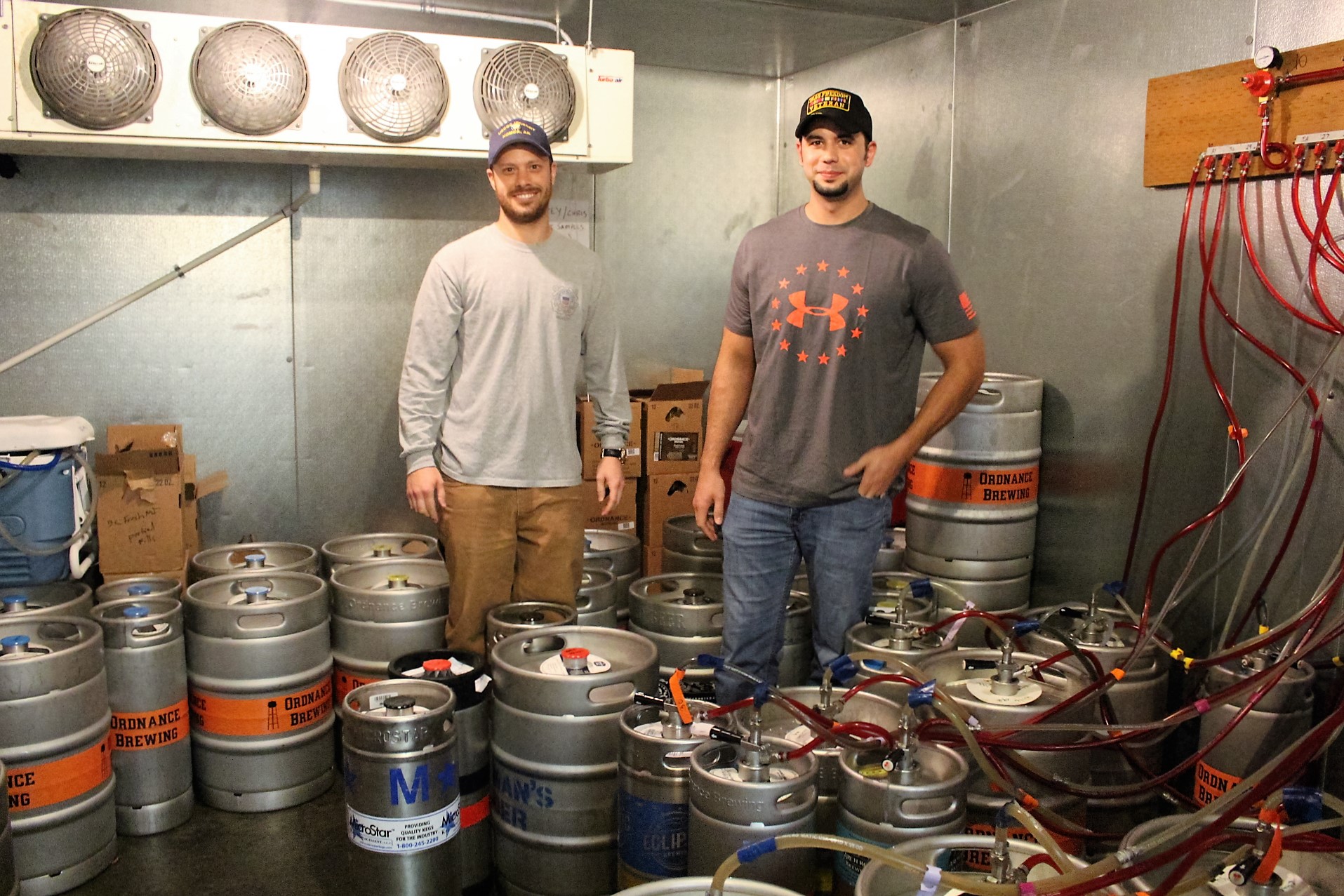
Ordnance Brewing, a tap house, located just off of I-5 in Wilsonville, Oregon, is a brightly-lit place with barrels for seats and food truck menus for happy hour. Behind the bar is the refrigerator-cold room that houses all of the untapped beer waiting to be sipped. It is in this room where two veterans tapped HonoRED Ale for the first time, a new beer they brewed together as a special for Veterans Day.

ordnance brewing honoRED
Ordnance Brewing Taproom in Wilsonville celebrate Veterans Day with HonoRED Ale. Proceeds benefit University of Western States.

On Veterans Day, November 11, Ordnance Brewing donated all proceeds from HonoRED Ale to University of Western States (UWS) and the Northwest Center for Lifestyle and Functional Medicine (NWCLFM). The tap house continues to donate all the proceeds to UWS, stopping when the tap runs dry. Ordnance chose to give to UWS because of the free chiropractic and massage services the university provides to community veterans in partnership with the Returning Veterans Project. UWS is an integrated health care university in Northeast Portland. The NWCLFM, is a virtual center at UWS, with a vision is to promote healthy behaviors and positive lifestyle changes in order to achieve optimal quality of life for community members through service, education and research.

The veteran that nominated UWS for the donations and helped brew the HonoRED Ale was Chris David Payne. Though he has never been to UWS for the free chiropractic and massage services, he does recognize the importance of providing care for veterans saying, “I have asked for help in the past when I was struggling. I can’t even put into words how good it feels when someone has your back when you need it. I know that UWS does that and that’s why I picked you guys.”

The veteran population in the United States are often some of the most underserved people in the country, despite having served to protect the day-to-day freedoms many take for granted. To help combat the health care services deficit for veterans, the Returning Veterans Project (RVP) partners with organizations throughout Oregon to provide free health and wellness services to post 9/11 war zone veterans or those who took part in Operation Iraqi Freedom, the Iraq War and Operation Enduring Freedom or the Afghanistan War. RVP is one of the few veteran-centered health service providers that incorporates holistic and integrative approach to treating the physical and mental scars of war.

In May 2015, UWS launched a partnership with the RVP and became the largest provider of health services in the partnership for the 28-hours per week of free chiropractic and massage services. University of Western States has a mission to serve and by partnering with the Returning Veterans Project, the university is able to help Portland-area community veterans that need it most.

Read more about the event here.

ordnance brewing
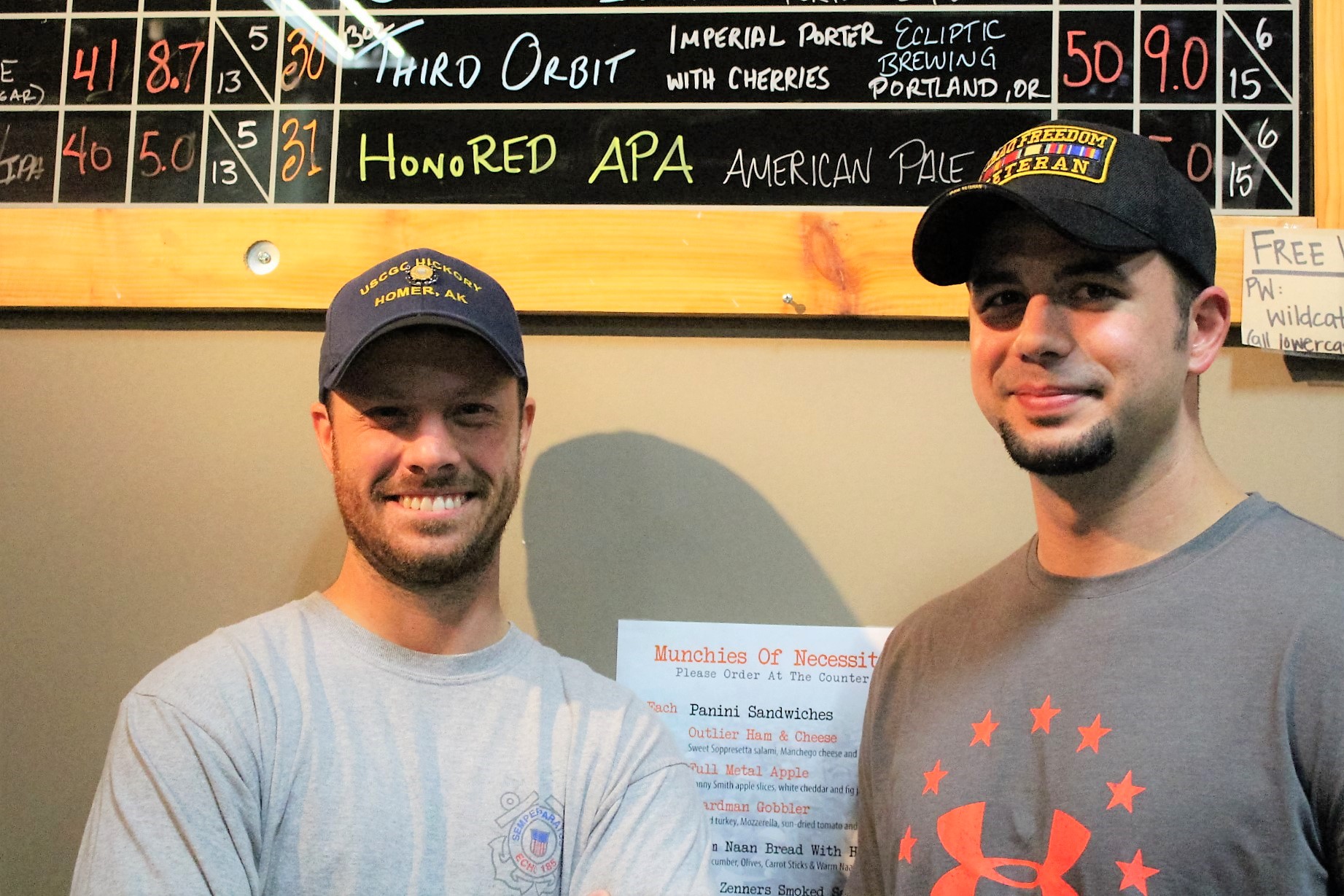
Veterans Matt Eide, left, and Allen Raanes served up HonoRED Ale at the Ordnance Brewing Taproom in Wilsonville.

What Inspired Me to Study Chiropractic

Since I was very young, I knew I wanted my career to be connected to helping others achieve wellness. I wasn’t sure how this was going to happen, I just knew I wanted to work to get people healthy. I am excited that I have the opportunity to do so at University of Western States!

From an early age, I was interested in the human body. My grandpa started a family practice clinic in a small town in central Oregon, and I will always remember how he helped people by providing a meaningful service to those in his community. Observing these interactions while I was growing up strongly influenced me to help others in a similar way.

Growing up in a military family was another important contribution in my pursuit to be a Doctor of Chiropractic. The military insurance covered my family’s health care needs. Before 2001, there was no chiropractic coverage available through military insurance and even today the coverage is very limited. I had very little exposure to chiropractic until my senior year of high school when my mother hurt her back from a fall at work. She went to the chiropractor and the impact that it had on her health was very impressive. I knew then that I needed to seriously consider studying chiropractic.

After graduating high school, I attended Brigham Young University – Hawaii (BYUH) where I studied biology. After a few years, I transferred to Portland State University (PSU) where I completed my requirements for UWS. In between my studies at PSU and BYUH, I married my wife and we now have a daughter.

At PSU, I learned about the concurrent bachelor program at UWS, which will allow me to complete my undergraduate degree while attending the chiropractic program at UWS. I was very nervous to make the jump directly to a doctoral program without completing my bachelor’s. However, once I started school at UWS, I could see how much the required courses I had taken previously prepared me for my graduate-level courses.

While the concurrent bachelor program for DC students was an important part of my decision, the final selling point was when I took a campus tour. I not only found a home, but I also felt that my future came into focus – I knew what I wanted to do. I feel very lucky that UWS is so close to where I live.

I have been at UWS for five weeks and I have loved every minute of it. I feel comfortable here, the size of the school is perfect, the campus is beautiful, and the staff are genuinely interested in each student. I would highly recommend University of Westerns States to anyone who may be considering a career in chiropractic.

Written by DC student, Dan Kemper


dan kemper

Dan Kemper considers himself a child of America after growing up in a military family. He has lived in Washington state, Germany, Nebraska, Hawaii and Wisconsin and has been in the Portland area since 2013.

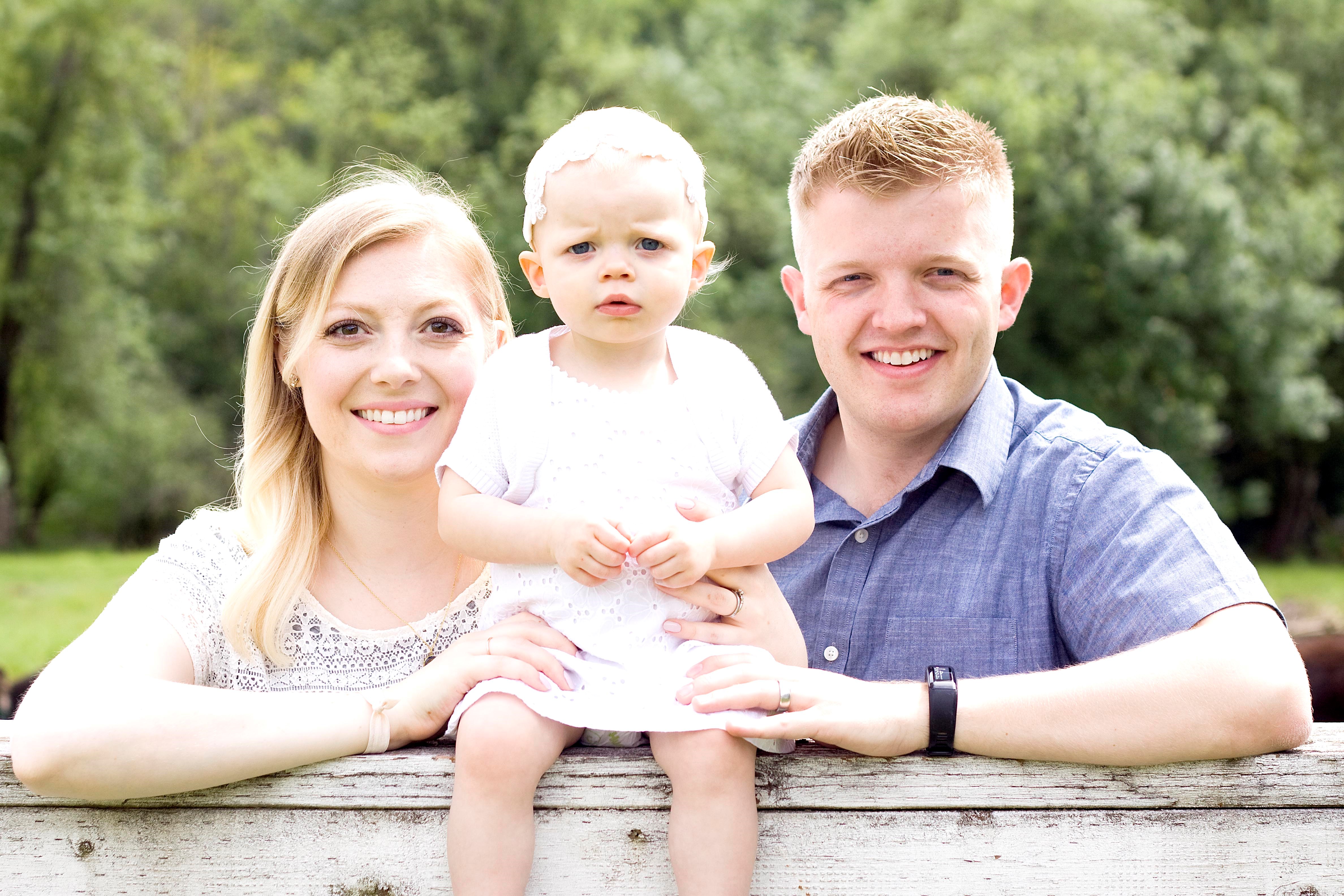
Kemper completed his pre-chiropractic studies at Brigham Young University – Hawaii, and Portland State University. A family man, he married in 2014 and has a daughter that is almost two-years-old. Kemper and his family enjoy hiking, watching movies, cooking together and the occasional visit to IKEA. He lives on an overgrown tree farm southeast of Portland with cows, llamas, chickens and a garden. Kemper spends his free time cooking and researching food science, and through that passion, he is an ardent food blogger.

Kemper started the Doctor of Chiropractic program at University of Western States in the fall of 2016. He has been interested in chiropractic since high school. Kemper gained great appreciation for the practice while working as a chiropractic assistant during the summer before starting at UWS.

Dr. Jason Young: 2016 Alumnus of the Year

2016 alumnus of the yearEach year, University of Western States hosts the Homecoming and NW Symposium, an event with opportunities to learn and network at seminars and a vendor fair. The university uses this opportunity to present the Alumni Recognition Award, which honors alumni whose achievements have elevated the fields of integrated and chiropractic medicine, made a difference in the community and upheld the university’s mission in their post-graduate and professional lives.
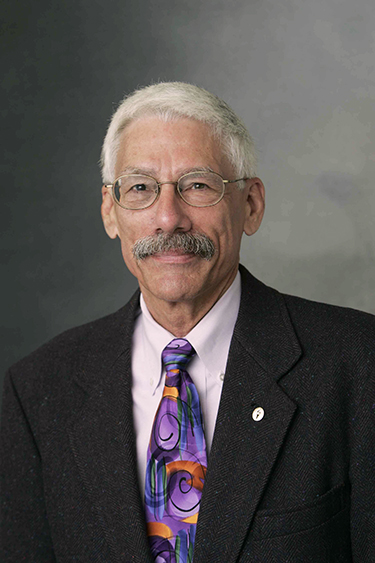
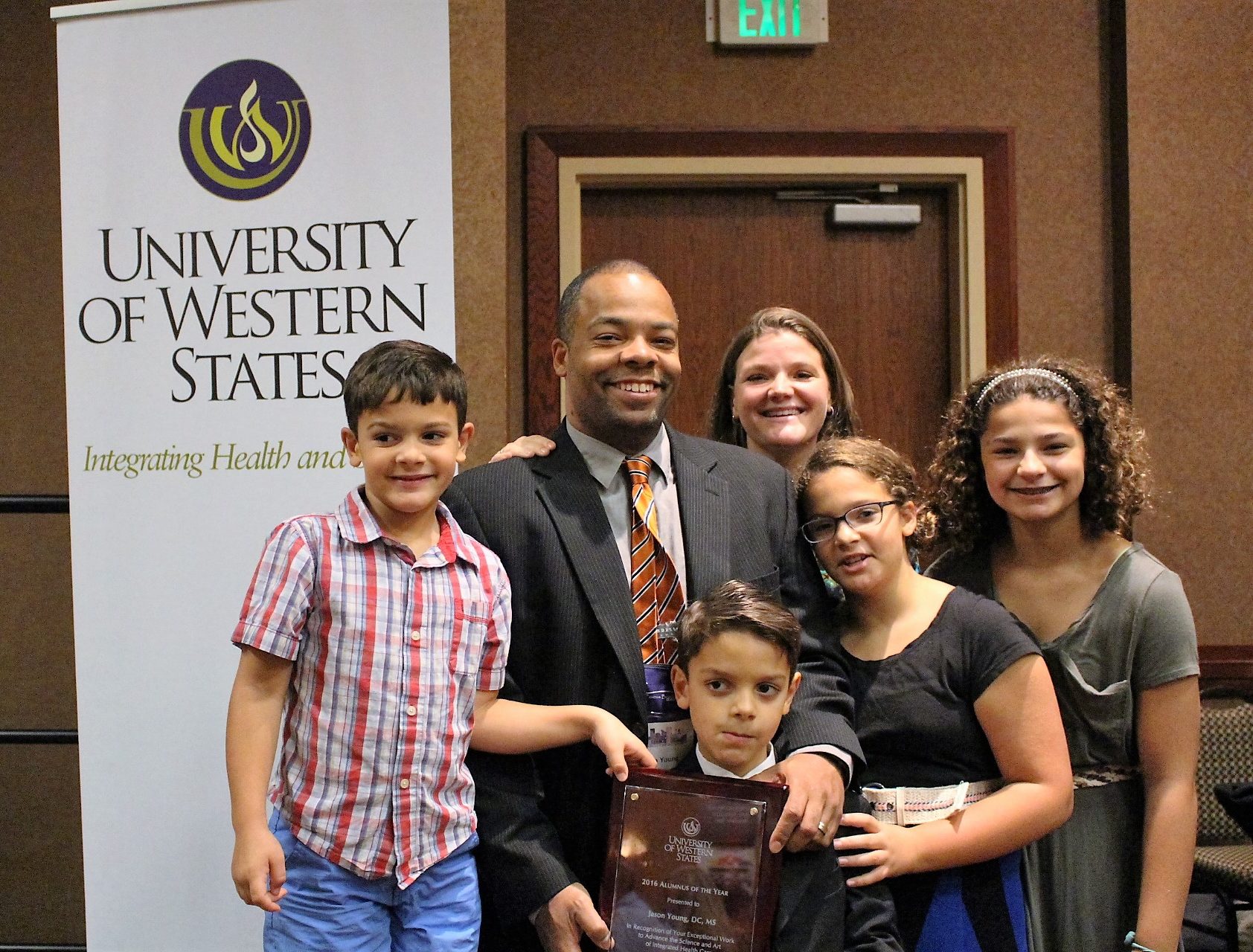
During the event on October 14, 2016, Dr. Joseph Brimhall, UWS president and Dr. Patricia Conners-Allen, immediate past chair of the Board of Trustees, presented the Alumnus of the Year Award to Dr. Jason Young. Dr. Young earned his Doctor of Chiropractic (DC) degree in 2007 and Masters of Science in Human Nutrition and Functional Medicine in 2014 from UWS. When Dr. Conners-Allen presented the accolade she said, “You could not pick a better person for this award.”

While a student at the university, Dr. Young was the Associated Student Body (ASB) president for two terms, as well as a sitting member of the Board of Trustees. When asked about winning the Alumni of the Year Award, Dr. Young said he was in shock.

“This is such an amazing recognition,” said Dr. Young. “The ceremony was special, and it was great to have my family and kids there.”

Dr. Young lives in Corvallis, Oregon and works at the Body of Health Chiropractic & Wellness Center. “Oregon is a great place to practice chiropractic care, and most importantly, it is a great place to be a chiropractic patient,” said Dr. Young.

His personal philosophy on chiropractic medicine is that, “it’s all about quality of life and doesn’t just make people feel better, but helps them be better people too. I want to teach people to take care of themselves, and I want to be there to support them.”

Dr. Young is also the Chair of the Oregon Board of Chiropractic Examiners, a role that serves the public by regulating the practice of chiropractic, promoting quality care and ensuring ethical health care.

“My involvement with the Board is important for the profession,” said Dr. Young.  “My perspective is that chiropractic medicine has an important role to play in health care. We have an interest in making chiropractic care accessible to people.”

Additionally, Dr. Young has created new opportunities for the profession by becoming the first chiropractic physician to work with the Oregon State University athletic department. UWS is proud of his work and honored to recognize Dr. Young for his service and accomplishments.

Chiropractic Intern Gains Experience at the VA

intern at VA

Why do you think it is important for chiropractic interns to gain experience in at the VA?

My clinician, Dr. Christopher Sherman, told me to prepare myself to see some unexpected things on my first day at the VA. “Everyone is complicated,” he said. “Our job is to figure out who we can help or where we should refer them so they can get the appropriate care.”

I wondered to myself, after I heard that, how crazy complicated could these patient’s needs could be?

Well, three patients later that particular morning, a gentleman sat down for his initial visit. He stated he was there for thoracolumbar pain. I laughed to myself, “so complicated.”

During the interview he disclosed he had undergone a lobectomy due to lung cancer. Soon after that he lifted his shirt, prominently displaying his saphenous vein, which was shunting blood from his subclavian artery to his lower abdomen. This procedure was done following a thoracic aortic aneurysm. My jaw dropped.

Working in the VA setting challenges chiropractic interns to have a more in-depth look at chiropractic care and how it fits into the medical model. Not only have I been exposed to an array of conditions within my chiropractic work, I have also had the opportunity to shadow other specialty doctors at the hospital. During weeks two and three of my clerkship, Dr. Sherman was gone on a pre-planned vacation, which gave me the chance to do rotations in other areas to fulfill my hours. The first week I shadowed in the operating room while surgeons performed a discectomy, medial branch block and spinal cord stimulator implant. Decked out in my scrubs and feeling like I just walked on the set of Grey’s Anatomy, I awkwardly stood in the corner unsure where to stand. In every surgery I observed, the surgeon introduced himself, extensively explained the procedure and oriented me anatomically as the surgery was taking place. Not only that, the surgeons asked about my background, what chiropractic school consists of, what types of conditions we typically treat and, by the end, if we could treat employees because they felt they could benefit from our services.

Additionally, I spent time in physical therapy, the Chronic Pain Clinic, and with the physiatrist as she performed knee and shoulder injections. Each encounter was not only welcoming, but encouraging as well. I had in-depth discussions about current research, conditions that benefit from different forms of conservative care, and gained a better understanding of what each of these individuals and specialties has to offer the patients. Moving forward, I will be doing rotations in other departments to continue to be exposed to as many different aspects of health care available at this VA location, on top of the 40-50 patients I treat weekly in the chiropractic department.

The VA approach to care is evidence-based and has the patient’s best interest in mind. Although I spent a brief amount of time in these different departments, I am able to confidently say I have a significantly better understanding of what happens in many of the procedures I observed. This exposure gives me the ability to better explain treatment options to my future patients and offer guidance for individual situations. Chiropractors are one part of the expansive medical world, and for us to be effective in our positions, we must be willing to understand what else is available to our patients.


steph-mem
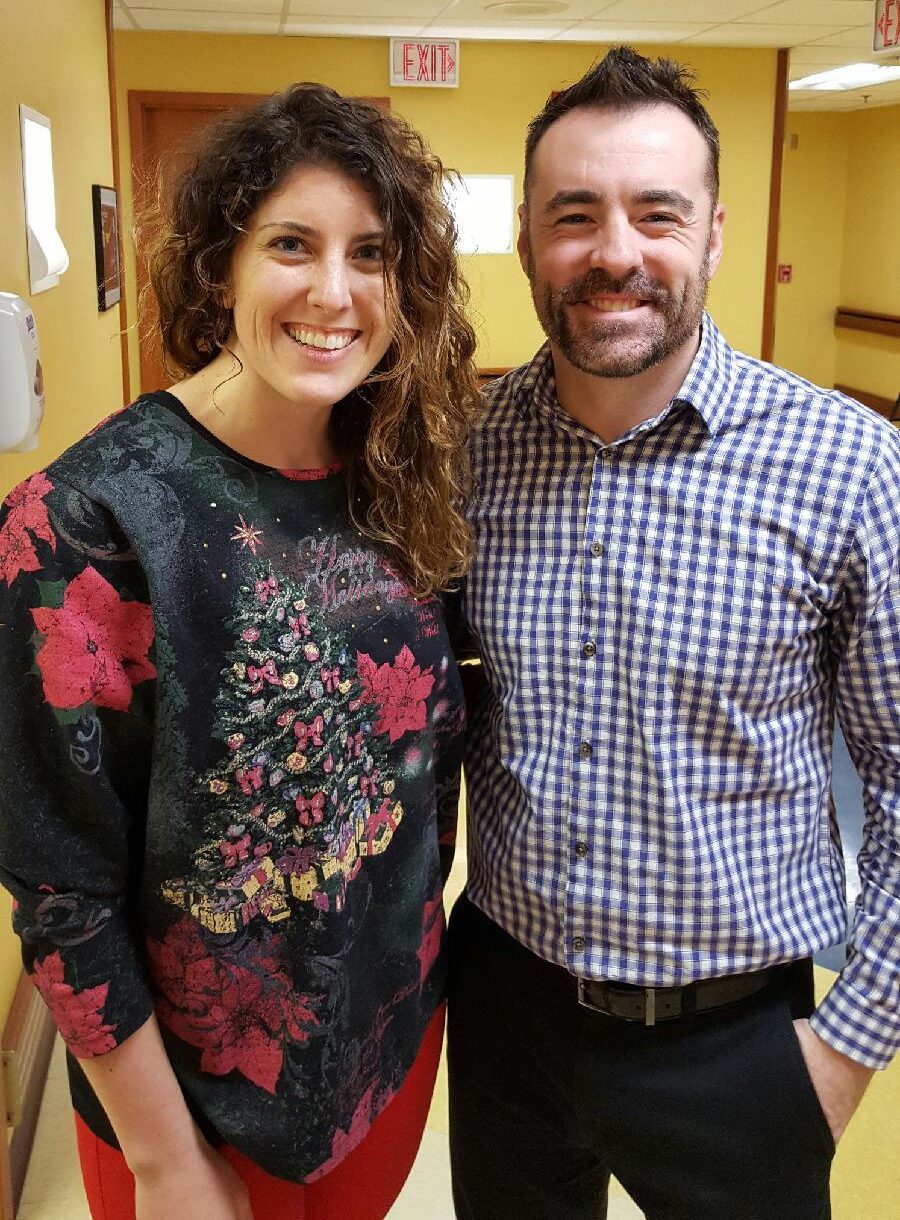
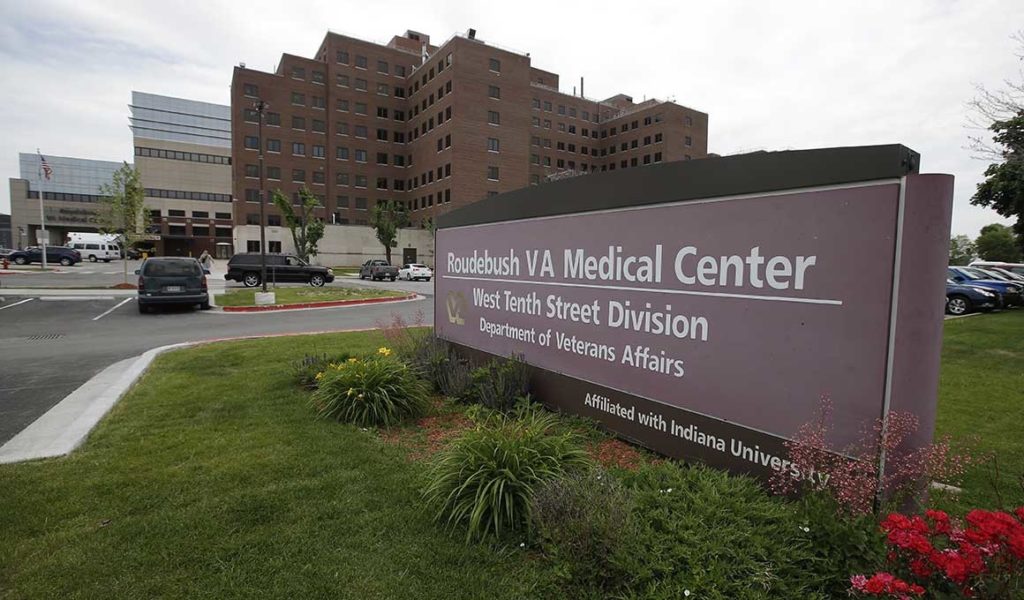
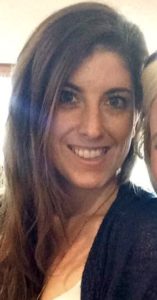
Stephanie Halloran is completing her 12th quarter at University of Western States (UWS). Rounding out her studies, she is currently on preceptorship at the Roudebush Veterans Administration Medical Center in Indianapolis, Ind. Originally from Aurora, Ill., she earned her Bachelor of Science in Kinesiology at University of Illinois – Champaign-Urbana. After earning her undergraduate degree, she moved back to Chicago to pursue a career in personal training. Frustrated with the medical and nutrition advice clients were receiving, Halloran decided to pursue her Doctor of Chiropractic degree at UWS.

Since then, Halloran has been actively involved with the Student American Chiropractic Association (SACA) serving as a representative on both the local chapter and federal levels. Halloran was awarded with SACA Member of the Year at the 2016 SACA Leadership Conference for her contributions to the organization, and under her leadership, UWS won Chapter of the Year. She is concurrently in the Human Nutrition and Functional Medicine Master’s program at UWS, as well as working toward her Diplomate in Diagnosis and Internal Disorders. When she has free time she can be found outdoors, in the gym, baking specialty cupcakes, or at local wineries. Following graduation, Halloran will apply for highly-competitive VA residency programs in hopes to continue her education and work with veterans.

Find more information on the chiropractic residency opportunities offered at the VA here.

UWS remembers Lester Lamm, DC

remembering dr. lester lammLester Carl Lamm
January 28, 1944 – September 20, 2016

Son of Mary and Eugene Lamm, fourth-generation Oregonian Lester Lamm saw life as an adventure not to be missed.  Raised in Florence and Myrtle Point, Lester’s horizons broadened while serving as a Peace Corps volunteer in Honduras from 1964 to 1966. Following the Peace Corps, he served two years in the U.S. Army. His service in the Peace Corps and Army motivated him to complete an undergraduate degree at Portland State University and then to travel the world.  While at Portland State, Lester took part in anti-war protests. He was photographed at a 1970 protest after which, the photo regularly appeared in the Oregonian for decades.

Through his life, Lester journeyed to more than 60 countries. A year-long trip around the world in 1976 with his family brought them to Katmandu Nepal, which ignited a lifelong love of the country and its people. In 1981, following graduation from Western States Chiropractic College (now University of Western States), Lester and his family returned to Nepal where Lester opened a healthcare clinic and taught school in the Kathmandu Valley. In 1983, the family returned to Portland where Lester accepted a teaching position at Western States. He later became a vice president serving in a variety of administrative roles while he continued teaching students through his 28 years at the college. He retired in 2011. In 2014, while serving as university historian and professor emeritus, Lester authored Oregon Pioneer: The Journey of Chiropractic Education in the Pacific Northwest, The Story of the University of Western States.

Lester gave willingly from his heart with openness and joy. A gifted story teller, Lester enthusiastically shared his experiences of people and places around the world.  A dedicated and skilled professor, he made a difference to his students’ success, many of whom became lifelong friends. A committed professional and physician, he worked steadfastly to advance chiropractic education. He loved travel, music, history, art, movies, and golf.  He is survived by his wife, Laura Lamm; daughter, Shaunessi Lamm Ferguson; granddaughter, Carmen Thomsen; son, Forrest Lamm; mother, Mary Evans; brothers Dennis and Gus Lamm, and an extended family of beloved friends and professional colleagues all over the world.  He lives forever in our memories and in our hearts.

A Remembrance Celebration will be held at the University of Western States January 28, 2017. To honor Lester’s memory, donations may be made to University of Western States (Lester Lamm Remembrance Fund), 2900 NE 132nd Avenue, Portland, OR 97230. Donate here.

Veterans Affairs Residency Opportunities

October 13 at 12:40 – 1:30 p.m. in Hampton Hall 1, guest speakers Dr. Edward Bednarz and Dr. Mario O. Roybal will discuss career opportunities the VA has to offer, as well as the status of VA residencies.

Veterans Affairs Residency OpportunitiesUWS student and third year chiropractic intern, Stephanie Halloran describes her Preceptorship experience at the VA Hospital in Indianapolis, Indiana.

What drew you to internships with the VA, and what excites you most about the future of chiropractic in working with veterans?

Two years ago I attended my first Student American Chiropractic Association (SACA) Leadership Conference in Roanoke, Virginia. The conference focused on the Veterans Affairs (VA) residency opportunities at five locations around the country. The chiropractic physician at each location gave a short talk on the specifics of what their residents did, the benefits of the VA clerkships and residencies in integrative medicine and how the skills obtained there would transfer over to private practice. At the conclusion of that day, I knew I wanted to do my preceptorship at one of University of Western States VA-affiliate locations.

My goals during the VA clerkship are personal development and professional advancement. I knew I would benefit from the opportunity to practice under some of the best doctors in the country. So far, I have found that shadowing an interdisciplinary team of physicians has been an amazing experience in terms of professional development. As part of my work, I get to listen as they discuss they condition and management they choose based on clinical expertise.

In this VA clerkship, I have the opportunity to observe other practitioners that I would not otherwise encounter before I start practicing. I will rotate to different departments within the pain clinic such as pain psychology, physiatry and physical therapy, and I will be in the operating room as neurosurgeons perform discectomies and spinal blocks. These daily interactions will give me the chance to develop the skills to work with these professionals in my everyday practice, as well as thoroughly explain alternate treatment options to patients who are investigating routes outside of chiropractic care.

My second goal with the clerkship is the opportunity to advance the chiropractic profession as we continue to find our appropriate place in the health care system. Clerkships and residencies within the VA will prove invaluable in establishing ourselves as providers in chronic pain treatment and prevention for not only our troops, but for the U.S. population as a whole. In a country where opioids make up 60 percent of prescribed drugs, patients and primary care physicians alike are seeking alternate ways to manage pain. Chiropractic medicine is often misunderstood in the health care industry, but once other practitioners are aware of the specific skills chiropractic physicians have, it creates a paradigm shift and the opportunity for collaboration amongst MDs, DOs, PTs and DCs.

I am not one for sitting back and letting other people do the work to change the trajectory of this profession. The VA clerkship will afford me the chance to expand my understanding of other medical specialties and actively engage in conversations that change the outside view of chiropractic medicine. Along with this exciting impact, I will have the opportunity to treat a population of people who voluntarily risked their lives to give me the freedom to pursue my dreams. I have no doubt it will be a jammed-packed quarter that will significantly impact my future as a chiropractic physician for the better.

Meet the New Provost – Dr. Bernadette Howlett Q&A

Your title at University of Western States is provost and vice president of academic affairs. What does that title mean at UWS?
The provost and vice president of academic affairs (VPAA) is a member of the executive cabinet responsible for all of a university’s academic programs, as well as the services that support them – such as the library. One of the primary duties of the provost and VPAA is to work with the president and cabinet to allocate the resources needed for academic programs and support services. As the provost and VPAA at UWS, I’m responsible for serving as the liaison officer for regional accreditation, which means speaking for the university and ensuring compliance with accreditation standards. The regional accreditor (Northwest Commission on Colleges and Universities, NWCCU) provides oversight of quality assurance to colleges and universities in the seven-state region of the Northwest. UWS additionally has specialized accrediting bodies for some of our programs, such as chiropractic and massage therapy. In addition to resource allocation and accreditation compliance, the provost and VPAA works with the deans, chairs and members of the faculty and staff to design curricula, assess performance of programs, and develop and retain the faculty and staff.

What excited you about coming to UWS in this role?
I have a lifelong interest in integrated health care. Also, my academic focus for the last 20 years has been evidence-based practice. These two areas come together at UWS. The programs here perfectly align with my interests.

What’s your vision for what you want to do as provost at UWS?
I see UWS a leader in the transformation of health care services and health science education, responding to new paradigms of health care payment models, integrated health and competency-based education. As provost, my vision is for UWS to be the destination for integrated health science education and health care services as well as the benchmark by which similar institutions are measured.

What is your first priority in this role?
My first priority is accreditation reporting. Since I’ve been on board we have already submitted an interim report to the Council on Chiropractic Education (CCE), which is the programmatic accreditor for the Doctor of Chiropractic program. We are also preparing two reports for NWCCU, which are due this fall and spring.

What are some specific challenges you see faced by UWS?
We have a great deal of opportunity coming from changes in health care regulations as well as the industry of higher education. The challenges come from recognizing and responding to these opportunities to the benefit of the students who attend UWS as well as the patients we serve. Related to this issue is the cost of delivering education in the health sciences. Ever changing technologies in both health care and education, the importance of hands-on learning for clinical education programs (which requires a lower student-to-faculty ratio than lecture-based delivery) and relentless increases in fixed costs (such as health insurance) place health science educational organizations in a particularly challenging situation from a budgeting standpoint. The dedication of people working at UWS as well as their creativity is why UWS is so successful in addressing these challenges.

You are well known in the integrative health care research and academia field. What drew you to this line of work?
I suppose it started for me when I was 19 years old and had a bad injury to my ribs. I received chiropractic care as well as massage therapy. I was told the provider who initially evaluated me that I would not fully recover; but with the help of massage and chiropractic care I was able to heal.  At that time, I was also an avid bicyclist. So, I was really interested in maintaining my health, not just getting treatment if I got sick. I learned about the idea of food as medicine. I learned about the spirit/mind/body wellness model. I sought various interventions focused on wellness, including acupuncture. I also became very interested in individualized medicine. As a result of all this, I pursued a bachelor’s degree in interdisciplinary studies. And I have always worked in interprofessional teams focused on identifying and addressing root causes, which to me defines integrative health care. All of this has added up to a career focused on evidence-based, patient-centered, integrative models of health care and related research.

What is your dream job, had you not started working in the health care and education fields?
My dream job would be producing music in my retirement years. I have always performed and written music. In my bachelor’s degree one of my majors was music. Interestingly, I took a course called “Sounding the Inner Landscape,” which offered some content on the health effects of music. I think that class planted a seed in me long before I considered the path I eventually would take in health science education. I would have remained in music, my career of choice, if I had been more comfortable with raising children as a “starving artist.” After I had my second child (I have two sons) I started thinking that being the child of a starving artist might not be the idyllic childhood I wanted for my boys. It was a wonderfully romantic idea for me to live a bohemian artist life. But it lost something for me when higher education knocked on my door and placed opportunity in front of me. Ultimately, I didn’t lose out on anything. I still play and write music… and I still don’t get paid to do so. All kidding aside, music is still very much alive for me. My career in health science education has afforded me endless opportunities to be creative, which keeps my heart happy and makes the work engaging. I learned over the years that what I most value is contributing to making the world a better place. There’s nothing more impactful in that regard than education.

What are your hobbies when you are not working?
Of course, there’s music. Also, I love being outside. Hiking and exploring the outdoors is like food for me. I fall in love with nearly every place I visit and can imagine myself living there. Additionally, I enjoy volunteering. I haven’t found an organization here yet to be hooked into. It likely will end up being whatever high school my younger son ends up attending. My older son is college age and preparing to attend Clark College.


Best Chiropractic Practice in Portland

Equilibrium named best chiropractic practice in Portland by Willamette Week

Clinic is owned and staffed by UWS alums and faculty

Willamette Week recently released the Best of Portland 2016 list – as voted on by readers. A big winner was Equilibrium, an integrated health care clinic, that provides chiropractic services as well as acupuncture and massage. The clinic is owned by University of Western States (UWS) class of 2000 alums Nicole Bhalerao, DC, and Shireesh Bhalerao, DC, MCR, CCSP. Class of 2015 alum, Cydney Keller, DC, also serves as a staff chiropractic physician.

Dr. Shireesh Bhalerao, associate professor at UWS, teaches chiropractic and clinical sciences. He believes that the clinic’s focus on a more evidence-based model has helped differentiate Equilibrium from other integrative health clinics.

“We strive to incorporate the best available research evidence into our clinical decision-making. Many patients have complimented us on our efforts to do so. They appreciate the extra effort our practitioners make to find relevant, high-quality research and apply it to their care,” said Dr. Bhalerao. “This approach has also led to a strong referral network with local medical physicians.”

Dr. Bhalerao believes there is a more important differentiator.

“Our patients have always been our central focus. Winning this award means that they recognize this,” said Dr. Bhalerao. “They appreciate the care they receive at Equilibrium. This means a lot to me and the rest of the staff.”

Health Plan Covers Integrative Medicine

Oregon Health Plan to cover chiropractic care and other integrative medicine services in the treatment of back pain

UWS alumnus served on committee and a faculty member provided research supporting an integrated approach to pain management

oregon health plan saboe

University of Western States alumnus Dr. Vern Saboe, serving as a member of the Back Lines Reorganizations Task Force of the Oregon Health Authority (OHA) Health Evidence Review Commission (HERC), helped to change policy that will now provide coverage under the Oregon Health Plan (OHP) for chiropractic care, acupuncture, cognitive behavioral therapy, osteopathic manipulation, physical therapy and occupational therapy in the treatment of back pain. The new policy changes became effective July 1, 2016.

In his role as a member of the task force, Dr. Saboe reached out to the integrated health care community for research and evidence that supported the importance of conservative and integrative care. UWS faculty member Dr. Daniel Redwood, director and faculty member in the UWS Human Nutrition and Functional Medicine degree program, worked with Dr. Saboe to help provide a valuable evidence-based critique of the initial draft. The previous guidelines placed more emphasis on pain medication and surgery. Dr. Redwood’s critique, according to Dr. Saboe, was critical in shifting the group’s focus to a more integrated approach.

According to the OHP Back Policy Changes Fact Sheet, “The HERC based its decisions on new evidence, including a bio-psycho-social model designed to help people with back problems resume normal activities. This model will help people manage their pain with less reliance on medication and fewer costly surgeries. Until now, the OHP has limited treatment to patients who have muscle weakness or other signs of nerve damage. Beginning in 2016, treatments will be available for all back conditions. Before treatment begins, providers will assess patients to determine their level of risk for chronic back pain, and whether they meet criteria for a surgical consultation.”

The OHP states that in 2013, about eight percent of OHP recipients saw a provider for back conditions, and more than half of those individuals received narcotic medications, often for many months. Providing conservative and integrative options for patients will help reduce the chance of opioid addiction and the costs to both the individual and the community, associated with such addiction.

“This type of integrated care approach is going to help patients with back pain reduce dependence on medication, avoid surgery and increase their overall quality of life. We are excited Oregon has embraced this shift in care,” Dr. Joseph Brimhall, president of University of Western States said.

The decision to cover integrated pain management care came after four years of exhaustive policy work by the task force, comprised of a neurosurgeon, a chiropractic physician, an acupuncturist, an orthopedic surgeon, a primary care physician, a physiatrist, physical therapists, specialists in mental health and addiction, a health plan medical director, pain specialists, and a national expert in the evidence on treatments for back pain. As part of their process they reviewed a large body of evidence about the effectiveness of various treatments and the potential harms of certain therapies.

The Oregon Collaborative for Integrative Medicine (OCIM) will assist the OHP in implementing this policy shift. University of Western States, a founding member of OCIM, will be partnering to help operationalize this change at the OHP.