Annual Integrative Medicine Day at OMSI

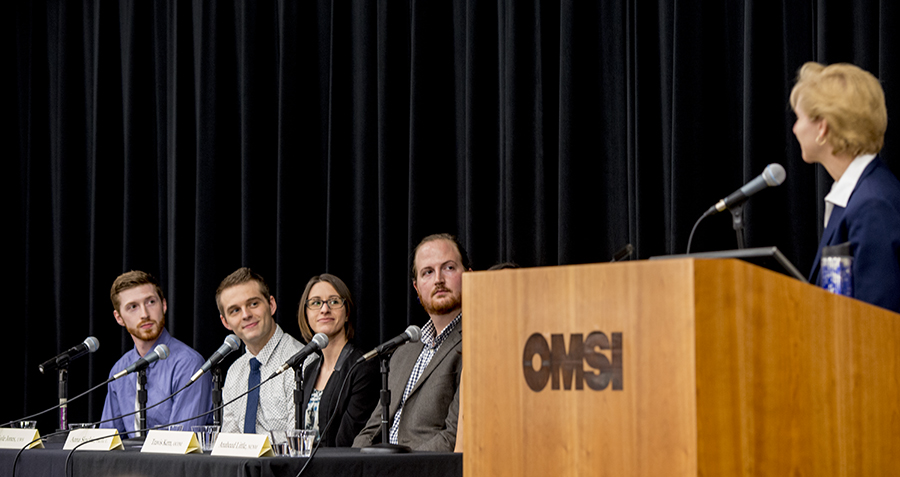
The Oregon Student Alliance for Integrative Medicine (OSAIM) recently held its annual Integrative Medicine Day at OMSI on January 30. OSAIM, which is a collaborative group made up entirely of students from the major medical schools in Oregon, hosts this annual event with the hopes of encouraging students, doctors and community members to learn more about integrative medicine. The group also hosts a video scholarship competition, in conjunction with Bob’s Red Mill. One winner is chosen from each participating school. The video must cover the topic of food as medicine. This year’s UWS winner, Kyle Jones, did his video on the health benefits of chia seeds. All participating winners were on hand for the Integrative Medicine Day and gave responses to questions regarding food in today’s society. Along with the student scholarship winner panel there were also two breakout sessions on topics including sleep, death and dying, and cannabis. There was also a social after with the Noah Bernstein Trio.

The OSAIM executive board has representation from three UWS DC students this year including Freya Moran, Alexx Oljenik and Rob Sanders.

Annual Integrative Medicine Day 2016 at OMSI

Annual Integrative Medicine Day 2016 at OMSI

Annual Integrative Medicine Day 2016 at OMSI

Annual Integrative Medicine Day 2016 at OMSI


Leaps into IM: Part Three

By Freya Moran

Of the 29 students who attended the Leaps into IM training, five of us were considered alternative care practitioners: a herbologist, a naturopath, a doctor of traditional Chinese medicine, an acupuncturist and myself. Near the end of our stay the faculty asked the five of us to sit as a panel and discuss alternative care, and what took place was irreplaceable.

At the beginning of the week, I found the conversation (regarding medical practice) between professions to be cautious at best. During the osteopathic demonstration, I was asked to demonstrate my own skills from the chiropractic perspective regarding the general physical and postural exam. After sitting through a week of presentations on documented research and evidence regarding the efficacy of various practices (including yoga, acupuncture, tai chi, etc.), people had a more open mind and even more questions regarding chiropractic care. So when we sat down for our panel discussion, it was no surprise the room was abuzz with questions.

During the panel discussion we tried to keep things informal by opening the floor to questions from the medical doctor (MD) and doctor of osteopathy (DO) students and faculty. The questions were cordial and included how exactly to refer, how to read chart notes and what conditions would merit a referral. Then one of the DO students carefully asked the difference between chiropractic and osteopathic practice, and when it would be appropriate for a DO to refer to a DC? Oh, and what the heck is a subluxation?

If, as a student, you’ve never asked yourself these questions then now is a good time to sit down and talk about it. And then talk about it some more. Then meet up with a mentor or shadow a chiropractic physician and talk about it with them too. I cannot say enough about the importance of constantly refining your thoughts on your position in medicine.

And then just to keep your mind busy (with all your vast amounts of free time), keep up with the research, the case studies and the trials. Use those research conclusions and your clinical experiences to continue to shape, change and refine your idea and philosophy of patient care and your place in human health. Don’t allow yourself to stay stagnant – push yourself to have the awkward conversations, change your approach, and surround yourself with people who don’t share the same opinions. How can we continue to grow as individuals and as a profession if we do not meet the needs and answer the questions we aren’t comfortable with answering?

These hard questions led to a robust and informative discussion about respect. After the student alternative care panel, we went to lunch and I suddenly found myself surrounded by curious young doctors, genuinely asking me what a chiropractic treatment approach would be for diabetes, cardio metabolic disease and osteoporosis. How would I co-manage obesity? Could I look at a shoulder sometime that evening? It was amazing how open and interested this group of MDs and DOs were regarding conservative management of the most common lifestyle diseases in America.

As a 7th quarter student, I definitely did not have all the answers. I haven’t read all the research. I’ve never written an essay on the history and philosophy of subluxation. I know that I can’t possibly accurately represent the views of so many in our immense profession, but what I do know is that I’m going to spend the rest of my career learning and continuing to have these amazingly brave conversations with my fellow health care providers and patients.

I have learned that there is no lecture, lab or seminar you can take to develop your individual philosophy – it obviously takes years of clinical experience and constant questioning – but being involved in LEAPS has offered me some insight into my future of answering questions about my profession and has inspired me to keep searching for answers.

This is the third and final installment of Freya Moran’s blog series regarding her experience as the first chiropractic student at the Leaps into IM annual leadership program in Oceanside, Calif.


Northwest Center for Lifestyle and Functional Medicine faculty in the news!

Kim Rogers, intern with the NWCLFM and adjunct faculty in the sport and performance psychology department, was recently awarded the 2016 Society of Health and Physical Educators (SHAPE) America Ruth Abernathy Presidential Scholarship. Started in 1995, the Ruth Abernathy Presidential Scholarship honors outstanding graduate and undergraduate student members based on academic record and extracurricular accomplishments. Rogers, was one of two graduate students and three undergraduate students to receive this national award. Her winnings include $1,750 and a free three-year SHAPE membership.

“I am deeply honored to receive the 2016 Ruth Abernathy Presidential Scholarship,” said Rogers. “This award would not have been possible without the support and expertise of the many professors and researchers I’ve had the wonderful opportunity to work with throughout my graduate studies. The monetary award will help further support my research in the areas of health promotion and sport and exercise psychology.”

Dr. Conrad Woolsey, director of the sport and performance psychology program  and faculty member of the NWCLFM, was on a U.S. Navy research team along with lead investigator, Commander Dr. Thomas Sather, and recently published a study showing that the younger  a person consumes energy drinks, the greater the odds they would consume greater quantities later in life. The study, conducted on U.S. Navy personnel, found that people in this test group who began using energy drinks between the ages of 13-16 were nearly five times more likely to consume high quantities of energy drinks during a single occasion when compared to those who started consuming energy drinks between 20-23 years of age. Also, persons who began to consume energy drinks between the ages of 13 and 16 years were 2.5 times more likely to consume high quantities of energy drinks during a single occasion when compared to those who started between 17-19 years of age. This is the first published study from this data, but one of many other publications on this topic for Dr. Woolsey. The research team conducting this new study included: Dr. Sather, Dr. Woolsey, Dr. Ronald Williams Jr., Dr. Marion W. Evans Jr. and Dr. Fred Cromartie. Learn more!


Beat the Winter Blues

winter blues

As the days get shorter, darker and wetter our health and well-being can take a nosedive. Add in all that extra stress from the holidays plus the pressure of a brand new year and you’ve got yourself a recipe for a not-so-cheery disposition. However, don’t be discouraged, the winter blues are very common. In fact, this time of year can be especially hard because so many of our weak points are targeted all at once.

Arm yourself with tools to fight the attack by tuning in to yourself to figure out what’s causing the most distress. Is it the never-ending flow of cookies and eggnog that’s giving you body blues? What about your overwhelming schedule and holiday to-do list, not to mention the unrealistic new year’s resolutions you’ve set for yourself? Maybe it’s just the weather that’s got you down. You’re not getting outside enough and the lack of sunshine and fresh air leaves you lethargic and unmotivated.

This year, instead of reaching for your Tupperware full of leftover cookies, curling up on the couch and succumbing to the winter blues, assess your triggers and intervene before they become overwhelming roadblocks. Read these tips from our team of integrated health care specialists and learn how you can defeat winter doldrums.

What type of winter blues are you experiencing?

MIND | BODY | ENVIRONMENT


MIND

Dr. Amanda Armington, Attending Physician, Health Centers of UWS, Campus

Mindfulness can be very powerful and especially helpful in the winter months. Focus on presence: just be. Your lists, goals and resolutions can wait. Try this simple yet very challenging exercise of just breathing for two minutes. You’ll be surprised at how refreshing and rewarding it is. Taking a break from life’s business can actually increase your productivity. Try this tool www.donothingfor2minutes.com and turn up your speakers.

Dr. Ty Weingard, Attending Physician, Health Centers of UWS, Salem

Vitamin D3 is a hormone that’s great for the immune system and emotional well-being during the winter SAD season. Seasonal Affective Disorder or SAD is a real concern for many patients and friends throughout the winter. Take 5000 IU of vitamin D3 to increase your mood and support your immune system.


BODY

Dr. Aaron Montgomery, Assistant Clinical Director, Health Centers of UWS, Gresham

A great way to help beat the winter blues is by staying active over the next few months. Exercise is a proven way to help with Seasonal Affective Disorder or just keep energy levels and sense of well-being up. Your exercise does not have to be intense to be effective, it simply needs to be consistent. Whether it’s lifting weights, running or even walking, try to do at least 30 minutes per day. This will likely pay big dividends on feeling well and staying healthy over the next few months. Consistency is key to beat those winter blues!

Dr. Susan Strom, Clinical Assistant, Health Centers of UWS, Campus

There are two supplement blends I stock up on for my patients during the winter months to support the immune system and cut down on the frequency and duration of cold and flu symptoms. Congaplex is a formula from Standard Process that contains a variety of nutrients which, taken at the first sign of an infection, can help the body to fight off the invaders. Herbal complexes that contain echinacea, andrographis and holy basil are also very helpful in improving the way the immune system works.

Dr. Ryan Ondick, Attending Physician, Health Centers of UWS, Campus

Moderate aerobic exercise improves immune function, provides a mild antidepressive response and enhances sleep. Exercise is important to think about in defense against the winter blues because it is often the first thing to suffer when the weather gets bad.

Dr. Devin Williams, Attending Physician, Health Centers of UWS, Gresham

In the summer we all know that we must drink water to avoid dehydration. But dehydration affects just as many people in the winter because the cold decreases thirst response. We may not lose water through running or playing in the heat of the summer, but we lose much of our water through our breath. When you see your breath in the cold air that’s actually water being expelled from your body. Don’t assume that just because you aren’t sweating or in the sun that your body doesn’t need adequate water intake. There have also been numerous studies that show the link between dehydration and depression. So, continue to drink adequate water throughout the cold months to keep healthy!

Dr. James Strange, Attending Physician, Health Centers of UWS, Campus

Eating healthier in the winter and during the holidays does not mean dieting! Focus on adding whole nutritious foods such as fruits, vegetables, whole grains, proteins and good fats to every meal, instead of restricting the “bad” ones. Choose healthy foods you love to eat and don’t let your schedule dictate your meals- always be prepared, especially during this time of year when tempting sweets are everywhere. As the saying goes: eat better and move better.

Dr. Daniel DeLapp, Attending Physician, Health Centers of UWS, East Portland

Avoiding the winter blues can be a challenge, especially when we are constantly being tempted by all the sugary treats at holiday parties. Unfortunately, eating too many simple sugars, particularly fructose damages our immune system. When our immune system is compromised it can lead to feeling off-balanced and can contribute to feeling the blues. One of the ways it does this is by unbalancing your gut flora. Sugar feeds the pathogenic bacteria, virus and fungi. Most people don’t realize that 80 percent of your immune system actually lies in your gastrointestinal tract. That’s why controlling your sugar intake is CRUCIAL for optimizing your immune system and avoiding the winter blues.

Dr. Owen Lynch, Director of Health Centers of UWS, Downtown

Here’s a riddle: Why is an icy sidewalk like a musical scale?
Because it’s C sharp or B flat.

Would you like to maintain your independence and avoid falls, especially during the winter when conditions are most treacherous? Complete the self assessment at the Center for Disease Control’s website by clicking here.

Dr. Franchesca Vermillion, Attending Physician, Health Centers of UWS, East Portland

In order to fight off the winter blues, it’s very important to keep moving. In the winter time, when I find it hard to make it to the gym but still want to work out, I challenge myself to the Deck of Cards work out. I take a normal deck of cards and shuffle them. The cards are placed face down and each suit is assigned a work out. For example, spades are squats, clubs are mountain climbers, diamonds are push-ups and hearts are sit-ups. These are just examples you can assign any four work outs that you want to the cards. Then as you flip the card and do the face value of the card. Royal cards are worth 10 and the aces are worth 15. It makes for a great work out from home!


ENVIRONMENT

Dr. Shawn Hatch, Attending Physician, Assistant Professor, Health Centers of UWS, Campus

Due to the weather here in the northwest, we spend a lot of time indoors during the winter. Not being exposed to the sun puts us at risk for not getting enough vitamin D. Other than exposure to sunlight, the best way to get vitamin D is through whole foods like fish, eggs, mushrooms and beef liver but we can also get it through supplements and fortified foods. And don’t forget to keep moving. Finding creative ways to be active while indoors can be a fun challenge.

Dr. Frederick Kalmbach, Clinical Assistant, Health Centers of UWS, Campus

Walking every day can be difficult due to the weather, but investing in good rain gear or making a point to get out even for short walks during breaks in the rain can help. Even a 10 minute walk when the sun eventually comes out is beneficial.

Ami Brimhall, Mindfulness Facilitator

With more cold and wet weather here it’s easy to get discouraged, move less and stay crunched up as we go through the day. Here’s a great holiday gift you can give yourself. Try to walk around, stretch and get outside for even 5-10 minutes during your day. Think, “I’m embracing the cold!” as you do. You may be surprised as how much more at ease you become and find new and wonderful things to notice about the colder, wet outdoors.

Northwest Center for Lifestyle and Functional Medicine News: Community members weigh in on health concerns

When the executive director for the Northwest Center for Lifestyle and Functional Medicine (NWCLFM), Cheryl Hawk, DC, PhD, CHES, began her role, her aim was clear – listen to the community and find out what they wanted from the center.

“We didn’t want to just start a bunch of initiatives that we thought would be helpful,” Dr. Hawk said. “We wanted to really go into the community and find what the people in East Portland really wanted and needed.”

Dr. Hawk, with a background in research, decided to get out and talk to the people in the community including interviews with Portland community leaders and focus groups with community residents. She also created a short survey for community members at events to fill out. The questions are simple: What makes it easy for you to be healthy? What makes it hard for you to be healthy?

While this data collection will take place over the next year, some initial data has been collected and tabulated. Dr. Hawk found a number of early trends.

The top five reasons people cite for staying healthy:

  • nature, parks, bike paths available
  • healthy food options available at home
  • ability to get regular exercise/enjoy exercise
  • opportunities to exercise with dog/kids
  • ability to plan activities/have goals for being healthy

The top five reasons people cite as being barriers to a healthy lifestyle:

  • lack of time, too busy
  • too much food and drink available, especially fast food
  • lack of motivation, lack of planning
  • cost, including cost of health care
  • no advanced planning
  • health problems that prevent exercise (tie)

“We will continue to collect these findings over the next year,” Dr. Hawk said. “Then after reviewing the results, our plan of action is to start implementing initiatives that speak to these barriers to health.”


About the Northwest Center for Lifestyle and Functional Medicine

The Northwest Center for Lifestyle and Functional Medicine was launched in 2015 as a center of excellence highlighting ways to reduce lifestyle-related health conditions such as diabetes, obesity and hypertension. The center’s vision is to promote healthy behaviors and positive lifestyle changes in order to achieve optimal quality of life for the members of our community through service, education and research. The center believes in integrated, conservative, patient-centered approaches to address lifestyle-related health conditions. To learn more about the center visit uws.edu/nwclfm.


Dr. James Kurtz named 2015 UWS Alumnus of the Year and Dr. Philip Snell honored for Integrative Health Care work

PORTLAND, Ore., November 2, 2015 – University of Western States (UWS) recently held its 2015 Homecoming and NW Symposium. The event culminated in a celebratory homecoming dinner on October 17, where two alumni were honored for their distinction and service.

James Kurtz, DC, DACRB, DACBSP, was selected as the 2015 “UWS Alumnus of the Year.” Dr. Kurtz works as the team chiropractic physician for the Seattle Seahawks football team. He has also worked as the co-team chiropractic physician for the Seattle Sounders, the PGA TOUR and for the 2007 and 2008 Paralympic teams.  Dr. Kurtz owns NW Sports Rehab with locations in Seattle and Federal Way. This award was designed to highlight the exceptional work of UWS graduates. Nominees were submitted by their peers and chosen by a selection committee.

“I am truly honored to even be considered for this award. Thank you to UWS for helping to give me a vision of what I could do and for giving me the foundation to build an incredible career upon,” Dr. Kurtz said. “Never in my wildest dreams did I ever think my career could be this rewarding. I have been on the sidelines for two Super Bowls and I have been able to share that with my incredible wife Dr. Ming Ming Su-Brown whom I met while in school at UWS. It’s been a very rewarding career and there is still more to accomplish.”

Phillip Snell, DC, was given the 2015 Award for Excellence in Integrative Health Care from the Northwest Center for Lifestyle and Functional Medicine at UWS. The purpose of the award is to honor an integrated health care professional who promotes healthy behaviors and positive lifestyle changes as a path to optimal health.

“This distinction from the university is an honor. I have spent a large part of my career working to increase awareness regarding the importance of making every day healthy lifestyle decisions,” Dr. Snell said. “To be honored by my alma mater for this work is truly gratifying.”

Dr. Snell works at the Hawthorne Wellness Center, an interdisciplinary wellness center. He also created the websites fixyourownback.com and myrehabexercise.com as tools for patients to become active participants in their own care.

“Both of these individuals are great examples of UWS alumni that are elevating the field of chiropractic health care,” Dr. Joseph Brimhall, UWS president said. “They are also excellent ambassadors making a difference in their communities. We are proud of their work and honored to recognize them for their service to humanity.”