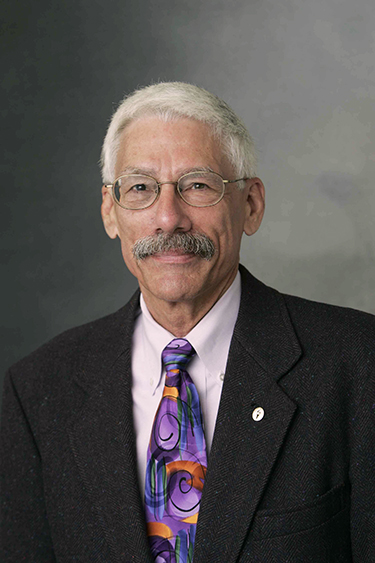
Meet the New Provost – Dr. Bernadette Howlett Q&A

Your title at University of Western States is provost and vice president of academic affairs. What does that title mean at UWS?
The provost and vice president of academic affairs (VPAA) is a member of the executive cabinet responsible for all of a university’s academic programs, as well as the services that support them – such as the library. One of the primary duties of the provost and VPAA is to work with the president and cabinet to allocate the resources needed for academic programs and support services. As the provost and VPAA at UWS, I’m responsible for serving as the liaison officer for regional accreditation, which means speaking for the university and ensuring compliance with accreditation standards. The regional accreditor (Northwest Commission on Colleges and Universities, NWCCU) provides oversight of quality assurance to colleges and universities in the seven-state region of the Northwest. UWS additionally has specialized accrediting bodies for some of our programs, such as chiropractic and massage therapy. In addition to resource allocation and accreditation compliance, the provost and VPAA works with the deans, chairs and members of the faculty and staff to design curricula, assess performance of programs, and develop and retain the faculty and staff.

What excited you about coming to UWS in this role?
I have a lifelong interest in integrated health care. Also, my academic focus for the last 20 years has been evidence-based practice. These two areas come together at UWS. The programs here perfectly align with my interests.

What’s your vision for what you want to do as provost at UWS?
I see UWS a leader in the transformation of health care services and health science education, responding to new paradigms of health care payment models, integrated health and competency-based education. As provost, my vision is for UWS to be the destination for integrated health science education and health care services as well as the benchmark by which similar institutions are measured.

What is your first priority in this role?
My first priority is accreditation reporting. Since I’ve been on board we have already submitted an interim report to the Council on Chiropractic Education (CCE), which is the programmatic accreditor for the Doctor of Chiropractic program. We are also preparing two reports for NWCCU, which are due this fall and spring.

What are some specific challenges you see faced by UWS?
We have a great deal of opportunity coming from changes in health care regulations as well as the industry of higher education. The challenges come from recognizing and responding to these opportunities to the benefit of the students who attend UWS as well as the patients we serve. Related to this issue is the cost of delivering education in the health sciences. Ever changing technologies in both health care and education, the importance of hands-on learning for clinical education programs (which requires a lower student-to-faculty ratio than lecture-based delivery) and relentless increases in fixed costs (such as health insurance) place health science educational organizations in a particularly challenging situation from a budgeting standpoint. The dedication of people working at UWS as well as their creativity is why UWS is so successful in addressing these challenges.

You are well known in the integrative health care research and academia field. What drew you to this line of work?
I suppose it started for me when I was 19 years old and had a bad injury to my ribs. I received chiropractic care as well as massage therapy. I was told the provider who initially evaluated me that I would not fully recover; but with the help of massage and chiropractic care I was able to heal.  At that time, I was also an avid bicyclist. So, I was really interested in maintaining my health, not just getting treatment if I got sick. I learned about the idea of food as medicine. I learned about the spirit/mind/body wellness model. I sought various interventions focused on wellness, including acupuncture. I also became very interested in individualized medicine. As a result of all this, I pursued a bachelor’s degree in interdisciplinary studies. And I have always worked in interprofessional teams focused on identifying and addressing root causes, which to me defines integrative health care. All of this has added up to a career focused on evidence-based, patient-centered, integrative models of health care and related research.

What is your dream job, had you not started working in the health care and education fields?
My dream job would be producing music in my retirement years. I have always performed and written music. In my bachelor’s degree one of my majors was music. Interestingly, I took a course called “Sounding the Inner Landscape,” which offered some content on the health effects of music. I think that class planted a seed in me long before I considered the path I eventually would take in health science education. I would have remained in music, my career of choice, if I had been more comfortable with raising children as a “starving artist.” After I had my second child (I have two sons) I started thinking that being the child of a starving artist might not be the idyllic childhood I wanted for my boys. It was a wonderfully romantic idea for me to live a bohemian artist life. But it lost something for me when higher education knocked on my door and placed opportunity in front of me. Ultimately, I didn’t lose out on anything. I still play and write music… and I still don’t get paid to do so. All kidding aside, music is still very much alive for me. My career in health science education has afforded me endless opportunities to be creative, which keeps my heart happy and makes the work engaging. I learned over the years that what I most value is contributing to making the world a better place. There’s nothing more impactful in that regard than education.

What are your hobbies when you are not working?
Of course, there’s music. Also, I love being outside. Hiking and exploring the outdoors is like food for me. I fall in love with nearly every place I visit and can imagine myself living there. Additionally, I enjoy volunteering. I haven’t found an organization here yet to be hooked into. It likely will end up being whatever high school my younger son ends up attending. My older son is college age and preparing to attend Clark College.


Best Chiropractic Practice in Portland

Equilibrium named best chiropractic practice in Portland by Willamette Week

Clinic is owned and staffed by UWS alums and faculty

Willamette Week recently released the Best of Portland 2016 list – as voted on by readers. A big winner was Equilibrium, an integrated health care clinic, that provides chiropractic services as well as acupuncture and massage. The clinic is owned by University of Western States (UWS) class of 2000 alums Nicole Bhalerao, DC, and Shireesh Bhalerao, DC, MCR, CCSP. Class of 2015 alum, Cydney Keller, DC, also serves as a staff chiropractic physician.

Dr. Shireesh Bhalerao, associate professor at UWS, teaches chiropractic and clinical sciences. He believes that the clinic’s focus on a more evidence-based model has helped differentiate Equilibrium from other integrative health clinics.

“We strive to incorporate the best available research evidence into our clinical decision-making. Many patients have complimented us on our efforts to do so. They appreciate the extra effort our practitioners make to find relevant, high-quality research and apply it to their care,” said Dr. Bhalerao. “This approach has also led to a strong referral network with local medical physicians.”

Dr. Bhalerao believes there is a more important differentiator.

“Our patients have always been our central focus. Winning this award means that they recognize this,” said Dr. Bhalerao. “They appreciate the care they receive at Equilibrium. This means a lot to me and the rest of the staff.”

Health Plan Covers Integrative Medicine

Oregon Health Plan to cover chiropractic care and other integrative medicine services in the treatment of back pain

UWS alumnus served on committee and a faculty member provided research supporting an integrated approach to pain management

oregon health plan saboe

University of Western States alumnus Dr. Vern Saboe, serving as a member of the Back Lines Reorganizations Task Force of the Oregon Health Authority (OHA) Health Evidence Review Commission (HERC), helped to change policy that will now provide coverage under the Oregon Health Plan (OHP) for chiropractic care, acupuncture, cognitive behavioral therapy, osteopathic manipulation, physical therapy and occupational therapy in the treatment of back pain. The new policy changes became effective July 1, 2016.

In his role as a member of the task force, Dr. Saboe reached out to the integrated health care community for research and evidence that supported the importance of conservative and integrative care. UWS faculty member Dr. Daniel Redwood, director and faculty member in the UWS Human Nutrition and Functional Medicine degree program, worked with Dr. Saboe to help provide a valuable evidence-based critique of the initial draft. The previous guidelines placed more emphasis on pain medication and surgery. Dr. Redwood’s critique, according to Dr. Saboe, was critical in shifting the group’s focus to a more integrated approach.

According to the OHP Back Policy Changes Fact Sheet, “The HERC based its decisions on new evidence, including a bio-psycho-social model designed to help people with back problems resume normal activities. This model will help people manage their pain with less reliance on medication and fewer costly surgeries. Until now, the OHP has limited treatment to patients who have muscle weakness or other signs of nerve damage. Beginning in 2016, treatments will be available for all back conditions. Before treatment begins, providers will assess patients to determine their level of risk for chronic back pain, and whether they meet criteria for a surgical consultation.”

The OHP states that in 2013, about eight percent of OHP recipients saw a provider for back conditions, and more than half of those individuals received narcotic medications, often for many months. Providing conservative and integrative options for patients will help reduce the chance of opioid addiction and the costs to both the individual and the community, associated with such addiction.

“This type of integrated care approach is going to help patients with back pain reduce dependence on medication, avoid surgery and increase their overall quality of life. We are excited Oregon has embraced this shift in care,” Dr. Joseph Brimhall, president of University of Western States said.

The decision to cover integrated pain management care came after four years of exhaustive policy work by the task force, comprised of a neurosurgeon, a chiropractic physician, an acupuncturist, an orthopedic surgeon, a primary care physician, a physiatrist, physical therapists, specialists in mental health and addiction, a health plan medical director, pain specialists, and a national expert in the evidence on treatments for back pain. As part of their process they reviewed a large body of evidence about the effectiveness of various treatments and the potential harms of certain therapies.

The Oregon Collaborative for Integrative Medicine (OCIM) will assist the OHP in implementing this policy shift. University of Western States, a founding member of OCIM, will be partnering to help operationalize this change at the OHP.


Faculty Member Scored Most-Read Study

HNFM adjunct faculty member had the most read study regarding medicine on research website

Tim Sharpe, a Human Nutrition and Functional Medicine (HNFM) adjunct faculty member at University of Western States (UWS), recently had the distinction of his paper “Evaluation of the Efficacy of LactiGo™ Topical Gel as an Ergogenic Aid,” being ranked as the most viewed paper on ResearchGate under the category of “medicine.” Sharpe was also the most read author in the United States in August, with more than 50,000 reads since debuting in June.

The paper is based on a study Sharpe and co-author Chad Macias did using a carnosine gel on athletes. Carnosine is a compound of two amino acids, most commonly found in red meat. There are hundreds of peer-reviewed studies that show the potential for carnosine as having profound impact in many areas, including anti-aging, pain, a variety of medical conditions and sports performance. Sharpe and Macias learned of a transdermal carnosine gel (LactiGoTM) and decided to try it on athletes at the Institute for Human Kinetics. Their athletes earned four gold and one silver medal at the Rio Olympics.

In June 2016, they published a peer-reviewed study to examine the supplement in more detail.

“We had eleven professional soccer players perform two different tests designed to test first maximal aerobic capacity (lower intensity) and second to test more anaerobic performance (higher intensity),” Sharpe said. “We compared their performance before using the gel and after using the gel. The performance increases seen were very impressive, averaging around five percent in the lower intensity testing and around four percent in the higher intensity testing. Maximum improvements of up to 15 percent were seen.”

The paper was first published on June 1, 2016. Since then, Kansas University did their own double-blind placebo-controlled trial showing similar results. Sharpe and Macias are planning to conduct two more studies on LactiGoTM planned for publication within the next eight months.

UWS HNFM student Jennifer Warstler Kryvicky helped with the statistical analysis for the paper. She is currently conducting her own double-blind placebo-controlled study on LactiGoTM gel as her capstone project.

sharpe study

UWS and Siker Imaging Announce Affiliation

University of Western States and Siker Imaging Announce Imaging Affiliation

Partnership gives UWS diagnostic imaging residency students more training opportunities

In August 2016, University of Western States (UWS) entered into a collaborative agreement with Siker Medical Imaging and Intervention (SMI), a private outpatient diagnostic imaging company founded in 2004 in Portland, Oregon. SMI provides high-resolution MRI, CT scans, diagnostic ultrasound and digital X-ray services.

As part of this newly-founded relationship UWS radiology residents will be on site at one of two Siker Imaging facilities for educational observation as well as hands-on clinical learning through participation with a variety of technologists, radiologists and patients.

“This is such an exciting educational opportunity for our residents,” Dr. Beverly Harger, director of radiology at UWS said. “Our relationship with SMI will give our residents direct access to advanced imaging modalities such as MRI and CT, enhancing their development of skills necessary for comprehensive imaging interpretation.”

Another part of this agreement is that UWS imaging center staff will be interpreting x-ray studies for patients referred to SMI from Portland-area chiropractic physicians.

“Siker Imaging and our referring DCs value the UWS imaging team for its expertise in interpreting digital x-rays,” Sean Callaghan, chief operating officer at SMI said. “This is a great addition to our array of sub-specialty services.”

“This really is a great opportunity for University of Western States and Siker Imaging,” Dr. Harger said.  “While providing SMI with a valuable service, we are also providing excellent learning opportunities for our residents. The affiliation also gives us direct contact with referring chiropractic physicians in our community, not only our alumni but also those not affiliated with the university. This is a great way to foster our relationship with these important groups.”

siker imaging

Research Publishes on Headache Study

UWS Center for Outcomes Studies publishes paper on protocols for headache study

For the past five years, the University of Western States Center for Outcomes Studies has been conducting a randomized control trial (RTC) to assess how manual adjustments can alleviate cervicogenic headaches. The trial was funded by the National Institutes of Health, National Center for Complementary and Integrative Health. It is a community-based, observer-blind RTC and the first full-scale RTC assessing the dose-response of spinal manipulation therapy outcomes for cervicogenic headaches.

The Center for Outcomes Studies has recently published an in-depth paper that describes the protocols used in this RTC with the intention to guide other researchers on how to effectively structure and recreate a similar multiyear, multi-million dollar randomized control trial.

Results of the study have not been published yet because there are still active patients in the study. Once the patients have completed the study, the Center for Outcomes Studies will analyze the data and start publishing results.

headache study