Three Mindfulness Practices to Improve Leadership

Spring Term CMHC Student Blog No. 3

By: Chrissy Holm, EdD-CMHC, SP specialization student

In this blog post, Chrissy Holm, EdD-CMHC, SP specialization student details three mindfulness practices that can improve your ability to lead others, as well as yourself during times of stress or discomfort.

Mindfulness

Mindfulness is the ability to remain in the present moment without judgement and to be fully aware of where and what you are doing without overreacting or becoming overwhelmed. It’s an approach to one’s current experience with curiosity and openness that creates space between stimulus and response. An example I love to use with clients is to envision a spider in your hand. Your initial reaction may be to shake your hand to quickly release the spider, scream or smash it. This can sometimes feel similar to how we respond to stress or discomfort. Get it away! Is it gone yet? However, before slinging the spider in another direction, what if you took a breath, slowed down, stayed completely still and began to look at the spider with curiosity? How many legs does she have? How many eyes? Is she hairy? Maybe she has a name? Suddenly, the circumstances are transformed and you begin to want to lean in and find out more about this spider.

Similarly, by doing this, we can change the relationship we have with our thoughts, feelings and sensations, to be more responsive and less habitual or reactive. You can train yourself to move toward challenge or stress instead of away. There are many ways to practice mindfulness and across many contexts. Mindful eating, mindfulness meditation, showing up mindfully in relationships, spending time in nature, etc. are all great ways in which you can train your brain to slow down and lean in.

I’d like to recommend three mindfulness practices that can help you become a better leader by not only managing your own stress, but assisting others as well.

            1. Daily gratitude

            2. “Zen Ten”

            3. Belly breathing

Below are specific recommendations as well as an explanation of how these practices can affect your leadership skills.

1. Daily gratitude – Write down three things you are grateful for and why. Practicing gratitude improves resiliency and increases optimism. Human beings naturally focus on the negative as a survival mechanism. It’s better to focus on the tiger (king) coming after you than the beautiful butterfly in the air if you want to live to see another day. However, when we focus on perceived threats, we narrow our scope of vision and inherently shut down our ability to be flexible and creative. However, when you lead with gratitude, this positive perspective broadens your view and affords more creativity, growth, adaptability, etc. that is necessary for the types of stressors we face today. 

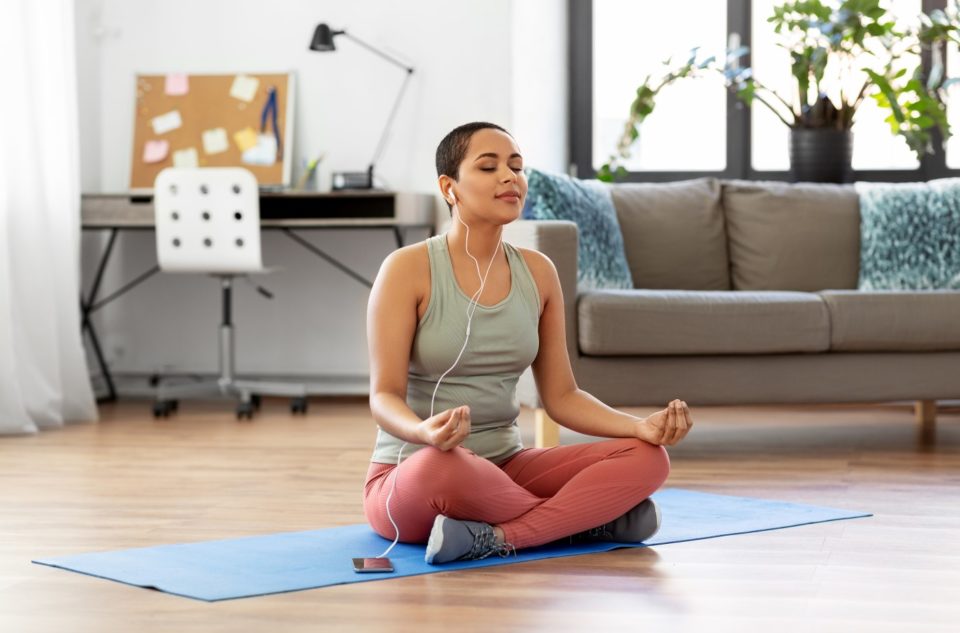
2. Take a “Zen Ten”- 10-minute meditation both morning and night. Spending 10 minutes to sit still and focus on your breathing regulates emotions and slows down overactive cognitive processing. If you’re feeling anxious, frustrated, disappointed or confused, these are all “intense emotions” and can signal to your body that you are stressed. When you can release that emotional tension, and simply notice it without judgment, it diffuses and becomes less powerful and controlling of your mind and behavior. As a leader, it is important to show up open, able to take in new information as it unfolds, and make thoughtful decisions when needed. At night, a Zen Ten also helps promote restful sleep by slowing down the mind in a similar fashion. Some mindfulness meditation apps I would recommend are Calm, Headspace and Insight Timer.

3. Belly/Diaphragmatic breathing for two to three minutes – This kind of breathingquickly decreases stress by breathing down into your stomach, expanding out on your inhale and contracting your stomach in on your exhale. This method of breathing stimulates the vagus nerve to slow down your heart rate by engaging your parasympathetic nervous system. Chronic stress can decrease immunity. If you want to have the longevity necessary to lead throughout many seasons of stress, then it’s important to keep chronic stress levels low. This type of breathing down-regulates the fight-or-flight stress response and allows you to return to baseline functioning.

Again, there are many ways to practice mindfulness, and it’s important to find which exercise works best for you. Choose one, choose them all, but create a routine of a daily mindfulness practice to gain the most benefit for your brain and body. Similar to how you build muscle in the gym, it’s important to get the reps in; if you don’t use it, you lose it.

Resource: https://mindfulnessexercises.com/mindfulness-exercises-for-professionals-leadership-motivation

University of Western States relocates to modernized campus in Northeast Portland

University of Western States (UWS), a private integrated health sciences university serving Portland since 1904 and the second oldest chiropractic university in the world, has relocated its campus to a vibrant leading-edge facility at 8000 NE Tillamook St. The new campus includes a 150,000-square-foot structure constructed in 2006 that formerly housed the world corporate headquarters of Banfield Pet Hospital. The university was previously located at 2900 NE 132nd Ave. in Portland.

birdseye campus shot

The university had originally planned to open its new campus doors for the spring quarter beginning April 6, 2020. Instead, administrators quickly regrouped and worked closely with the school’s information technology (IT) department to shift all classes online, allowing students to focus on distance learning services during COVID-19 shelter-in-place orders. Students adapted quickly, sharing photos of their virtual classrooms on social media.

“As an institution of higher learning that has been in Portland since its inception in 1904, we are celebrating this relocation and our commitment to the community,” said Joseph Brimhall, DC, president of UWS. “Despite the global pandemic, we succeeded in meeting our timeline and completing this complex relocation. I am proud of our team for accomplishing this historic move in the midst of challenging circumstances. This campus relocation enhances opportunities for collaboration with other institutions and community partners and fosters a healthy and sustainable center for generations.

The university is world-renowned for its excellence in providing integrated health sciences education. The prominently located new campus allows the university to better serve students and provide health care to members of the Portland community. UWS currently employs more than 150 on-campus staff members, enrolls more than 1,200 students, and continues to evolve and develop.

The impressive new facility offers innovative and versatile spaces, featuring hands-on laboratories, expanded meeting spaces, dedicated study settings, and dynamic work areas for faculty and staff. The campus features an advanced healthcare facility designed to fulfill patient needs and provide exceptional opportunities for clinical training.

new campus interior

UWS offers health sciences graduate education in the fields of chiropractic medicine, human nutrition and functional medicine, sports medicine, diagnostic imaging, sport and performance psychology, and clinical mental health counseling. University students from across the nation and around the world complete their studies both on campus and online.

Portland Mayor Ted Wheeler extended his congratulations to UWS students, Brimhall and the university team, stating, “It’s great to see the University of Western States settling into its newly relocated campus in the Northeast quadrant. Especially during this challenging time in our world, I’m impressed at how quickly they adapted to a distance learning format to protect the health of their students. As one of Portland’s oldest institutions of higher learning, UWS will no doubt thrive in its new environment and continue to create the future leaders of our community.”

U.S. Rep. Earl Blumenauer expressed his excitement for the congressional district, stating, “For the past 116 years, University of Western States has brought renowned health sciences programs and services to the Pacific Northwest. Its new modern campus promises to advance the art of integrated health care, which will help not only Oregonians, but patients around the world.”

“We’ve been anxiously awaiting this day since the university first announced its intention to move to the Madison South neighborhood,” said David Smith, president of the Madison South Neighborhood Association. “We welcome the UWS faculty, staff and students with open arms and look forward to the day when the shelter in place order lifts so our residents can explore the on-campus clinic.”

The campus relocation provides sustainability and stability during an era of significant institutional growth and development.

“University of Western States has created a unique opportunity to meaningfully engage members of our neighborhood as we serve the community,” said Dr. Brimhall. “We are excited to remain in Northeast Portland and look forward to physically moving into our campus and serving students for another 116 years!”

View a video about the move and virtually tour the campus. Additional details about the relocation can be found at uws.edu/facilities-planning.

Spring Term DC Student Blog No. 3

Tips from Dr. Bill Borman and Dr. Ron LeFebvre

By: Caitlin Jones, Q7 UWS doctor of chiropractic and sports medicine student

The spring 2020 quarter has proven to be a different one for sure! With the Doctor of Chiropractic (DC) program being so hands-on, it’s going to be a difficult transition, but our professors are working together to try to ensure that we get the best possible education we can. I spoke with a few professors before UWS decided it would be in everyone’s best interest to extend the online learning to labs for the quarter as well –, but their answers are still really helpful during this time! Currently, they are working together in a taskforce to deliver our lab content to us online and deciding how to best assess and prepare us as clinicians. My best advice now is to be patient and work with your Associated Student Body (ASB) reps if you have any questions or ideas!


Q&A No. 1

Dr. Bill Borman, basic sciences professor

bill borman

Do you have any recommendations for how students can succeed in your class this term? 

I think the key to success will be self-discipline in keeping up with content. It’s going to be very tempting for students to put off studying/learning, because they won’t have the obligation of being scheduled for class. They also won’t have the benefit of the group dynamic that comes with everyone going to class together and working or studying together. I anticipate developing the self-discipline to stick to a schedule dedicated to learning the content of each of the many courses students take in each term will be key to success.

With labs being postponed, are there any at-home, hands-on activities that students can do to help reinforce your material? 

I think the dissection lab is, by far, the best place to learn, understand and appreciate anatomical structures and their relationships. Losing the opportunity for students to continue that experience is disappointing, but prudent and necessary given the coronavirus circumstances. Given that, a viable alternative to participating in the dissection directly would be for students to observe the dissection remotely. As such, I’ve started recording myself doing the dissections students normally do for themselves. While I’m dissecting, I’m also recording the commentary I make while helping students in person – reviewing structures, describing relationships, quizzing, etc. I think these videos are going to be immensely helpful for students to observe the process and sequence of dissection, and hopefully, will be an acceptable alternative to the lost opportunity to dissect for themselves. I will also post review videos from a previous term in which I taught these courses and I already know students really appreciate those videos. 

And for fun, what did you do during the quarter break? 

Given the circumstances, we had to modify our plans for what we were going to do during the quarter break pretty substantially. Originally, my wife and I had planned on traveling to Wisconsin for 10 days to spend time with both our families. We decided it would be better and safer to stay home. I originally spent some time installing trim in the lower floor of our home (I’ve been working off/on for a number of years replacing all the interior doors and trim throughout our entire home.) Pretty quickly, though, I realized I needed to get in the lab and start dissecting/recording. It’s a pretty daunting project given the short timeline, but it’s going pretty well so far and I’m enjoying it. I think the students will really appreciate it as well.


Q&A No. 2

Dr. Ron LeFebvre, clinical education professor

Ron Lefebvre

Do you have any recommendations for how students can succeed in your class this term?

It is critical for students to structure their time. The daily course schedule usually does a lot of that for them. Now, however, many of the lectures are asynchronous and can be done at any time leaving the potential for time management chaos. Suddenly, all of the normal time guardrails have fallen down leaving an open range where I fear many will lose themselves. Students should create a tight schedule for watching videotaped lectures and accomplishing other training tasks as if they were back in school. They should also link with study buddies and meet via FaceTime/Zoom also on a regular schedule. This all is going to require the next level up of self-discipline.

With labs being postponed, are there any at-home, hands-on activities that students can do to help reinforce your material?

I’ll leave that advice to lab instructors—but obviously, if they don’t live alone, there may be people that they can safely practice some procedures on and if they can, they should.

And for fun, what did you do during the quarter break? 

Note that in class, Dr. LeFebvre told Q7 students that he has been hard at work over the break going through his courses and making them best suited for the new online format. He has also been going on numerous walks with his dog and enjoying time at home!

In future posts, we’ll hear from Dr. Cortny Williams, Dr. Mia Crupper, Dr. Beth Dominicis and Dr. Lester Partna! 

Evidence-Informed Practice Faculty Training Program

ron lefebvre

University of Western States (UWS) faculty consistently refine their skills and knowledge they pass on to students through training in new evidence-informed practice (EIP) techniques and research practices. The university greatly values our faculty’s hard work in extensive training as it models the standard of being lifelong learners. Part of this deeper training faculty partake in is led by Dr. Ron LeFebvre, UWS clinical education professor and EIP coordinator.

Dr. LeFebvre’s program guides participants through a variety of EIP components including clinical literature searches, quality assessment and going further into how the application of the literature would directly benefit classroom instruction or patient education.

“One of the foundational principals here at UWS is that our clinical training is evidence-informed,” said Dr. LeFebvre. “After faculty complete this training, we can see that they are more confident integrating EIP skills and knowledge into their courses or on the clinic floor.”

UWS faculty members who have completed the program include Dr. James Strange, Dr. Amanda Armington, Dr. Kate Brown, Dr. Chad Lambert, Dr. Suzanne Lady and Dr. Craig Kawaoka.

“Going through this program has helped me directly teach some of the EIP courses in Q10/11, but more importantly, it has allowed me to become a better steward of the literature and develop skills and confidence when reading about studies that directly impact what we do as chiropractic physicians,” said Dr. Lady. “The program helped me become more familiar with the literature for conditions we co-manage with other providers in an interdisciplinary way.”

Spring Term CMHC Student Blog No. 1


Mental Health Services During COVID-19

By: Chrissy Holm, EdD-CMHC, SP specialization student  

Chrissy Holm

Now that it’s been a few weeks into quarantine, the dust has theoretically settled. Well, at least a little. As I’m currently in my clinical internship year for the UWS clinical mental health counseling (CMHC) program, I can thankfully report that my internship site, Care Counseling in Minneapolis, Minnesota, has finished transitioning over to all telehealth psychotherapy sessions. Now that we are all in our new routine of working from home, I’d like to carve out some time for gratitude and recognition for our wonderful university.

As an online student, I have become quite familiar with Zoom. Not only has this portion of my program been extremely convenient, it also prepared me very well for COVID-19. In September 2019, I took on the task of researching best practices for telehealth, and creating as well as delivering a telehealth training program for 35+ clinicians at my internship site. Not only was I able to teach an important skill to my colleagues, but I felt proud to be an ambassador of UWS in this way. 

Flash forward to March 2020 with new COVID-19 precautions, stay-at-home orders, etc., that required most professionals to shift quickly to working remotely. Many therapists scrambled to secure HIPAA compliant telehealth platforms, figure out how to work technology, and adjust to connecting with clients in new ways through a device. However, not only had my site been utilizing telehealth smoothly for months, but we had the bandwidth to also create a COVID-19 telehealth resource library that we shared with thousands of providers in our community.

I say all of this to highlight how fortunate I feel to have been able to leverage online learning and help many people adjust successfully to these unprecedented times. I think that online learning requires students to be particularly driven, independent and resourceful. COVID-19 has required similar qualities to “thrive” in this new environment. I felt uniquely prepared to take on this challenge thanks to my amazing professors and peers in the UWS CMHC and sport and performance psychology programs. Now more than ever, we are reminded about the importance of collaboration and flexibility. Each and every one of us have something unique to contribute and sometimes it takes a bit of courage to step forward and give a helping hand. During this time of uncertainty, it will take new ideas, fresh initiatives and an element of bravery to come through on the other end stronger than ever. I encourage everyone to think of how they might be able to connect with someone outside of their comfort zone and see where it leads.

Integrated Health Care at the Core of Family Values


The mission of University of Western States (UWS) is to advance the science and art of integrated health care through excellence in education and health care. Since the university’s inception in 1904, generational ties have connected alumni and their families toward the pursuit of integrated health care.


The UWS motto, for the good of the patient, exemplifies the decision-making process of UWS graduates and the care they provide. At the heart of this care, the whole-person health perspective is valued and it is common to see our graduates working alongside other practitioners such as naturopaths, massage therapists, nutritionists, clinical mental health counselors, athletic trainers and more.  

Recent UWS doctor of chiropractic graduate, Sierra Ambrose-DeLapp, DC, (class of 2019) is just one example of our graduates working closely on an integrated health care team. In fact, she is working alongside her mother, Dr. Satya Ambrose at Sunnyside Collaborative Care in Happy Valley, Oregon.

delapp family at graduation
Dr. Daniel DeLapp, Dr. Sierra Ambrose-DeLapp, Dr. Satya Ambrose

Dr. Ambrose is an acupuncturist and naturopathic physician who has been in practice for more than 40 years. She was co-founder of the Oregon College of Oriental Medicine (OCOM) where she currently teaches classes in nutrition, biochemistry and pediatrics. Her care leans heavily on her passion for the overall prevention of illness and spreading knowledge that empowers patients’ lifestyles.

Dr. Sierra Ambrose-DeLapp’s father, Dr. Daniel DeLapp, is a chiropractic physician, a licensed acupuncturist and a naturopathic physician. He has been an attending physician in the UWS clinic system for more than 30 years. In his practice he emphasizes natural therapies such as manipulation, massage, nutritional and herbal remedies with physical rehab and lifestyle modification as foundational care.

The family raised their children on a 24-acre organic farm and while they lived healthy lifestyles and shared their values with their children, Dr. DeLapp and Dr. Ambrose never pushed their children into the medical field.

“The best piece of advice I received from my parents is to never stop learning, to always love and be kind to everyone,” said Dr. Sierra Ambrose-DeLapp.

“Sierra naturally gravitated toward health care,” said Dr. DeLapp. “She was fortunate to be in a program in high school called CAL (Center for Advanced Learning). The program allowed students to explore their personal interest.”

Once Dr. Sierra Ambrose-DeLapp knew that she wanted to pursue a career in the medical field, integrated health care, as modeled by her parents, was her chosen route.

“When I was in school, I envisioned being able to make connections with my patients,” said Dr. Sierra Ambrose-DeLapp. “I envisioned working alongside with other medical professionals and having a community that was centered on health and happiness. It is a blessing to be able to get people out of pain by just using my hands and teaching them ways to get out of pain themselves so they do not need to take medications.”

Valuing a love of lifelong learning was another tenant that Dr. DeLapp passed along to his daughter. He gives the same advice to current students as well.

sierra and daniel delapp

“My biggest piece of advice to students is to enjoy learning, because it never stops,” said Dr. DeLapp. “Be sure to study hard, but also practice your hands-on every day. When I see patients get better from the intern care, it’s the most rewarding part of the job.”

From forging her own path in the medical field and making a name for herself and the care she provides, Dr. Sierra Ambrose-DeLapp is proud of the education and support she received from the UWS community, including her parents.

“The most valuable thing I learned from my time at UWS is that we are all here to help each other,” she said.  “Trust in all that you have learned. Sometimes, it’s easy to forget how much you take in and how much you really have to offer patients. I have learned that there is always something you can do, even if you cannot heal everyone.”