UWS Library Earns High Accolade With Online Computer Library Center

Library View

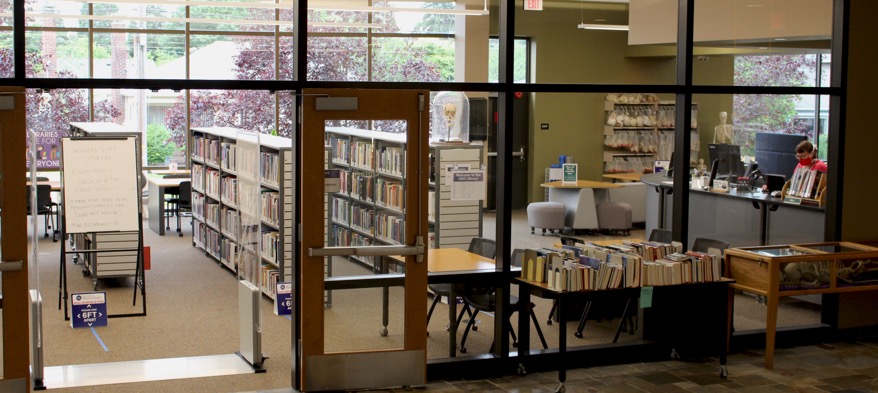
The Online Computer Library Center, formally known as OCLC, ranked the University of Western States Library 14th out of 7,500 libraries in their 2019 Annual Report as having the quickest interlibrary loan (ILL) turn-around time with an incredible 83% fulfillment. This statistic from a major library service provider refers to loan requests that the UWS library staff are fulfilling for other libraries. It also reflects flexible service hours (include evenings and weekends), the workflow that we have been able to establish with the library staff and their schedules, and the contribution that UWS is making to the larger scholarly community.

“The interlibrary loan team in the UWS library is amazingly efficient and resourceful in their work,” said Rian Debner, university librarian. “The team is focused on the needs of our students and our borrowers: their top priority is getting resources into the user’s hands as quickly as possible. Not only do they fulfill many requests a week – often in the hundreds – for the UWS community, but they also leverage the library’s own collection to meet user information needs across the country.

Dr. Daniel DeLapp Retires from UWS Clinic System

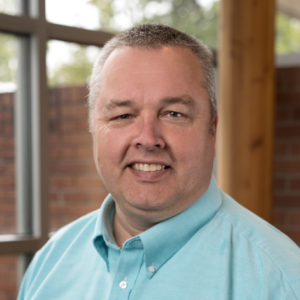
Dr. Daniel DeLapp

Dr. Daniel DeLapp, chiropractic physician, licensed acupuncturist and naturopathic physician announced his retirement from the University of Western States clinic system. Dr. DeLapp served as an attending physician in the UWS clinic system for more than 30 years.

“It has been a tremendous opportunity and privilege to work with interns and patients over the years,” said Dr. DeLapp. “The wonderful support from my fellow faculty, staff and administration has made this job a very fulfilling career. I will miss you all.”

“Dr. DeLapp is a skilled and compassionate health care provider incorporating multiple disciplines into his practice,” said Dr. Stanley Ewald, UWS associate dean clinical internship.“He is also a caring, talented educator. Opting out of private practice, he embraced education and has been training future doctors for decades. When you think about it, that’s exactly the type of person you want teaching you. We will miss him.”

Read more about how integrated health care is at the core of Dr. DeLapp’s family.

Dr. Brimhall Elected to Oregon Alliance of Independent Colleges and Universities

The Alliance logo
dr. brimhall

The Board of Trustees of the Oregon Alliance of Independent Colleges and Universities (“The Alliance”) announced its appointment results following their fall board meeting. Dr. Joseph Brimhall, president and CEO of UWS was named an executive committee member.

Dr. Brimhall’s appointment will begin October 2020 and runs through October 2022.

“I look forward to working with the leadership of the Alliance to advance independent higher education in Oregon,” said Dr. Brimhall.

The mission of Oregon Alliance of IndependentCollege and Universities is to represent and serve its member institutions, all of which are regionally accredited, nonprofit, private colleges and universities in Oregon.

Mental Health Care for Providers on Front Lines

Clinical Mental Health Counseling Student Blog

By: Kyle Zaber, EdD-CMHC, SP specialization student

First responder mental health

The COVID-19 pandemic has impacted us all. Through stay-at-home orders, lack of sporting events and opportunities to participate, modifications in workload and work location, to becoming parent-teachers, or social interaction via technology only, we’ve all been asked to adjust to a new “normal.” This demand on our time, energy and emotions has impacted none more so than those within the health care industry. Care providers around the world are being thrust into an extraordinary demand unlike any we’ve experienced in modern medical history. As an adviser of workforce engagement, I partner with leaders in hospitals and hospital systems across the country to help reduce patient suffering by enhancing and sustaining an engaged and resilient workforce. The COVID-19 outbreak has demonstrated the best in those that serve our communities as health care professionals. They have risen to the challenge and have been exceptional in their battle to reduce patient-suffering.

While leaders in hospitals and hospital systems are happy to share their praise of their front-line staff, they are also quick to share their concern regarding long-term impacts of the COVID-19 pandemic on their workforce. Many have used words and phrases such as, PTSD, anxiety and depression to describe their fears of the second battle soon to come, that of their workforce’s mental health in a prolonged-pandemic setting. Their fears are justified as a meta-analysis conducted by Brooks et al. (2020) indicated that symptoms of post-traumatic stress disorder (PTSD), anxiety and depression are higher for front-line health care staff in a post-epidemic/pandemic setting (e.g. SARS, Ebola). Furthermore, Brooks et al. (2020) discovered that some health care professionals struggle to recover from the effects brought on by the pandemic and choose to leave the medical profession altogether. The trauma inflicted as a result of this pandemic is not fully known, nor will it be until we are safe to transition back to what more closely resembles “normal,” but l believe a strong commitment to serving those who chose to serve others during this pandemic will be needed immediately.

As a student in the UWS clinical mental health counseling (CMHC) program, I believe my education and training is supporting me to be in a unique position to help mitigate the effects COVID-19 in more ways than one. First, my training as a counseling intern has taught me to listen first, ask questions for context and allow others to share freely. As an adviser of workforce engagement, these skills will be essential in understanding my clients’ needs to foster an engaged and resilient workforce. While many hospitals and hospital systems will share overlapping characteristics as a result of COVID-19, just like the clients I serve through internship, each hospital and each hospital system are unique having been impacted by this pandemic in their own way.

Second, UWS’s unique combination of CMHC training and performance psychology training, have enhanced my ability to help my clients find and utilize strengths to enhance the impact of their services. I believe those in the health care industry come to the field with a desire to help others be and feel better. This pandemic has been a tremendous test of the resolve of front-line health care staff as the virus, at times, has proven too strong for their interventions. I fear these are the memories that will be triggered in the prolonged-pandemic minds of front-line staff. While this is understandable, I believe it will be necessary to help work with my clients to find areas in which their strengths yielded positive outcomes for patients and to process what strengths enhanced their teams’ call to service. Through my Psychology of Performance Excellence course, we were informed how reinforcing one’s strengths can help enhance one’s task engagement.

At this time, as the world responds to the demands of COVID-19, those in the counseling arena will be called upon to help our communities adjust to their new normal. Those of us engaged in our online learning through UWS will be in a unique position to assist through tele-health services while we social distance to beat the spread of the virus. All of us in the counseling field will be positioned to serve our communities and positively impact the mental health of those in need once we are safe to return to face-to-face services. I’d like to conclude by thanking all health care professionals who are working tirelessly to battle COVID-19. As mentioned, I’m in a privileged position to hear about the best of what health care providers, hospital leaders and hospital directors are doing to combat this pandemic. It is their courage and service that enhances my desire to be present for them during and after this difficult period. I hope everyone reading this is safe, healthy and well.

Reference

Brooks, S. K., Webster, R. K., Smith, L. E., Woodland, L., Wessely, S., Greenberg, N., & Rubin, G. J. (2020). The psychological impact of quarantine and how to reduce it: Rapid review of the evidence. The Lancet, 395, 912-920. https://doi.org/10.1016/S0140-6736(20)30460-8

Rite of Passage Chiropractic Pinning Ceremony Goes Virtual

If you’re in the Portland Metro area, please consider scheduling an appointment in the Campus Health Center (503-255-6771) so that you can see the high-caliber clinic interns and UWS graduates!

By: Caitlin Jones, Q9 UWS doctor of chiropractic and sports medicine student


The pinning and white coat ceremony at University of Western States (UWS) is a celebratory event where chiropractic students take their first big step toward becoming chiropractic physicians. It signals the start of working in the Campus Health Center (CHC) with a clinician to help treat patients and pulling all of the knowledge learned the previous two years into practice. Working with a clinician in the CHC helps to solidify a student’s knowledge and shape how they’re going to treat their future patients. 

“The pinning ceremony is a rite of passage and represents the student’s physical entry into the clinic and the continuation of this journey to provide health care,” said Dr. Stanley Ewald, associate dean of clinical internship. “It is time to take an oath to oneself to advance the health of every patient equally and recognize the goodness and value of every single human being.”

The pinning ceremony is more than just the first step into the clinic, it’s a big event where families can celebrate the student’s accomplishments thus far. By this time, students have earned a bachelor’s degree in science and have taken their first national board exam, which is a feat. It’s also a great excuse to get dressed up with your pinned white coat and take pictures with family and friends!

pinning

“As a clinician, it is exciting to have fresh new faces in my treating group,” said Dr. Amanda Armington, attending chiropractic physician and associate professor. “They grow so much over the course of the clinical internship and it is in my opinion the best part of the program (but maybe I’m biased). The clinic intern will begin to piece together all the preclinical knowledge and build on that to provide evidence-informed, quality patient care!”

COVID-19 has affected the school in many ways, including transferring the pinning ceremony from a big, in-person event to a virtual one.  While it is unfortunate that students aren’t able to celebrate in person together, it does still allow for family members to participate and celebrate virtually!

Making it this far into the program and entering clinic is a thing to celebrate.

“Make sure you take time and reflect back on all that you learned up to this point and now prepare to recall this information in a succinct and practical matter,” said Dr. Craig Kawaoka, attending physician and associate professor. “Congratulate yourself on a hard-earned and well-deserved achievement. Also, realize this is only the beginning of a lifelong learning experience and practice.”

Current Quarter 8 or Quarter 9, I hope that you celebrate it in your own way! When I received my pin last quarter, I grabbed my closest friends (who are in my COVID bubble) and took pictures and had a potluck dinner to reminisce on the past two years and speculate what clinic was going to look like. It wasn’t the pinning ceremony of years past, but it was still perfect for me. Now, I look forward to the school’s virtual event and pictures of everyone in their coats and pins!


Incoming Chiropractic Student Blog: Tips from an Upper Quarter Student No. 2 – Moving to Portland

By: Caitlin Jones, Q9 UWS doctor of chiropractic and sports medicine student

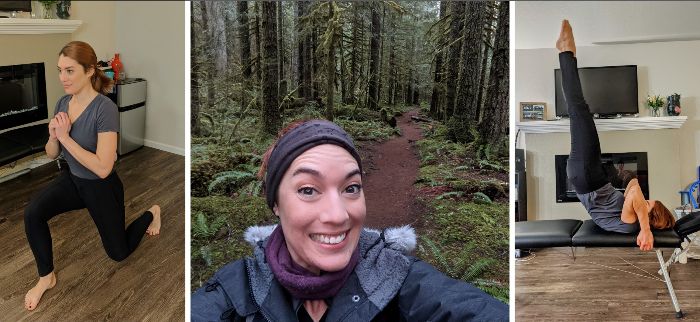
hiking pacific northwest

Being from Virginia and never visiting the Pacific Northwest before applying to UWS, I was a bit terrified to pick up and move across the country. Especially when all I knew about Portland was that it rained a lot. After I took the plunge and made the move, I am so happy that I did. Sure, it rains, but not nearly as much as I thought. The summer is also worth all those dreary days. I have a Jeep Wrangler that’s used to being flooded with a summer downpour at least once a week and I’ve been able to keep the top off all summer without flooding it once! 

As a break from school, I really wanted to get into hiking and between Mount Hood, the Columbia River Gorge and the Oregon Coast – there are hundreds of hikes within two hours or less from Portland. Some even right in the city limits – hello Pittock Mansion and your beautiful views! I’ve had friends that have gone crabbing, skiing, rock climbing and kayaking. Oregon is home to some of the best outdoor activities. During this pandemic, it has been a sanity saver with all the amazing places to stay safe while will getting outside and enjoying yourself.

If you’re joining the UWS student family this fall or winter, you are not required to move to Portland just yet. I’d recommend moving to Portland if you’re able, both financially and with your COVID comfort-level. The first few quarters are tough and having a solid study group can really help you learn the material. There are a ton of on-campus resources that you will have access to such as the library and the UWS Health Center. Having chiropractic treatment in the clinic will help you build relationships with upper quarter students as well as get you familiar with how we treat patients here. 

If you’re wanting to move to Portland, reach out to the admissions department and they can give you some advice on how to find housing. Personally, I found my roommates on our UWS student Facebook page and we found a house close to campus on Zillow. Even as an older student myself, it really helped me to live with other students, because we helped each other through the difficult parts of this program. 

And if you aren’t able to move to Portland quite yet – don’t worry! Admissions is working on setting up some socials for you. There’s also a mentor program, student clubs such as the Student American Chiropractic Association (SACA) and the Student Canadian Chiropractic Association (SCCA) to help you build relationships with other students. It sounds cheesy to say, but we really are a family here at UWS. 

hiking pacific northwest