AASP Annual Conference Experience

AASP Conference Logo

UWS EdD-SPP, CMHC Specialization Student, Erin Cochran recaps her experience attending the 37th annual Association for Applied Sport Psychology (AASP) conference in Fort Worth, Texas


Each year, the Association for Applied Sport Psychology (AASP) holds a conference that brings together a wide variety of applied practitioners from around the world and who work with professional and elite athletes; collegiate, high school, and youth sport athletes; and tactical and non-sport performance populations. This year, it was my honor to be able to attend my fourth AASP conference in-person (attended virtually in 2021 due to COVID-19 pandemic) and regain a deep sense of purpose for my future work with clients and research.

One of the best experiences one can have when attending a professional conference is the inherent sense of comradery and connection with like-minded individuals. There’s no better example of this feeling than connecting with fellow counseling and sport and performance psychology students, alumni, faculty and staff from UWS.

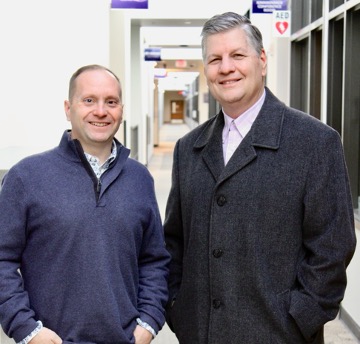
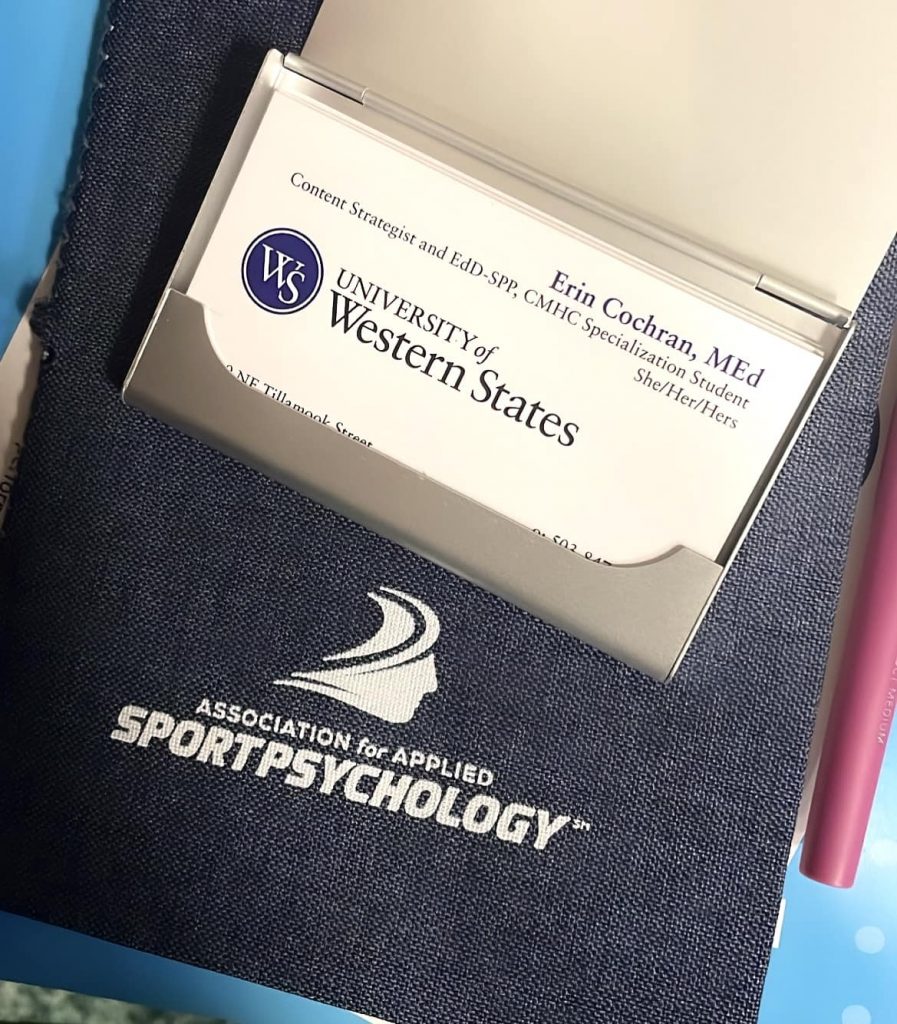
AASP Blog Photo

I began the UWS integrated degree program in 2018. When I graduate in spring 2024, I will obtain a Doctor of Education in sport and performance psychology (SPP) and a master’s degree in clinical mental health counseling (CMHC) (EdD-SPP, MS-CMHC). Since beginning the program, I have grown exponentially in my professional identity and have nothing but gratitude and reverence for the education I’ve received from UWS. Being able to work full time during my educational pursuits online has been a game changer but can come with the cost of not experiencing the in-person connections you could create in a physical classroom. However, the support and connection I’ve gained throughout my time goes beyond the limitations of a physical classroom and has allowed me to connect with UWS folks across the world. Being able to connect with a few of these influential people every year at the AASP conference is the cherry on top.

The AASP 2022 annual conference featured more than 100 lectures, panels, workshops, lectures, and symposia over four days held at the Fort Worth Convention Center. The central theme across all was based on how practitioners can apply the latest evidence-informed techniques and practices across the performance spectrum to strengthen clients’ “inner edge.”

Here are just a few of the numerous presentations that really stuck with me:

  • Integrated Sport Psychology Services – Perspectives from Major League Baseball (MLB)
  • The Complexity of Treating Eating Disorders and Perfectionism in Athletes
  • Licensed Sport Psychology Professionals’ Roles and Experiences Working Within a NCAA DI Athletic Departments
  • “Life is Like a Marathon” keynote address by Paralympian Tatyana McFadden
  • “Title IX’s New Glass Ceiling: Opportunities, Criticisms and Re-Imagining the Empowerment of Women” keynote address
  • The Development of Psychological Skills Training Programs for Future Health Care Professionals
  • Applying Neuroscience to Enhance Mental Health and Sports Performance
  • “Healing, Not Harming: How a Trauma-Informed Lens Can Change Sport” keynote address

All of these sessions and keynote presentations displayed a clear intersectionality of how clinical mental health counseling skills can directly enhance sport and performance psychology services and vice versa. Following graduation, some of my professional goals include continuing to pursue licensure in the state of Oregon as a licensed professional counselor and either own a private practice or work within an integrated clinic, as well as offer sport and performance psychology programming to NCAA Division I collegiate athletes, specializing in athletic identity work. I’d also like to earn certification as a Certified Mental Performance Consultant (CMPC®). There’s no doubt that being a regular attendee of the AASP conference will help me capitalize on these goals and I will continue to foster relationships with fellow UWS alumni, faculty, staff and students for years to come.

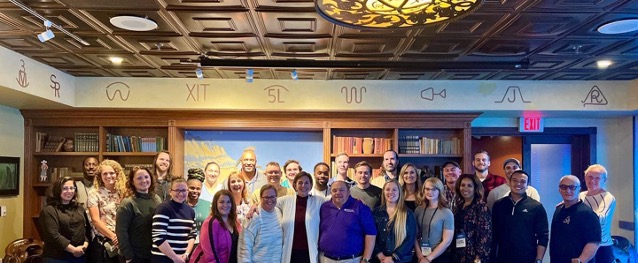
UWS students, alumni, faculty and staff gathered at the 2022 Association for Applied Sport Psychology (AASP) conference in Fort Worth, Texas


More about the EdD-SPP, CMHC program:

The UWS doctorate of education in sport and performance psychology, clinical mental health counseling specialization (EdD-SPP, CMHC) is uniquely designed for students who are simultaneously seeking counseling licensure and advanced sport and performance psychology training to open the door to a wide array of career options.

UWS Release New inTouch Magazine

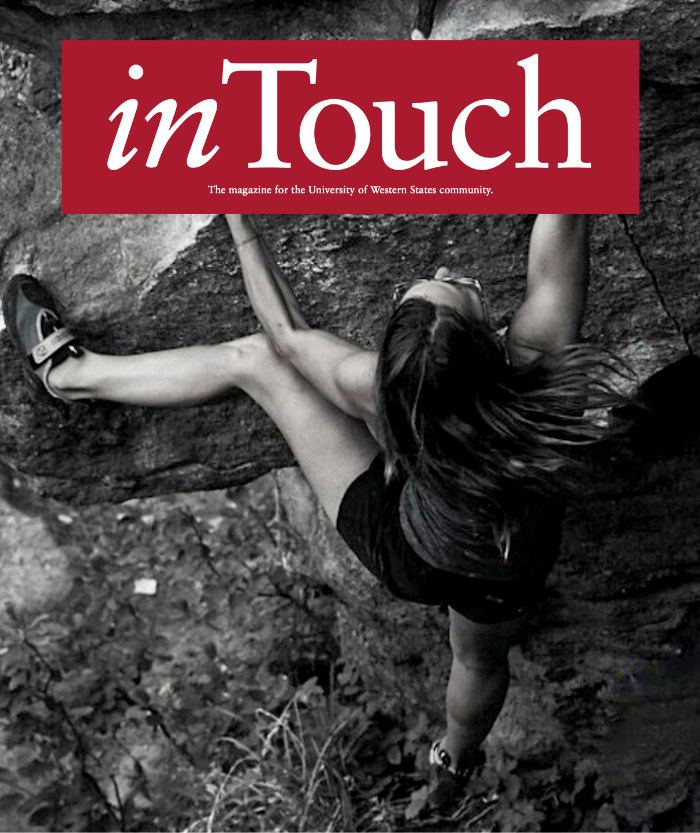
Check out the Summer/Fall 2022 edition of the inTouch alumni and friend magazine!

inTouch summer/fall cover

This edition of the inTouch includes:

  • News about the UWS affiliation with the TCS Education System.
  • Highlighting UWS chiropractic interns work with the U.S. military.
  • A final call to attend the 12th annual Summer in December Continuing Education program. 
  • Feature of various opportunities students across all UWS academic programs who have recently had to directly apply classroom knowledge to care for patients and clients.
  • A call to join the UWS Cornerstone Society and Alumni Finder Map.
  • Announcement of the 2022 UWS Alumni Recognition Award recipient.

…and much more!

Read past editions of the inTouch alumni and friends magazine.

Pt 2: What is Sport and Performance Psychology? 

Post 2: The Range of SPP Services

By: Sarah Castillo, PhD, CMPC, UWS sport and performance psychology program director
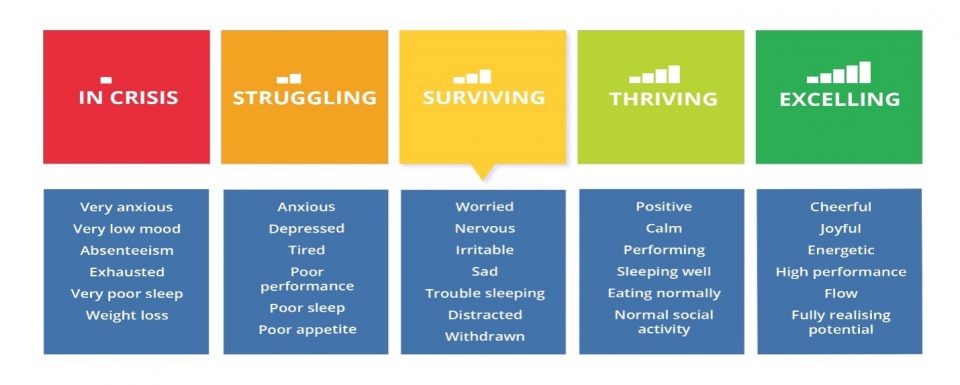
In the first post in this series, we talked about the “continuum of mental health.” As you recall, mental health is not simply the absence of mental illness – it’s more nuanced than that. Performers exist at every point along the continuum from “in crisis” to “excelling,” and that means there must be appropriately trained sport and performance psychology (SPP) practitioners available to work with them. Of course, the types of services provided depend upon the needs of the client and the expertise of the SPP practitioner. In general, these services can be placed into one of two categories: clinical or performance. We’ll talk about the differences between the two, but first, it’s essential to talk about the underlying requirements of both.

If you’ve decided to work in a mental health career, whether you’re interested in doing clinical or performance work, you’ve got to be proficient at demonstrating basic counseling skills. These skills include, but are not limited to, the ability to 1) demonstrate empathy and listening skills; 2) the ability to paraphrase, challenge, and question; 3) the competency to read and respond to both verbal and nonverbal cues; and 4) the ability to collaborate effectively with the client from initial assessment to termination of the helping relationship. Often, people enter the helping professions thinking “I’m the one all of my friends come to when they need advice,” or “all of my friends tell me how easy I am to talk to.” While that’s flattering, and likely says something about an innate ability to help, it’s essential to know that “helping” is not the same as “advice-giving,” and being “easy to talk to” is different than serving as a guide toward lasting behavioral change. Basic counseling skills are common to both clinical and performance work with performers, but they are by no means easy to learn and develop.

Now that we’ve talked about the common skills and abilities that SPP practitioners across the continuum of mental health must have, lets dive deeper into the two general types of services.  For reference, below is a linear depiction of the Delphis (2020) proposed continuum of mental health.

SPP Blog Graphic

In order to provide clinical services, SPP practitioners must hold a state-issued license as a clinical mental health provider.  When working with performers experiencing mental health distress (i.e., “in crisis” or “struggling”), services include the diagnosis and treatment of mental illness according to the classifications in Diagnostic and Statistical Manual (DSM). The goal of clinical services is “restorative.” That is, treatment focuses on helping the performer to regain positive control over thoughts, emotions, and behaviors. Examples of these state-licensed professions include psychologists, clinical social workers, marriage and family therapists, and clinical mental heal counselors. In every case, clinical practitioners are held to the standards and particular ethical codes of their profession, including the requirement to refer clients out when their needs do not match the role and/or expertise of the SPP practitioner.     

SPP practitioners providing performance services work with performers and groups who are already “thriving” or “excelling.” Observations, interviews and assessments are conducted to determine the performer’s needs. Next, mental skills interventions are designed and implemented to improve performance beyond the current level. Along the way, the practitioners and performers work together to assess effectiveness and make changes when and where necessary. Currently, the only accredited competency standard in sport and performance consulting is the Certified Mental Performance Consultant (CMPC®) credential offered through the Association of Applied Sport Psychology (AASP). Similar to clinical services, the provision of performance services requires adherence to the standards and particular ethical codes of the profession, including the requirement to refer clients out when their needs do not match the role and/or expertise of the SPP practitioner.

But who works with performers who are “surviving”? If you’ve been paying attention, you’ve noticed that there’s still one category in the mental health continuum that hasn’t been addressed. Those performers who may be classified as “surviving” might be best served by either clinical services, performance services, or both. This makes it essential for SPP practitioners to pay close attention to performers’ thoughts, emotions and behaviors. While the presenting issue may be performance-related, clinical issues may arise. Conversely, the presenting issue might best be addressed by a clinical practitioner, but during the course of treatment performance-related issues might appear. In either case, the SPP practitioner must have the training and expertise to recognize the additional impact of clinical or performance issues and make the appropriate referral.

At UWS, we believe that the “dual relationships” clause present in both clinical mental health and mental performance consulting ethical codes expressly prohibits SPP practitioners from working with a single performer on both clinical and performance issues. That is, even when an SPP practitioner is dually trained (i.e., both a licensed clinician and a CMPC®), they may not fulfill both roles with the same client. Although from the practitioner’s perspective it may seem easy to “switch hats” based upon the issue the performer brings to session, the prohibition is developed with the client’s perspective in mind; that is, is the client aware of when the “hats” have been switched? Does the client know which hat the SPP practitioner is wearing when they visit a training session? Because, at any point, the client may be negatively impacted by the confusion or anxiety these dual roles cause, it is unethical. 

Check out the third installment of the “What is Sport and Performance Psychology?” series that covers how the UWS SPP and CMHC programs prepare students to build their careers in these growing professions.


Want to learn more about the UWS sport and performance psychology degree programs? Visit the program webpage for more information or contact the admissions department virtually, by emailing [email protected] or calling 800-641-5641.

Dr. Jaipaul Parmar Named UWS 2022 Alumnus of the Year

Alumni Recognition Award Graphic

Jaipaul Parmar, DC, 2010 graduate of University of Western States (UWS), has been named the 2022 UWS Alumnus of the Year.

“It is a true honor and privilege to be named the 2022 UWS Alumnus of the Year,” said Dr. Parmar. “Since acceptance, going through the program, graduating, and now having over a decade of practice, I hold a very special place in my heart for UWS. I have a genuine passion for the chiropractic profession and am beyond grateful for this recognition from the institution that has forever changed my life and has allowed me to have an impact on others’ lives every single day.”

Shortly after receiving his license, Dr. Parmar began serving as a member of the British Columbia Chiropractic Association (BCCA) and the Canadian Chiropractic Association (CCA). He was recently nominated to sit on the CCA Board of Directors for his contributions to the community. Dr. Parmar and his practice, Alliance Wellness Clinic in Vancouver, BC, has served as a preceptor site for UWS student clinical interns for many years.

“Since graduating from UWS in 2010, Dr. Jaipaul Parmar’s contribution to the BC chiropractic community and the university has been significant,” said UWS President and CEO, Dr. Joseph Brimhall. “Dr. Parmar’s clear passion for the profession goes beyond boards and public service but is also evident on an individual level as a mentor to UWS student interns. As a preceptor for several years, Dr. Parmar has been eager to share his expertise with our student interns and has shown a keen investment in the next generation of chiropractors.”

Recipients of the UWS Alumni Recognition Award represents the outstanding accomplishments UWS alumni accomplish in advancing the science and art of integrated health care. UWS alumni reflect the core values of the university – student focus, best practices, curiosity, inclusiveness, professionalism and whole-person health.

Dr. Parmar and all the nominees will be honored at an alumni reception at the UWS campus at 8000 NE Tillamook Street in Portland, Oregon on Thursday, April 20, 2023.

What is Sport and Performance Psychology?

Post 1: The Continuum of Mental Health

By: Sarah Castillo, PhD, CMPC, UWS sport and performance psychology program director

Let’s face it – there are plenty of options when it comes to pursuing a graduate education and choosing a career. If you’re interested in working with performers, you might choose sport management, sports marketing, coaching education, athletic training, strength and conditioning, or a host of other options. If it’s mental health, you might consider clinical psychology, psychiatry, or social work. If it’s kinesiology, the scientific study of human body movement, career fields range include exercise prescription, biomechanics, and motor development? But, there’s only one field that lives at the very center of them all – sport and performance psychology. The name is intriguing, it’s popular and it sounds like it might be exactly what you want! But what, exactly, is it? In this blog series, we’ll address the basics of sport and performance psychology and help you to understand where you might fit.

First and foremost, sport and performance psychology (SPP) is a mental health profession. In 2020, Delphis, an organization dedicated to management organization on mental health and well-being, proposed a continuum of mental health in an attempt to expand the traditional belief that that mental health was nothing more than the absence of mental illness.

At University of Western States, (UWS), we agree wholeheartedly with this conceptualization of mental health. Even better, individuals trained in sport and performance psychology may be able to work with performers at various points along the continuum.

Let’s take a look at the training required for this work:

When working with performers “in crisis” or “struggling,” training in sport and performance psychology must be paired with clinical licensure in psychology. Individuals with this dual training are able to diagnose and treat mental illness with a clear understanding of how competitive sport and performance environments must be considered.

Working with performers who are “surviving” requires, at minimum, substantial training in sport and performance psychology and significant counseling skills. While the performer’s presenting problem may not be clinical in nature, it’s essential that the SPP practitioner be able to immediately recognize any future appearance of clinical issues, as they may be just below the surface. When clinical issues arise, it is essential that the SPP practitioner make an appropriate referral to a clinical practitioner.

Performers who are “thriving” or “excelling” are able to manage life’s challenges with well-developed coping skills and are able to perform at their peak. Working with performers at this end of the continuum requires extensive training and applied experience in sport and performance psychology.

It’s critical to recognize that not every SPP practitioner wants to, or is qualified to, work with individuals at every point along the continuum. Therefore, when considering a career in sport and performance psychology, the first order of business is to determine what it is that YOU want to do. Which points along the continuum are you passionate about? Your choice of program coursework and supervised experiences all depend on where your passion for the field truly lies.  Sport and performance psychology is gaining popularity, but it’s your passion for the type of work that will make you a dedicated student and competent practitioner!

Be sure to check out the second installment in this three-part series, “What is Sport and Performance Psychology.” In part two, we’ll talk about the similarities and differences between clinical and performance-based SPP practitioners.

In the third installment of the series, it’s discussed how the UWS SPP and CMHC programs prepare students to build their careers in these growing professions.


Want to learn more about the UWS sport and performance psychology degree programs? Visit the program webpage for more information or contact the admissions department virtually, by emailing [email protected] or calling 800-641-5641.

Value of a Specialization in Sports Medicine

By: Bill Moreau, DC, DACBSP, FACSM

Sports and chiropractic care have enjoyed a long and mutually supportive relationship. It is now commonplace for doctors of chiropractic to be involved in all levels of sport care for athletes, from the recreation leagues to the Olympics, Paralympics, NFL and other professional sports leagues, and beyond. Regardless of the level of involvement, there are growing opportunities for chiropractic physicians to serve in the sporting world.

The highly visible world of sport is a great proving ground to demonstrate the safe, effective and efficient delivery of chiropractic care, in both preventative and interventional modes. Athletes of all levels are looking to reach their personal bests in sport. An athlete’s sustained and healthy career can be a predictor of their success. In order to reach that level of success, mental and physical wellness need to be top priorities.

Hear from Dr. Bill Moreau, about the value of a degree specialization in sports medicine.

HOW TO GET INVOLVED IN SPORTS CARE

A key to identifying the pathway to engage in sport care of athletes is for the doctor of chiropractic to identify opportunities that are unique to their particular circumstances. Many doctors are currently in the sporting environment, and many more want to get in the game. It makes sense to expect that the doctor needs to enhance their clinical skills and sports-related acumen as they begin to offer healthcare services outside of their clinic or office setting. For most doctors, their area of highest comfort and clinical confidence is when they are working in their own offices. In the office setting, doctors of chiropractic are in positions of authority where the final opinion is typically not questioned and all the staff, tools and equipment they use to help their patients is right at hand.

In sport care, the doctor needs to understand the three A’s of sport: ability, availability, affability.  All chiropractic physicians care for athletes. When the care is offered outside the clinic or office setting, the change in location requires the doctors to see the entire setting before engaging in care. It is important to recognize there are other well trained and talented professionals that also want to help the athletes stay healthy. Developing supportive partnerships within the health care team is necessary to deliver athlete-patient centric care.

sports chiropractic

OFFICE CARE VERSUS EVENT CARE

There are important differences between office and event care. One of the key differences is related to the clinical presentation of the patient. Chiropractic physicians are taught to recognize clinical conditions by identifying the signs and symptoms of the presenting patient and then match these findings to a diagnosis. The diagnosis is formulated based on the doctor’s education and clinical experience, and serves as a guide to implement the best course of care for the ill or injured athlete. The key difference is the time to presentation. In the clinical setting, the athlete’s injury will have had time to develop the classic telltale signs and symptoms we are trained to identify. At an event, you see an athlete moments after the injury. The injury is most likely still unwinding to show the clinical picture whereby the clinician can identify the diagnosis.

Serial (repeat) examinations are a cornerstone to the successful management of injuries and illness at an athletic event. For example, the current standard of care for the evaluation and management of an individual with sports related concussion is serial examinations every five (5) minutes.1 The final diagnosis should not be made until the patient’s clinical presentation is stable and no longer changing.

WHERE TO OBTAIN ADDITIONAL EDUCATION, TRAINING AND CERTIFICATION

Depending upon the role the chiropractic physician fills on the sports medicine team, additional education helps best prepare the doctor to fulfill their role. In the United States, the American Chiropractic Board of Sports Physicians is the recognized certification organization for the chiropractic physician who wishes to obtain a sports medicine certificate of additional qualification.2 For those who work outside the United States, the International Federation of Sports Chiropractic (FICS) is the recognized certification organization.3 Doctors working domestically or on the international level may also consider formal education in a master’s degree program related to sport or sports medicine to help prepare them for success in the sporting arena.

PREPARTICIPATION EXAMINATIONS AND SPORTS-RELATED CONCUSSION EVALUATIONS

In addition to the numerous opportunities, there are also barriers to the chiropractic physician wishing to engage in the full spectrum of sports medicine. The two most controversial areas pertain to the ability to perform preparticipation examinations (PPE), sometimes called the periodic examination, and the evaluation and management of sports-related concussion.

About one half of the states allow the chiropractic physician to perform the PPE while other states do not. There is a lack of consensus within and outside the profession regarding this issue. Typical areas of resistance are centered on the cardiac examination. The critics state they are not convinced that a chiropractic physician can detect abnormal heart sounds. While there is not a single study to support this position, there are studies that demonstrate that family practitioners, academic internists, and general internists all demonstrate a low proficiency of no more than 40% in recognizing basic heart murmurs. Cardiologists, who only represent 5% of practicing physicians, are the only group that routinely recognizes most abnormal heart murmurs.4

The AHA twelve-point cardiac examination has been suggested as the standard of care for the PPE. At the discretion of the examining clinician, a positive response in any one or more of the 12 items may be enough to cause a referral to a cardiologist for cardiovascular evaluation. Parental verification of the responses is regarded as essential for minor students in middle or high school students, because young patients are notoriously poor historians.5 The historical and physical examination described in those circumstances falls well within the scope and skills of a chiropractic physician. The point is the abnormal heart sound does not need to be named by the primary point of contact. All athletes with an abnormal heart sound must be evaluated by a cardiologist to identify the cause of the murmur and the safety for that individual to participate in sporting activities.

Regarding sport-related concussion, it would be very surprising, after the plethora of current media coverage, that any health care provider would ever consider returning an athlete who possibly sustained a concussion to play. Each athlete must be protected from continued participation while suffering from any symptom or sign of concussion. Advising against return to play based on clinical findings is well within the scope of skills for chiropractic physicians.

There is a growing and continued need for chiropractic physicians to evaluate and manage sports injuries in all patient populations. It makes sense that all providers would work to know what they need to know before the sport injury patient presents before them.

References:

  1. McCrory, Paul, Willem Meeuwisse, Jiří Dvorak, Mark Aubry, Julian Bailes, Steven Broglio, Robert C Cantu, et al. “Consensus Statement on Concussion in Sport—the 5 th International Conference on Concussion in Sport Held in Berlin, October 2016.” British Journal of Sports Medicine, April 26, 2017, bjsports-2017-097699. https://doi.org/10.1136/bjsports-2017-097699.
  2. Moreau, William J. “The American Chiropractic Board of Sports Physicians Supports the Journal of Chiropractic Medicine.” Journal of Chiropractic Medicine 6, no. 3 (2007): 85–86. https://doi.org/10.1016/j.jcme.2007.06.002.
  3. Latest FICS News. (n.d.). Retrieved February 4, 2020, from https://fics.sport/
  4. Barrett, Michael, Bilal Ayub, and Matthew Martinez. “Cardiac Auscultation in Sports Medicine: Strategies to Improve Clinical Care.” Current Sports Medicine Reports 11, no. 2 (April 2012): 78–84. https://doi.org/10.1249/JSR.0b013e318249c0ff.
  5. Maron, Barry J., Paul D. Thompson, Michael J. Ackerman, Gary Balady, Stuart Berger, David Cohen, Robert Dimeff, et al. “Recommendations and Considerations Related to Preparticipation Screening for Cardiovascular Abnormalities in Competitive Athletes: 2007 Update: A Scientific Statement From the American Heart Association Council on Nutrition, Physical Activity, and Metabolism: Endorsed by the American College of Cardiology Foundation.” Circulation 115, no. 12 (March 27, 2007): 1643–55. https://doi.org/10.1161/CIRCULATIONAHA.107.181423.