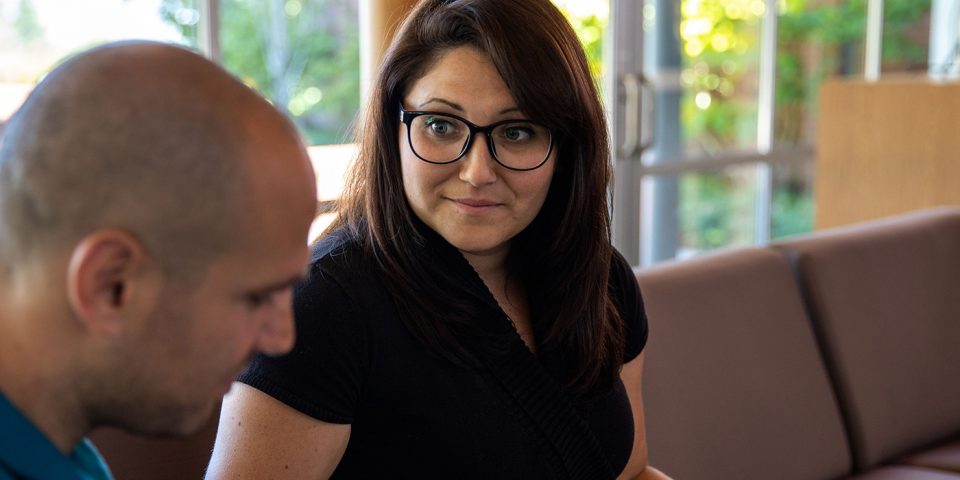
The 2025 Education Beyond Borders study abroad program will allow students to experience South Korea’s cultural vibrancy.
Since 2016, the Education Beyond Borders study abroad program has brought learners together to cultivate a deeper understanding of the world. Born at the intersection of global engagement and cross-disciplinary collaboration, Education Beyond Borders was created for the institutions that make up The Community Solution Education System as part of a shared mission to prepare agents of change to serve a global community.
Available to current students and alumni, the program consists of an online course and culminates in a study abroad experience that gives participants the opportunity to engage with diverse populations around the globe. Joined by others from four colleges and universities across the U.S., participants will examine the topic of inclusion through the lens of several disciplines, including psychology, business, education, law, and humanistic health.
The inaugural Education Beyond Borders program in 2016 took participants to Berlin, Germany, to examine the topic of immigration and the country’s refugee crisis. Subsequently, participants traveled to Johannesburg and Cape town, South Africa in 2018 to examine the topic of identity. In 2019, studies on the concept of balance led to an enriching trip to Tokyo, Japan.
Due to the coronavirus pandemic, the program was fully virtual in 2020, connecting participants from institutions across the globe to explore the United Nations’ Sustainable Development Goal 3: Good Health & Well-being.
Why South Korea?
South Korea was chosen as the destination for EBB 2025 due to its unique combination of technological innovation, advanced healthcare systems, and rich cultural heritage. The country is known for its leadership in integrating technology into various aspects of society, offering valuable insights into modern healthcare practices and technological advancements. Additionally, South Korea’s vibrant pop culture, encompassing K-pop, film, fashion, and cuisine, provides a compelling cultural backdrop to enrich the learning experience. This blend of health, technology, and cultural vibrancy aligns perfectly with our theme of “Bridging Health, Technology, and Cultural Horizons,” offering participants a comprehensive and immersive experience.
Registration for Education Beyond Borders 2025 is open to students and alumni from The Chicago School, Saybrook University, Pacific Oaks College, The Colleges of Law, and University of Western States.
The importance of global experience
At University of Western States, we believe in serving our global community. By examining identity through the lens of other cultures, learners cultivate a more dynamic worldview and improve their overall approach to service. Professionals with diverse cultural knowledge are better prepared to manage decisions with global implications—setting themselves apart as leaders in an evolving and complex international global workforce.
Learn how University of Western States supports those experiencing homelessness through chiropractic care and community partnerships, making a tangible difference for those in need.
With a commitment to social responsibility and community engagement, University of Western States (UWS) is working to support communities that are affected by socioeconomic issues such as poverty and homelessness.
UWS faculty encourage students to apply their skills to real-world settings through a combination of hands-on learning opportunities, service-based projects, and dedicated outreach programs. “This holistic education model instills in them the importance of community service, which is intrinsic to the health care profession,” says Stanley Ewald, DC, associate dean of the College of Chiropractic.
Service work also helps cultivate empathy, provide concrete tools for ethical community engagement, and empower students to make a difference.
Learn how UWS is caring for underserved communities through its chiropractic care initiatives and partnerships.
How Community Partnerships Are Making a Difference
UWS believes that community collaborations are important because they enable institutions to be more effective and responsive in their efforts to address social issues and improve overall community well-being. One of the key ways UWS has been involved in combating poverty and homelessness is by partnering with community clinics to provide chiropractic care.
Dr. Ewald emphasizes the importance of community partnerships and how they contribute to the overall UWS mission of helping those in need. “It opens the door for people to receive health care they might not otherwise have access to,” he explains. Community partnerships also help students develop a mindset of service. “By instilling a sense of responsibility and service in my students, I hope to create a ripple effect, with each individual doing their part to make a difference in the lives of those in need.”
Today, UWS provides chiropractic care to the uninsured and underserved at four clinics in the Portland area.
VOA Oregon keeps its community healthy and safe through holistic patient services. In 2023, it serviced 21,821 individuals with the help of 68 volunteers and 166 interns. UWS is proud to provide chiropractic care to these individuals at both VOA’s men’s and women’s clinics and supports VOA’s goal of creating a thriving community.
Cascadia Behavioral Health is a mental health facility that provides addiction recovery support, primary care, and more.
UWS provides a drug-free pain management model that complements the behavioral health services offered by Cascadia with chiropractic care. This holistic approach has been highly effective in helping patients manage their pain without relying on drugs or medication.
UWS is also a proud member of the Coalition of Community Health Clinics (CCHC). This non-profit organization is a community of 16 health clinics that provide a range of health care services for low-income, uninsured, and underserved communities. Together, UWS and CCHC partner on community events and share referrals.
Encouraging Students To Adopt a Service Mindset
Service is a central component of the UWS education model. The UWS motto is “for the good of the patient,” highlighting the responsibility to provide quality patient care through excellence in education.
Taking this motto to heart, Dr. Ewald emphasizes the importance of cultivating a service mindset. “I want students to understand that there is a need out there in the community,” he says. “It’s not just that they have an opportunity to make an impact; it’s that they have a responsibility to make an impact.”
Dr. Ewald has seen firsthand how this approach makes a tangible difference, having provided health care to impoverished communities in northern Mexico and Syrian refugees in Lebanon. For students looking to get involved in international service work, he reminds them that “a service trip can’t be for you; it’s going to be about who you’re serving.”
Dr. Ewald also notes that you don’t need to go abroad to make an impact, sharing how his personal experiences shaped his commitment to caring for underserved communities. Growing up, his mother modeled the importance of serving others. She often took him to visit families from various backgrounds, bringing them food, talking with them, and providing support. This early introduction drove home a critical message: Service begins at home.
The Impact of Chiropractic Care on Homeless Populations
Chiropractic care is a drug-free, noninvasive approach to health care that focuses on diagnosing, treating, and preventing neuromuscular disorders. For individuals experiencing poverty and homelessness, access to this type of care can be life-changing.
The National Alliance to End Homelessness reports that half a million people in the United States experience homelessness on any given night, with nearly 60% living in shelters and the rest unsheltered.
Housing insecurity and physical health can form a dangerous cycle. For many people experiencing homelessness, chronic pain, and musculoskeletal issues are common due to inadequate sleeping conditions, manual labor, or lack of access to proper medical care. According to a Groundswell survey, 47% of people experiencing homelessness experience physical pain daily, and 87% have pain from sleeping on rough surfaces. This type of pain can be debilitating, limiting an individual’s ability to work and perform daily tasks. The physical toll can lead to further difficulty securing reliable work, increasing the likelihood of continued housing insecurity.
That’s where chiropractic care comes in. Chiropractic adjustments can provide much-needed relief, improve mobility, and enhance overall quality of life. Additionally, students and faculty in the chiropractic program can offer preventive care and education on proper body mechanics, helping individuals avoid future injuries and maintain better physical health.
By providing essential care that might otherwise be inaccessible, UWS students and faculty are bridging a critical gap in health care services. Their holistic approach, which focuses on the whole person rather than just symptoms, fosters trust and encourages individuals to seek further medical attention as needed, ultimately supporting their overall well-being.
The Future of Community Outreach Programs at UWS
University of Western States continues to support those experiencing poverty and homelessness through its chiropractic care initiatives and partnerships. By providing access to care for underserved populations, UWS is making a tangible difference in the lives of individuals who may not otherwise have the opportunity to receive this type of treatment.
The efforts of UWS serve as an example of how health care providers can use their skills and resources to make a positive impact on local and international communities. As the world continues to grapple with the challenges of poverty and homelessness, service-oriented education programs are becoming increasingly important.
Through community partners, innovative education programs, and an emphasis on compassionate care, UWS showcases how future health care providers—and academic institutions themselves—can make an impact.
The achievements of University of Western States’ alumni and faculty extend beyond the classroom, contributing to their fields of knowledge and research. From groundbreaking research papers to influential publications and creative endeavors, this list exemplifies the UWS community’s intellectual vigor and innovation.
UWS Personnel are Bolded (Faculty: Black; Students: Red)
PUBLICATIONS:
Allen M, Rosner A. The mechanism of manual muscle testing as proposed by the ventral horn theory. MedicalHypotheses 2024; 182: 111240. Doi.org/10.1016/jmedhy.2023.111240.
Bablis P, Pollard H, Rosner A. The endurance of neuro emotional technique effects on chronic low back pain in a randomized controlled trial with implications for cost savings. Commentary. Journal of Natural Medicine; September 6, 2023.
Bablis P, Rosner A. Neuro-Emotional Technique: 35 years of mind-body health care: A commentary. Chiropractic Journal of Australia, 2023;50(1): 1-21..
Burnham K, Lady S, Martin C. Awareness of LGBTQ+ health disparities: A survey study of complementary integrative health providers. Journal of Chiropractic Education 2023;37(2):124-136. Doi:107899/ICE-22-2.
Ferruzzi K, Stello N, Zwickey H. Case report: Dietary effects on hyperlipidemia. Journal of Restorative Medicine, Accepted August 2023.
Knorr AL, Wexler RS, Fuller L. Treatment of Epstein-Barr-Induced Heapatitis with high dose intravenous vitamin C: A case report. Integrative Medicine: A Clinician’s Journal. 2023; 22(4): 24-27. PMCID: PMC10519236
McAlamen M, Arvinen-Barrow M, Iwasaki S, Meir G. Academic Career Paths in Sport and Performance Psychology. In Chu TZ, Christensen D, Brueckner S [Eds.] 13th Edition of theDirectoryfor Graduate Programs in Applied Sport Psychology. Indianapolis, IN: Association for Applied Sport Psychology, 2023. Pp. 48-65.
Roecker CB, Hewawasem SR, Skalski MR. Chiropractic management of bilateral meralgia paresthetica: a case report. Journal of the Canadian Chiropractic Association 2023;67(2): 175-185. PMCID: PMC10575328
Rosner A. The Role of Subluxation in Chiropractic. West Des Moines, IA: NCMIC Foundation, 2024.
Tistra ML, Berg-Carramusa CA, Peets T, Keptner K. Cultural experience with humility: A pre-post cohort study of student self-assessments. Internet Journal of Allied Health Sciences and Practice 2024;22(2):19. Doi:10.46743/1540-580X/2024-2470 https://nsuworks.nova.edu/ijahsp/vol22/iss2/19/
PLATFORM PRESENTATIONS:
Bennett H, Rundle B, Monroe C, Tarrant ML, Lee N, Fallon-Korb AJ. Five Slides in Five Minutes-(Re)Considering Traditional Psychological Constructs to Empower LGBTQ+ Athletes and Build a Culture of Inclusive Excellence. 38th Annual Conference, Association for Applied Sport Psychology, Orlando, FL, October 20, 2023. Platform presentation.
Cacho F, Ellinwood G, Englis M. Experiences of Perfectionistic Collegiate Classical Musicians. 38th Annual Conference, Association for Applied Sport Psychology, Orlando, FL, October 21, 2023. Platform presentation.
Coon J, Meir G, Moore M, O’Hana A. Existential Athletics: The Connection between Passion and Meaning in Life in University Athletes and Non-Athletes. 38th Annual Conference, Association for Applied Sport Psychology, Orlando, FL, October 18, 2023. Platform presentation.
Elie D, Swift K. Navigating the Terrain of Therapeutic Diets for GI disorders. Integrative Health Symposium, New York, NY. Presented February 15, 2024.
Flaten R, Davis Q, Trenda K, Schmitt L. Bridging the Gap between Education and Applications: Using the TOPE Literature to Help Young Professionals Organize Their Knowledge. 38th Annual Conference, Association for Applied Sport Psychology, Orlando, FL, October 21, 2023. Platform presentation.
Fuller L, Wexler R. Lamotrigine Deprescribing in Patients with Seizure Disorders: A Case Series. American Academy of Lifestyle Medicine; LM-2023 Lifestyle Medicine Conference 2023, Denver, CO/Online. Presented October 28-31, 2023.
Fuller L.. Wexler R. The Clinical Use of Intravenous Vitamin C for Post Acute Sequelae SARS-Cov-2 (PASC): A Literature Review and Case Series. 12th Annual Diet and Optimum Health Conference, Precision Health 2023: Living Better, Longer, Linus Pauling Institute, Oregon Health Sciences University, Portland, OR. Presented September 15-16, 2023.
Gonzalez S, Gaddy J. Leveling Up Communication and Conflict Resolution: Tools for Consulting in High Stakes: Opinionated and Emotionally Charged Situations. 38th Annual Conference, Association for Applied Sport Psychology, Orlando, FL, October 20, 2023. Platform presentation.
Helma PJ. Application of Technology in Sports Chiropractic. Presentation at the American Chiropractic Board of Sports Physicians. Sports Sciences Symposium, Portland, OR. Presented April 6, 2024.
Kampa M, Batchlor M. Effect of class IV laser on post-surgical wound healing : A case report. Association of Chiropractic Colleges, Research Agenda Conference, San Diego, CA, March 22, 2024. Poster presentation.
Lady S, Lockwood K, Burnham K, Lambert C, Major C. Effectiveness of a peer mind-body medicine training program on faculty stress responses. Panel Presentation, Association of Chiropractic College Education Conference and Research Agenda Conference . The Healthcare Evolution, San Diego, CA. Presented March 23, 2024.
Lady, S, Burnham K, Major C. Lockwood K, Lambert C. Effectiveness of a Peer Mind Body Medicine Training Program on Faculty Stress Responses. Association of Chiropractic Colleges-Research Agenda Conference, San Diego, CA, March 22-23, 2024. Platform presentation.
Leibowitz A, Abrams M, Hayden K, Martin S. Trauma-Informed Sport Psychology: A New Standard of Care? 38th Annual Conference, Association for Applied Sport Psychology, Orlando, FL, October 18, 2023. Platform presentation.
Leibowitz A, Martin SB. Trauma-Specific Education and Training for Nonclinical Sport Professionals. 38th Annual Conference, Association for Applied Sport Psychology, Orlando, FL. Presented October 18-20, 2023.
Major C, Novak M, Ross K, Visconti S, Burnham K. The Relationship between Satisfaction of Work-Related Needs and Forms of Motivation for the Pursuit of Scholarly Activity in Chiropractic Facility. Association of Chiropractic Colleges-Research Agenda Conference, San Diego, CA, March 22-23, 2024. Platform presentation.
O’Hana A. Can I Provide Psychotherapy and Mental Skills: Training to the Same Client? An Ethical Decision-Making Model for Integrated Practitioners. 38th Annual Conference, Association for Applied Sport Psychology, Orlando, FL, October 19, 2023. Poster presentation.
O’Hana A. Mental Health or Mental Skills? A Decision-Making Model of Assessment for Performance Clients. 38th Annual Conference, Association for Applied Sport Psychology, Orlando, FL, October 20, 2023. Poster presentation.
Quartiroli A, Rubio V, Moore EW, Olmedilla Z. Sport-Injury Related Growth: Development and Validation of the Perceived Benefits following a Severe Sport Injury Questionnaire (PB/SI-Q). 38th Annual Conference, Association for Applied Sport Psychology, Orlando, FL, October 19, 2023. Poster presentation.
Quartiroli A, Wagstaff C. Sport Psychology Continuing Education: A Survey of Where We Are and Where We Need to Go. 38th Annual Conference, Association for Applied Sport Psychology, Orlando, FL, October 20, 2023. Poster presentation.
Sachs N, Blank M. It’s in Your Pocket: Leveraging the Yardage Book to Equip Golfers with Mental Performance Tools. 38th Annual Conference, Association for Applied Sport Psychology, Orlando, FL, October 19, 2023. Platform presentation.
Sachs N, Blank M. Transforming Tournament Preparation: The Integration of Virtual Reality and Mental Imagery in Gulf Training. 38th Annual Conference, Association for Applied Sport Psychology, Orlando, FL, October 19, 2023. Platform presentation.
Strange J, Major C, Williams C. Chiropractic Student Perceptions of Rehabilitation Knowledge and Skill Level Improve after Incorporation of a Video-Based Group Learning Activity in and Advance Rehabilitation Course. Association of Chiropractic Colleges, Research Agenda Conference, San Diego, CA, March 22-23, 2024. Platform presentation.
Dive into the role of a Certified Mental Performance Consultant (CMPC). Learn about certification programs, salary prospects, and the power of mental performance.
Motivation, performance enhancement, and human potential. These are the crucial components of what goes into the goals of someone working in the field of sports psychology, and a certified mental performance consultant is no different in this regard. Building upon a base of academic coursework focusing on how sport psychology and counseling intersect and can be integrated, such as what can be found in University of Western States Sports and Performance Psychology graduate school programs, a certified mental performance consultant career can span a variety of sectors that go beyond the traditional world of sports.
What is the role of a Certified Mental Performance Consultant (CMPC)?
Improve focus during training and professional games
Build up self-esteem
Recover from injuries (with the assistance of a PT)
Develop and execute an exercise program
In general, the field of sports psychology has grown significantly, as APA reported “In 2018, for instance, a record 27 of 30 MLB teams employed “mental skills coaches” to help players deal with the mental challenges of the game”. This closely follows the larger demand for mental health services in general, with a 2022 issue brief from the Research and Action Institute stating that “the number of adults in need of mental health services rose almost 30% from 2008 to 2019”.
How Much Does a Certified Mental Performance Consultant Make?
The median compensation of a certified mental performance consultant depends on a variety of influences, from work settings to the field of work (such as private practices or university athletics). With this in mind, a 2020 compensation report for mental performance work from the Association for Applied Sport Psychology reports that the median gross annual income is $76,250.
Career Opportunities for CMPCs
Working in sports, coaching, exercise, and wellness, the pathways of a CMPC are diverse, with the potential to work along with a variety of clients from colorful backgrounds.
Sports Teams
Assisting sports players of all ages, from college athletes to professionals is about making sure their training–both physical and mental–is sustainable and productive for their personal development as athletes. A CMPC working with athletes also makes sure to educate them and make sure they are aware that sports are not just physical games, but psychological ones as well, with concentration and self-determination at times defining who wins and who loses a game.
Mental Health Facility
In a facility, a CMPC’s role can include injury recovery, helping people to stay focused during rehabilitation and observing their progress over time, helping to aid them and develop their exercises in an attempt to reduce their downtime and get them back on track.
Corporate World
As stated in the U.S. Surgeon General’s release of the Framework for Workplace Mental Health and Well-Being, “a healthy workforce is the foundation for thriving organizations and healthier communities”. Employers, CEOs, and HR directors have all concluded that the well-being of their employees is crucial to meeting goals and scaling their businesses. CMPCs may be independent consultants who assist individuals one-on-one with their problems, ranging from insecurity at work to anxiety before presentations.
How to Become a Certified Mental Performance Consultant?
The certification process to becoming a CMPC requires six crucial steps, as laid out by the CSPA ACPS before you can start your professional life as a performance consultant:
Obtain Application Materials
These include your CMPC standard application form and record of mentored experience hours logged, plus the course syllabus and your university transcripts, and a mentorship verification form.
This decision can take up to 10 weeks, and if you are rejected you must revise and resubmit your application.
Register and Prepare for the CMPC Exam
This must be completed within 6 months of your application being accepted by first following the instructions provided to you by the Certification Council, and researching the many available resources to you for studying for the CMPC examination.
Take the CMPC Exam
Upon completion of the CMPC exam, your results will be announced to you. If you fail you must wait 90 days before trying the CMPC examination again.
Collect CEUs and Pay a Yearly Fee
The annual certification fee is $25, and CEUs are to be collected over five years.
Where to Start Learning the Skills of a Mental Performance Consultant?
Integrating sports psychology and counseling starts with a program dedicated to developing not just your academic skills, but also preparing you for a professional career as a certified mental performance consultant. At UWS, there are three programs available for those who want to enter the world of sports psychology, but the Master of Science in Sport and Performance Psychology program (M.S. SPP) is 100% online and is specifically designed for those who want to become a CMPC through the Association for Applied Sport Psychology. With the ability to personalize your curriculum with classes that fit your career goal, your education can be personalized from start to finish, resulting in you not only potentially receiving a master’s degree but also developing the skills necessary for your specific career focus. Want to learn more and see what a degree can do for you and your career? Request info today.
Discover three well-known sports medicine careers, salaries, and education requirements. Prepare for your future by studying sports medicine at UWS.
Entering the sports medicine field presents a wealth of opportunities and diverse career paths. Sports medicine professionals work with athletes to prevent or recover from injuries and maintain peak fitness. With a sports medicine degree, graduates can embark on roles such as athletic trainer, strength and conditioning coach, and exercise physiologist. Each of these diverse sports medicine job opportunities includes unique responsibilities, salary prospects, and specialized education to address the needs of athletes.
What is an athletic trainer?
An athletic trainer, a common career for those with a sports medicine degree, provides preventative and rehabilitative care to athletes. They assess athletes’ complaints, diagnose muscle and bone injuries, and create personalized treatment plans to help manage the recovery process.
Depending on the extent of an injury, an athletic trainer may need to collaborate with other health care professionals, coaches, and athletes to treat their clients. This may include consulting specialists for more thorough examinations or ordering X-rays or MRIs to determine the extent of an injury. When injuries require more thorough treatment, such as surgery, an athletic trainer will consult with the athlete’s primary care physician, surgeon, or other specialists.
Athletic trainers educate athletes about how to prevent or reduce injuries. This includes teaching athletes how to train and condition without overworking their bodies. Athletic trainers also encourage healthy lifestyle choices such as rest and nutrition.
What is the projected job growth for athletic training?
According to the U.S. Bureau of Labor Statistics, the sports medicine career field for athletic training is projected to grow by 17% from 2021 to 2031*.
*Data gathered in 2023.
What degree do you need to become an athletic trainer?
More than 70% of athletic trainers pursue a master’s degree in sports medicine, athletic training, exercise science, or another related field. The Master of Science in Sports Medicine degree program at University of Western States provides learning opportunities that allow graduates to better integrate with sports medicine health care teams, providers, and athletes. Additional certification may also be required by some employers.
What is a strength and conditioning coach?
A strength and conditioning coach works to develop and implement programs that improve athletic performance while reducing the risk of injury. To do so, the coach must first conduct a fitness assessment to identify the strengths and weaknesses of an athlete to detect areas to improve on.
Strength and conditioning coaches develop personalized training plans to include purposeful sessions, proper technique, and development tracking. The focus is to put the client in the best position to achieve success and higher performance. Strength and conditioning coaches may also collaborate with the sports coach, sports medicine professionals, and other support staff to optimize the athlete’s training.
What is the projected job growth for strength and conditioning coaches?
The U.S. Bureau of Labor Statistics projects a 19% increase in sports medicine careers for fitness training and instructing from 2021 to 2031*.
*Data gathered in 2023.
What degree do you need to become a strength and conditioning coach?
It is commonly preferred by employers to have a master’s degree in exercise-science-related fields. Strength and conditioning coaches often obtain professional certifications or attend educational conferences to stay up to date on new scientific developments. According to the National Strength and Conditioning Association, a bachelor’s degree is a minimal requirement, but strength and conditioning coaches typically are expected to hold more advanced degrees such as a master’s degree in sports medicine.
That is why UWS includes high-performance leadership and performance nutrition concentration options in the sports medicine master’s program. The UWS master’s degree and the elected concentrations help set graduates apart from other strength and conditioning coaches. We offer an in-depth and well-rounded education focusing on leadership and dietary approaches to optimize performance and recovery.
What is an exercise physiologist?
An exercise physiologist conducts fitness assessments and physiological testing to evaluate the client’s cardiovascular fitness, body composition, and exercise capacity. Once this information has been collected and analyzed, the physiologist creates and oversees an exercise program for the client with specific health conditions. These clients are typically people with cardiac rehabilitation or chronic diseases that impact their ability to optimize their health and fitness.
Exercise physiologists guide exercise recommendations, intensity levels, and progression over time to fully optimize the performance outcome. Physiologists conduct research from fitness assessments and program results that contribute to the field development of exercise physiology—specifically, the impact on human performance and health.
What is the projected job growth for an exercise physiologist?
The U.S. Bureau of Labor Statistics forecasts a 9% increase in the sports medicine career field for exercise physiology from 2021 to 2031*.
*Data gathered in 2023.
What degree do you need to become an exercise physiologist?
According to the U.S. Bureau of Labor Statistics, exercise physiologists need at least a bachelor’s degree in health-science-related programs such as sports medicine, biology, anatomy, kinesiology, nutrition, and clinical work. However, those who hold more advanced degrees such as a master’s degree in sports medicine typically have more opportunities for career advancement and success.
University of Western States offers a Performance Nutrition concentration as part of its Sports Medicine master of science program. This nutrition-focused sports medicine degree integrates functional medicine techniques into the graduate’s education. For the betterment of athletes’ well-being, our Master of Science in Sports Medicine promotes a patient-centered approach, focusing on natural remedies for enhanced sports performance.
Pursuing an M.S. in Sports Medicine
University of Western States offers a master’s degree in sports medicine program that can enhance your knowledge and understanding of the athletic field. This degree program teaches students how to help people create and maintain a healthy and active lifestyle through health assessment, custom plan implementation, and analytical skills to gauge the results.
A successful career in sports medicine stems from a strong educational foundation. Build your career foundation here at UWS, and apply today.
There are various naturopathic careers to choose from including a naturopathic doctor, researcher, nutritionist, or herbalist.
Naturopathy is about helping patients find successful and natural complementary medicine, focusing on not just stopping the symptoms of an illness but going to the root of the problem. By focusing on the entire body, someone with a career in naturopathic medicine can focus on the individual needs of the patient.
These careers employ natural therapies such as nutrition-based or lifestyle counseling, to help ground the mind and body. By embracing a more holistic approach to health care, naturopathic careers in medicine promote good health. The goal of any job in naturopathic medicine is to create long-lasting change in a patient’s life, such as helping them to create healthy habits that promote a strong immune system, reject foods that have a higher chance of giving someone cancer, and have an active lifestyle that supports heart health.
Naturopathic Doctor
The American health care system faces significant challenges, with the National Academies of Science (NAS) giving it a failing grade. The criticism comes from the system’s focus on treating diseases rather than promoting overall health and well-being, which highlights a pressing need for a shift toward more holistic health practices. Naturopathic doctors are stepping forward to meet this need. By diagnosing and treating patients using natural therapies, including herbal medicine, nutrition, lifestyle counseling, and physical modalities, naturopathic practitioners are instrumental in promoting holistic health care.
The Doctor of Naturopathic Medicine (NMD) degree is specifically designed to train students to become licensed naturopathic doctors, focusing on whole-person medicine. Students learn to evaluate and address a wide range of essential factors that influence a patient’s inherent healing capacity. The program covers all essential aspects of naturopathic medicine, including diagnosis, treatment modalities, patient care, and practice management.
If you are interested in naturopathic medicine, you will have to go to medical school and receive your Naturopathic Medicine Doctorate (NMD). Naturopathic doctors can work in a variety of settings, from running a private practice to working in a hospital, after passing the two-part Naturopathic Physicians Licensing Examinations (NPLEX).
Naturopathic Researcher
Naturopathic researchers conduct scientific studies and clinical trials to explore the efficacy and safety of natural remedies and treatment modalities. Those who pursue this career in naturopathic medicine will design research studies, conduct experiments and data collection, collaborate with other researchers, and gather data documentation. Naturopathic research has received legitimacy over the years, strengthening health research.
If this job in naturopathy sounds interesting to you, you will need to have a bachelor’s degree in a medically related field such as chemistry or biology. A naturopathic researcher can work in a laboratory or conduct independent research. However, a bachelor’s degree is only a minimum requirement to enter this career path. An NMD may provide opportunities to expand your career and achieve greater success in this field.
Naturopathic Nutritionist
These jobs in naturopathic medicine specialize in using food as medicine, providing nutritional assessments, developing customized dietary plans, and offering guidance on nutrients that support optimal health. Naturopathic nutritionists cross-reference their patients and their diets. For specific groups such as nursing mothers, pregnant women, and athletes, naturopathic nutritionists can create a major impact in their patient’s lives by tailoring nutrition plans to meet their unique needs for physical performance and overall well-being.
Nutrition is a core component of naturopathic medicine. Individuals wanting to pursue a career in naturopathic nutrition should learn about the therapeutic uses of food and develop expertise in nutritional assessments, dietary planning, and personalized recommendations.
A naturopathic nutritionist requires at least a bachelor’s degree, but a more advanced degree such as an NMD is highly encouraged if you want to further your career as a nutritionist and achieve more success. Like other naturopathic medicine jobs, a nutritionist can work in a variety of settings, such as a clinic, as an independent consultant, or even in a nursing home.
Looking to Pursue a Doctor of Naturopathic Medicine Degree?
The demand for naturopathic professionals will continue to rise as long as more people recognize the benefits of holistic and integrative health approaches. Earning a Doctor of Naturopathic Medicine degree puts you at the forefront of a shift toward patient-centered care that values prevention, personalized treatment plans, and collaborative health strategies. At UWS, we craft our program to arm you with the in-depth knowledge, skills, and credentials necessary to excel in this important and growing field.
Visit our website to learn more about making a real difference in people’s lives.
Secure your place in the future of health care. Apply today.
Forbes spoke with Dr. Christopher Stanley about his upcoming role as lead sport and performance psychology consultant at the 2024 Summer Olympics.
University of Western States Professor of Sport and Performance Psychology Christopher Stanley, Ph.D., CMPC, was featured in a recent Forbes article as part of the magazine’s coverage of the upcoming 2024 Summer Olympics. Dr. Stanley spoke with sportswriter Manasi Pathak about his role at the Summer Games as lead sport and performance psychology consultant for USA Track & Field (USATF).
The Forbes article notes that Dr. Stanley previously served as USATF’s lead consultant at the 2020 Summer Olympics in Tokyo where the team earned seven gold, 12 silver and seven bronze medals. He has been involved with USATF since 2014 and was also their lead consultant at the Outdoor World Championships in Oregon (2022) and Budapest (2023).
In his Q&A with Pathak, Dr. Stanley discusses topics such as the impact of COVID-19 on the 2020 Summer Games, athletes’ mental health challenges, his history with USATF, and what his role will be at the Olympic Games in Paris this year.
“We have a ‘athlete-first’ perspective,” Dr. Stanley says. “Once on the ground, I am there as a resource to support athletes with their mental skill and mental performance needs.”
UWS is proud to see Dr. Stanley’s work receive the spotlight it deserves and for the value of sport performance psychology to be on international display at the Olympic Games.
Hello and welcome! To provide you the best possible experience, our site uses cookies and third-party services to remember you, understand how you use our site, and improve the quality of our communication with you. We care about our visitors and want to ensure you are informed on how we use your data. Click here to learn more. By continuing to use the University of Western States website, you agree to how we use your data to improve service and user-experience.