


ACOTE Praises Our Program’s Strengths
Our OTD program earned Candacy Status by the Accreditation Council for Occupational Therapy Education (ACOTE)—with zero weaknesses identified in its review—a rare distinction that recognizes our exceptional academic quality, expert faculty, and student-centered approach.
Here’s what ACOTE highlights as some of our program’s standout strengths:
- Delivers a cost-effective education, with lower tuition and fewer required credits than comparable regional programs
- Offers flexible and remote learning formats, including limited residency requirements, asynchronous coursework, and the ability to complete the program without relocating—ideal for students with work or family commitments
- Enhances clinical training through a robust standardized patient program featuring both physical and mental health simulations
- Promotes interprofessional collaboration through shared learning experiences with other UWS graduate health programs
- Demonstrates strong program leadership, with a program chair who brings extensive academic and grant experience, curriculum development expertise, and accreditation knowledge
Open the menu below to read the report’s full findings, including all our strengths, areas of concern (none), and ACOTE’s final action
ACOTE's Candidacy Application Review Findings
The following are the results of the Candidacy Application Review:
Strengths:
- Expands access through inclusive admission criteria that welcome applicants from all undergraduate backgrounds, provided prerequisite coursework is met
- Offers flexible and remote learning formats, including limited residency requirements, asynchronous coursework, and the ability to complete the program without relocating—ideal for students with work or family commitments
- Provides multiple academic pathways, including a traditional three-year track and an accelerated two-year option for motivated students seeking quicker entry into the workforce
- Facilitates a smooth transition for practicing OTAs by not requiring additional prerequisites, making the program OTA-friendly and accessible
- Emphasizes applied learning and professional practice through a doctoral capstone experience, eliminating the traditional dissertation requirement
- Delivers a cost-effective education, with lower tuition and fewer required credits than comparable regional programs
- Enables remote participation, making it the only OTD program in Oregon offering this level of geographic flexibility
- Demonstrates strong program leadership, with a program chair who brings extensive academic and grant experience, curriculum development expertise, and accreditation knowledge
- Leverages institutional innovation and a national reputation in holistic health care education, supported by UWS’ success in delivering remote graduate programs
- Provides access to dedicated campus facilities, including specialized labs and a nearby cadaver anatomy lab, with plans for a future occupational therapy center
- Enhances clinical training through a robust standardized patient program featuring both physical and mental health simulations
- Promotes interprofessional collaboration through shared learning experiences with other UWS graduate health programs
- Utilizes institutional expertise in accreditation, benefiting from the university’s successful track record across multiple graduate programs
- Strengthens infrastructure through integrated support from The Community Solution Education System, including shared resources for course development, marketing, and assessment
- Supports student success with comprehensive university wide services in admissions, financial aid, and academic support, ensuring continuity from enrollment through graduation
Remaining Issues:
Upon review of the Candidacy Application and the additional materials requested, there are no remaining issues related to compliance regarding the Candidacy Application.
ACOTE Action:
Grant Candidacy Status and proceed with the preaccreditation review of the program.
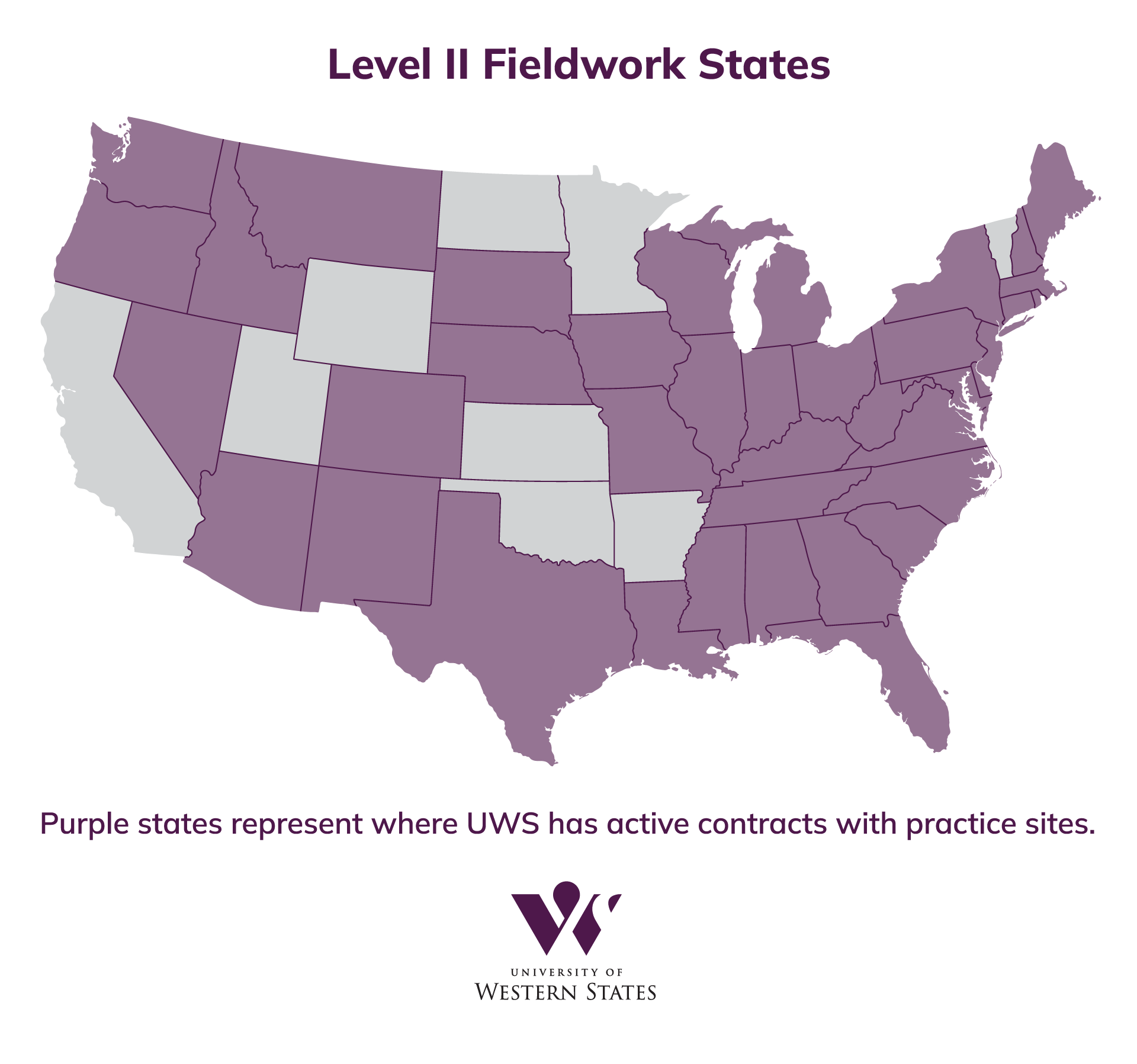
Fieldwork Across the U.S.
Gain hands-on experience in a location near you. Explore our national network of Level II fieldwork placements and build your professional network without relocating.
Accreditation and Licensure
The Doctor of Occupational Therapy Program at University of Western States has applied for accreditation and has been granted Candidacy Status by the Accreditation Council for Occupational Therapy Education (ACOTE) of the American Occupational Therapy Association (AOTA).
The occupational therapy doctoral program must have a preaccreditation review, complete an on-site evaluation, and be granted Accreditation Status before its graduates will be eligible to sit for the national certification examination for the occupational therapist administered by the National Board for Certification in Occupational Therapy (NBCOT®). After successful completion of this exam, the individual will be an Occupational Therapist, Registered (OTR).
More information about ACOTE accreditation is available at www.acoteonline.org. You may contact the Accreditation Council via the following: [email protected] | 301-652-AOTA ext. 2915 | 7501 Wisconsin Ave., Suite 510E, Bethesda, MD 20814
Pending full accreditation, graduates of the University of Western States’ OTD program will be eligible to sit for the National Certification Examination for the Occupational Therapist, administered by the National Board for Certification in Occupational Therapy (NBCOT®). After successful completion of this exam, the graduate will be an Occupational Therapist, Registered (OTR).
Career Pathways
As a Doctor of Occupational Therapy, you’ll be equipped to work in diverse settings such as:
- Hospitals and outpatient clinics
- Rehabilitation and skilled nursing facilities
- Schools and early intervention centers
- Mental health and community health organizations
- Home health care services
You can also specialize in areas such as:
- Pediatrics
- Geriatrics
- Physical rehabilitation
- Mental health
- Assistive technology
- Program development
- Research and education

